Thinking about selling? I’ll tell you what your property is really worth — no obligation.
Get My Free Home EvaluationKEY TAKEAWAYS
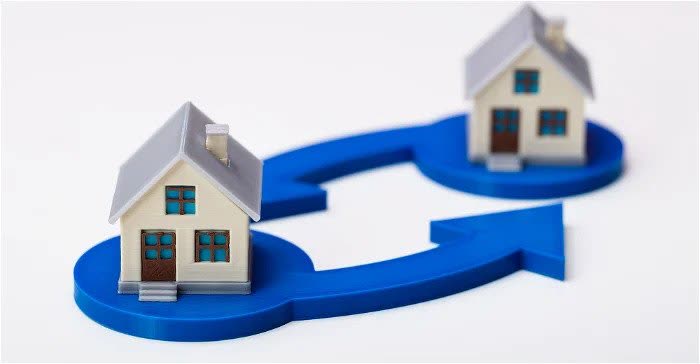
- A 1031 exchange lets you sell an investment property and defer the capital gains tax by rolling the full proceeds into another investment property.
- Two clocks start the day you close: 45 days to identify replacement property in writing, and 180 days to own it. Miss either and the deferral is gone.
- A qualified intermediary must hold your sale proceeds—if the money lands in your bank account, even overnight, the exchange fails.
- Only property held for investment qualifies. Your primary home is not eligible, and neither is a second home your family mostly uses.
- Nothing here is tax or legal advice—your CPA and attorney make the final call on every 1031 decision.
Somewhere in the Triangle right now, a landlord is sitting on a rental that has doubled in value and doing the sad math on what a sale would cost in taxes. I've had that conversation in living rooms from Apex to Wake Forest, and in my 17+ years selling real estate here, one answer changes the mood in the room more than any other: you may not have to pay that tax yet.
That answer is the 1031 exchange. This is my plain-English version for residential investors—what it is, how the deadlines actually work, and the quiet mistakes that wreck exchanges. If you want the technical deep end—the 3-property, 200%, and 95% identification rules, the tax forms, the state-level wrinkles—I cover all of that in the commercial 1031 deep-dive. This page is the on-ramp.
What a 1031 exchange actually is
Section 1031 of the Internal Revenue Code has been in the tax code since 1921. Congress wrote it to keep capital moving: if you sell one investment property and put the full proceeds into another, you can defer the capital gains tax instead of paying it now. Defer, not erase—the tax bill follows you into the new property and comes due whenever you finally cash out. Since the 2017 tax law, the rule applies only to real estate.
"Like-kind" sounds narrower than it is. For real estate, nearly any investment property is like-kind to any other: a rental house in Garner for a duplex in Durham, a townhome you lease near NC State for raw land in Chatham County. What matters is that both properties are held for investment or business use—not that they match in type, size, or price.
The IRS isn't forgiving the tax. It's letting your money keep working—and the deadlines don't round in your favor.
The two clocks: 45 days and 180 days
Both timers start the day you close on the property you're selling—the "relinquished" property in exchange language—and they run at the same time. The 180 days is not added on after the 45.
Within 45 days, you must identify your candidate replacement properties in a signed writing delivered to your qualified intermediary. Most residential investors identify up to three properties and buy one of them; the fancier identification options exist for bigger, multi-property plays and live in the commercial guide.
Within 180 days, you must close on one or more of the properties you identified. Not under contract—closed. There are no extensions for weekends, holidays, financing hiccups, or a seller who drags their feet. Miss either window by a single day and the exchange collapses, and the full tax comes due.
How an exchange runs, start to finish
- Assemble the team before you list. CPA, real estate attorney, qualified intermediary, and an agent who has run exchanges. The intermediary must be in place before your sale closes—you cannot bolt one on afterward.
- Sell the relinquished property. At closing, the proceeds go straight from the settlement table to the intermediary. You never touch the money.
- Identify in writing within 45 days. Deliver your signed list of candidate properties to the intermediary. Vague descriptions don't count—use addresses or legal descriptions.
- Close on the replacement within 180 days. The intermediary wires your funds into that closing.
- Take title the same way you sold. The same taxpayer or entity that sold the old property must acquire the new one—you can't sell personally and buy in a new LLC without planning for it.
- Report it at tax time. Your CPA reports the exchange on your return so the IRS knows why no gain shows up.
Thinking about selling? I’ll tell you what your property is really worth — no obligation.
Get My Free Home EvaluationThe qualified intermediary: the rule that surprises people
The tax code has a concept called constructive receipt, and it's the trap most first-time exchangers have never heard of. If your sale proceeds hit your bank account—even for a day, even by accident at closing—the IRS treats the whole thing as a taxable sale. Game over, no do-over.
The qualified intermediary exists to prevent that. A QI is a neutral third party who holds the funds between your sale and your purchase, prepares the exchange documents, and receives your 45-day identification. It cannot be you, your agent, your attorney, your accountant, or a family member—neutrality is the whole point. QIs charge a fee, and an exchange carries its own closing costs, so you're deferring tax, not eliminating expense. For the six figures of tax a strong Triangle rental can generate, that trade is usually easy math—but let your CPA run it.
Why Triangle investors reach for 1031s
Rentals across Wake, Durham, and Orange counties have appreciated hard over the past decade, which means a lot of local landlords are equity-rich in a single door. A 1031 exchange is how you put that trapped equity back to work without handing a slice to the IRS first. I see three moves over and over:
- Trading up. Sell the single-family rental in Fuquay-Varina you bought years ago, exchange into a duplex near downtown Durham, and turn one rent check into two.
- Consolidating. Swap several scattered starter rentals for one larger, easier-to-manage property closer to home.
- Repositioning. Move equity from a slower street into a corridor with stronger rent growth—the kind of block-by-block judgment I spend my weeks on.
If you're earlier in the game, start with my guide to Triangle rental investing to pick that first property well—and when you're thinking several moves ahead, my playbook on building a portfolio shows where exchanges fit in the long arc. Done patiently, investors chain exchanges for decades, deferring tax at every rung of the ladder.
What qualifies—and what doesn't
QUALIFIES
- Single-family rentals held for investment
- Small multifamily—duplexes, triplexes, quads
- Condos and townhomes you lease out
- Raw land held for investment
- Any mix of the above—land for a rental, one house for two
DOES NOT QUALIFY
- Your primary residence—it has its own separate home-sale tax exclusion
- A second home your family mainly uses
- Fix-and-flips held for resale rather than investment
- U.S. property swapped for property outside the U.S.—foreign real estate is not like-kind to domestic
- Cash you keep at closing—that's taxable "boot"
Thinking about selling? I’ll tell you what your property is really worth — no obligation.
Get My Free Home EvaluationThe pitfalls that break exchanges
Boot
Boot is anything of value you walk away with that isn't replacement real estate—leftover cash, or debt relief because the new property carries a smaller mortgage. Boot doesn't kill the exchange, but it is taxable in the year you receive it. To defer everything, buy equal or greater value and reinvest every dollar of proceeds.
Blown deadlines
The 45- and 180-day windows are the hard edges of the whole strategy. The fix is preparation: I tell clients to be shopping for the replacement property before the relinquished one even goes under contract, so the 45-day list is a formality instead of a scramble.
Touching the money
Constructive receipt again. The intermediary must be engaged before your sale closes and must hold every dollar until the purchase. One misdirected wire can undo the entire plan.
Personal use
The property has to be genuinely held for investment. Moving into the replacement right after closing, or renting it to family at a token rate, invites the IRS to reclassify it as personal-use property—and personal-use property doesn't qualify. If you ever intend to convert a rental into a residence, your CPA needs to structure the timeline first.
Where the professionals take over
Let me say this plainly: I'm a real estate agent, not a CPA or a tax attorney, and nothing on this page is tax or legal advice. The 1031 rules have technical edges—partial exchanges, reverse exchanges, entity and vesting questions, state tax treatment—and the cost of guessing wrong is the entire deferral. Your CPA and attorney rule on the tax strategy. My team and I run the real estate side: pricing and selling the relinquished property, finding replacement candidates worth identifying, and keeping both closings on the clock.
Final thoughts from Tim
I'm Tim Clarke, founder of the Tim M. Clarke Team, and after 17+ years in Triangle real estate, my strongest 1031 advice is simple: start the conversation early. The exchanges that fail are almost never bad ideas—they're good ideas started three weeks too late.
Bring me the property you're thinking of selling and the goals behind the move, and my team and I will coordinate with your CPA, attorney, and intermediary, build a realistic timeline, and hunt down replacement property that actually fits your strategy—not just whatever happens to be listed in week six. Reach out, and my team and I will follow up to map out whether an exchange is your next right move.
Thinking about selling? I’ll tell you what your property is really worth — no obligation.
Get My Free Home EvaluationFrequently Asked Questions
Thinking about selling? I’ll tell you what your property is really worth — no obligation.
Get My Free Home Evaluation