Thinking about selling? I’ll tell you what your property is really worth — no obligation.
Get My Free Home EvaluationThe 30-second version
- It fails from the inside out. Chlorine in Triangle water makes polybutylene brittle. A pipe looks fine on the outside and bursts anyway.
- Built 1978 to 1995? Check the gray plastic pipe at your water heater and crawl space. If it is stamped PB2110, you have it.
- It is a material defect. NC law requires you to disclose it on the RPOADS. It also scares off insurers and lenders.
- A full re-pipe is the only real fix. Budget $4,000 to $15,000 for PEX or copper. Partial jobs are a false sense of security.
In my 18 years selling across the Raleigh-Durham Triangle, few things quietly cost a homeowner more than gray plastic pipe running through the crawl space. Polybutylene was sold as the plumbing of the future in the 1970s and 1980s. It flexed, it installed fast, and it undercut copper on price. Then it started bursting in walls with no warning.
If you own a Wake or Durham County home built between the late 1970s and the mid-1990s, this affects you directly. Here is how I spot polybutylene, what it does to your home value, and the exact moves I tell owners to make.
What polybutylene pipe is and why builders loved it
Polybutylene, or PB pipe, is a flexible plastic resin run through a process called extrusion. The resin gets melted and forced through a die into continuous lengths, most of them a half inch to one inch across. During the Triangle's building boom, that flexibility meant a plumber could run a full water-distribution system in a fraction of the time copper or galvanized steel demanded. Faster installs, lower material cost. Every builder in a hurry reached for it.
Between the late 1970s and the mid-1990s, an estimated 6 to 10 million homes across the country were plumbed with it, concentrated heavily in the Sun Belt. North Carolina sat right in the path. As new subdivisions filled out across Wake and Durham counties, PB pipe became a standard feature, and it left a mark on our market that I still deal with every closing season.
Why it fails, and why you never see it coming
The flaw is chemical. Polybutylene reacts with the oxidizing agents that treat nearly every municipal water supply in North Carolina, chlorine and chloramine. Those chemicals attack the pipe wall from the inside. The material loses tensile strength and turns brittle, developing micro-fractures you cannot see. That is the dangerous part. A PB line looks perfect on the outside while it is one pressure spike away from letting go.
A polybutylene failure is rarely a slow drip. It is a sudden burst that can dump hundreds of gallons an hour into your walls.
Our climate makes it worse. Hot, humid summers and the occasional deep winter freeze drive the pipe through cycles of expansion and contraction. That repeated stress hammers the pipe walls and, worse, the acetal plastic fittings early systems used. Those fittings crack under pressure. When a line lets go, drywall soaks through, hardwood floors buckle, and in our humidity the toxic-mold risk (Stachybotrys chartarum) climbs fast. Remediation is expensive, and it lands entirely on you.
How to tell if your home has it
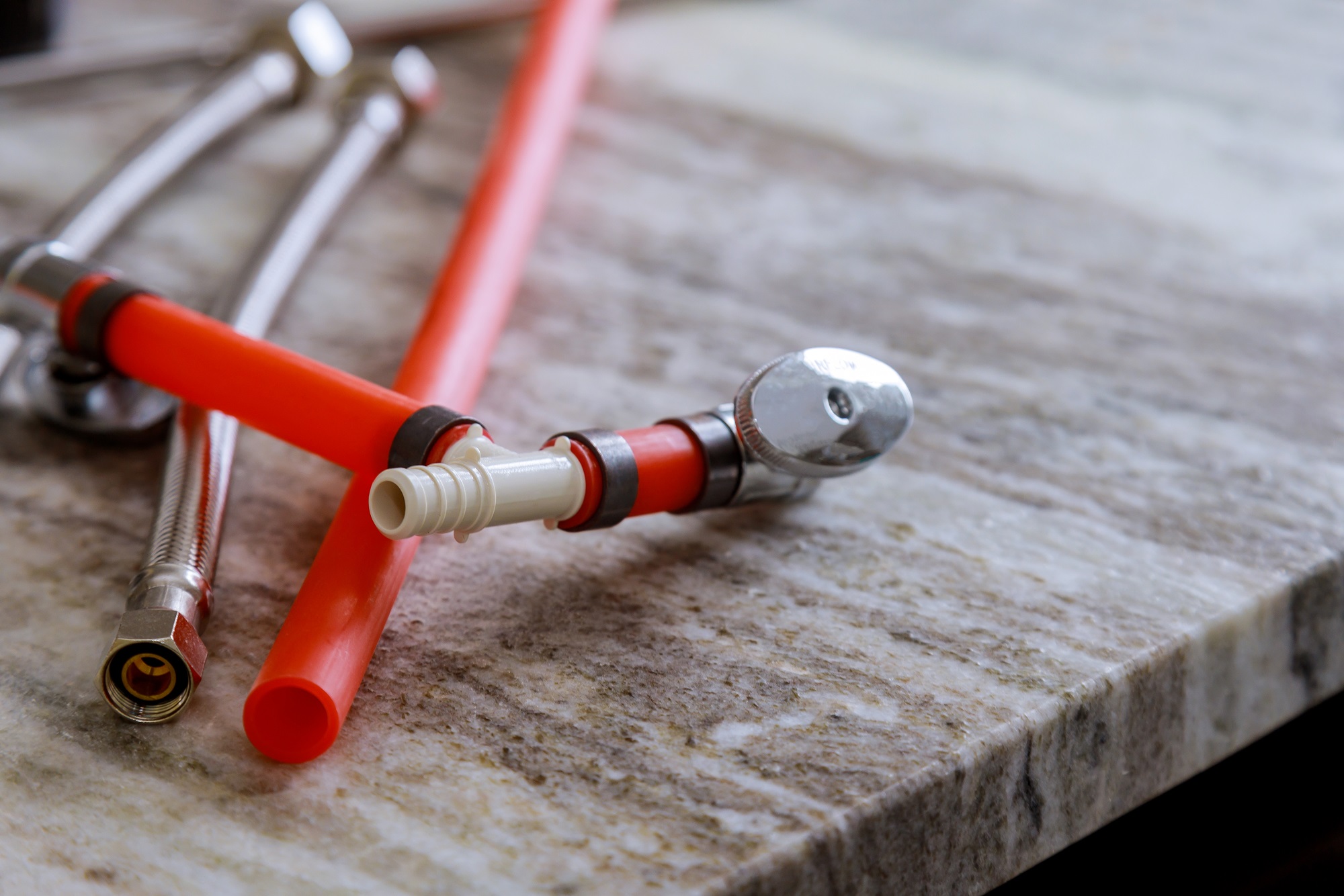
Start with a visual check, then confirm with a pro. Authentic polybutylene is most often a dull gray, though you will also find it in blue for cold-water lines or in black. It is distinctly flexible and usually carries the stamp PB2110. Check the fittings too. The early acetal resin fittings failed most often; later systems moved to more reliable copper or brass crimp rings.
Where to look in a Triangle home
In a typical crawl-space or unfinished-basement home here, PB pipe shows up in a handful of predictable spots:
| Where to check | What you are looking for |
|---|---|
| Foundation wall entry | Gray flexible line coming in from the crawl space or basement |
| Water heater | Supply lines connecting at the top of the tank |
| Ceiling joists | Runs stretched across an unfinished basement |
| Main shut-off / meter | Gray pipe at the shut-off valve or where the meter ties in |
When to call a professional
A visual scan confirms a lot, but before any transaction I have my clients bring in a licensed home inspector or a certified plumber. This is not an area for guesswork. A real inspection goes well past eyeballing the pipe. It covers all visible lines including stubs, risers, and manifolds. It uses a moisture meter to catch latent moisture or active leaks inside wall cavities and subfloors. It examines every fitting, joint, and transition coupling for stress, weeping, or mineral deposits (efflorescence). In tight spots, a plumber may run a boroscope camera to inspect pipe you cannot reach without cutting into the house.
Thinking about selling? I’ll tell you what your property is really worth — no obligation.
Get My Free Home EvaluationWhat it does to your home value and your insurance
From where I sit, polybutylene is a material fact that pulls value down and complicates the sale. The insurance side is the part that surprises owners. Many North Carolina carriers refuse to write a new homeowner's policy on a house with a known PB system, or they write it with a specific exclusion for any water damage from plumbing failure. The ones that do cover it often charge substantially more. That creates real hurdles for buyers who need financing, and it shrinks your pool of buyers on sale day.
There is no bailout from the manufacturers, either. The failures fed one of the largest class-action suits in U.S. history, Cox v. Shell Oil Co., which settled for $950 million in 1995. That fund reimbursed homeowners for replacement, but the deadline to file a claim expired in 2007. The money is gone. Today the cost falls entirely on the current owner, or it becomes a central point of negotiation in a sale.
Your replacement options
If your home has polybutylene, the question is not whether it fails. It is when. A full re-pipe is the only permanent, responsible fix.
The full re-pipe
A full re-pipe means systematically pulling every accessible PB line and installing a new system in modern material, either PEX (cross-linked polyethylene) or copper. Crews cut small access holes in drywall to run the new lines. Depending on the home's size and layout, the work runs three to seven days.
Cost in the Raleigh-Durham area swings on a few factors: the square footage, the number of bathrooms and fixtures, the foundation type (crawl-space access runs cheaper than a slab), the material you choose (PEX-A is often preferred for its flexibility; copper carries a higher material cost), and local labor rates. On average, plan to budget between $4,000 and $15,000 for a full, professional re-pipe.
Do this
- Replace the entire system at once, walls included
- Choose PEX-A or copper for the new lines
- Get quotes from reputable local plumbers before you commit
Skip this
- Partial re-pipes that leave hidden lines in the walls
- Pipe clamps and push-fittings as anything but an emergency stopgap
- Waiting for a leak to force your hand
A partial re-pipe replaces only the easy-to-reach pipe. It costs less upfront, and I advise against it every time. It is a half-measure that hands you a false sense of security while the pipe buried in your walls and ceilings stays a live liability. Clamps and push-fittings are the same story: temporary damage control, never a solution.
Financing the fix
Owners rarely have a re-pipe sitting in checking. Several funding paths work here in North Carolina:
- A Home Equity Line of Credit (HELOC) or a cash-out refinance
- An FHA 203(k) rehabilitation loan, which lets a buyer finance the home and the repair in one mortgage
- A personal loan from a bank or local credit union
- Occasionally, county or municipal home-improvement grants or low-interest loan programs
Thinking about selling? I’ll tell you what your property is really worth — no obligation.
Get My Free Home EvaluationPolybutylene in a real estate transaction
My job in any deal is to manage risk and protect value. Polybutylene sits near the top of that list, and it plays out differently depending on which side of the table you are on.
If you are selling
North Carolina law is not ambiguous here. Sellers must disclose known material defects on the Residential Property and Owners' Association Disclosure Statement (RPOADS), and a polybutylene system qualifies. Hide it and you invite serious legal and financial trouble after closing. My playbook for sellers is simple: disclose fully, hand over any documentation of past repairs or assessments, and strongly consider a pre-listing inspection with replacement quotes in hand. Walking in with the numbers already known lets you negotiate from knowledge instead of fear.
If you are buying
For any Triangle home built between 1978 and 1995, make PB pipe a focus of your due-diligence period. Hire an inspector who knows how to identify these systems and read the subtle signs of degradation. If the inspection confirms it, you have three strong moves: ask the seller to complete a full re-pipe before closing, negotiate a seller credit or price reduction large enough to cover the future replacement, or price the immediate cost into your offer from the start. A known issue does not have to kill a deal. It just has to be handled with a real strategy.
Where the material stands today
The failures of polybutylene drove the industry to build something better. Modern PEX-A (Uponor) and PEX-B have been tested hard and hold up far better against chemical breakdown, so today's buyers get plumbing they can trust for the long haul. The consensus among plumbing experts and building scientists on old PB systems is blunt: there is no safe polybutylene. Every one is prone to eventual failure, and proactive replacement is the only recommended course.
If a re-pipe is not in reach right now, get vigilant. I tell owners to schedule an annual plumbing inspection and watch for the warning signs between visits, then plan and fund the replacement before an emergency plans it for you.
- Check the pipe yourselfLook at the water heater, crawl space, and main shut-off for dull-gray flexible pipe stamped PB2110.
- Book a professional inspectionBring in a licensed inspector or certified plumber for an unbiased read on your system's condition.
- Get real re-pipe quotesLine up reputable Triangle plumbers and price a full PEX or copper replacement, walls included.
- Line up financingA HELOC, cash-out refinance, FHA 203(k), or personal loan turns a surprise into a plan.
- Disclose it if you sellPut polybutylene on the RPOADS, attach your documentation, and negotiate from knowledge.
Thinking about selling? I’ll tell you what your property is really worth — no obligation.
Get My Free Home Evaluation