Moving to Raleigh-Durham? I’ll walk you through neighborhoods, timing, and next steps.
Book My Relocation Strategy CallPeople relocating to the Triangle ask me the same two questions in their first phone call: how far is Raleigh from the beach, and how far are the mountains? The answers are about 2 hours and about 3, and that pairing is one of the most underrated reasons to move here. I'm Tim Clarke, and after 18 years selling real estate across Raleigh, Durham, and Chapel Hill, I've watched this beach-and-mountain access shape where my relocation clients buy, what they pay, and how happy they are five years later. This guide gives you the real drive times, the actual destinations Triangle families use, and how to pick your side of the metro so the geography works for you.
What the Beach-and-Mountain Advantage Is
The Triangle sits in North Carolina's Piedmont region, a plateau of rolling hills between the Atlantic coastal plain and the Appalachian Mountains. Raleigh, our state capital, anchors the east side. Durham brings its industrial heritage and modern renaissance. Chapel Hill rounds it out as the classic college town. Three research universities power the whole thing: NC State, Duke, and UNC-Chapel Hill, whose basketball rivalry divides the region into shades of blue while the quality of life unites it.
The geographic math is simple and it is the whole point. Drive east on I-40 and you hit Wrightsville Beach near Wilmington in about 2 hours. Take US-70 toward Morehead City and you reach the Crystal Coast, including Atlantic Beach and Emerald Isle, in roughly 2 to 2.5 hours. The Outer Banks run a bit longer, closer to 3 to 3.5 hours depending on your target island. Point the car west instead and you're in the Blue Ridge high country around Boone in about 3 hours, or in Asheville along the Blue Ridge Parkway in 3.5 to 4. Almost nowhere else in America can you leave a major tech-and-medical job market on a Friday morning and choose between salt air and a 6,000-foot summit for the same weekend.
That choice is not a travel-brochure footnote. It is a measurable driver of property value and inward migration here. Executive relocations cite it constantly. And it feeds real investment strategies: many of my clients own a primary home in the Triangle plus a second home or vacation rental on the coast or a cabin in the high country, collecting rental income from one landscape while living in the other. The compact geography makes that two-property play practical in a way it simply isn't in bigger states.
A Geographical Sweet Spot
Look at a map of North Carolina and the Triangle sits almost perfectly between the state's two great natural assets. To the east: miles of barrier-island beaches on the Atlantic. To the west: the highest peaks in the eastern United States. Major corridors like I-40 East and US-70 connect us to the coast; I-40 West and US-421 carry us into the mountains. No destination is out of reach for a weekend, and most are in reach for a long day trip. Clients relocating from across the country tell me this accessibility sat near the top of their home-buying decision matrix, and it is a cornerstone of the region's economic resilience.
Who This Lifestyle Fits
The beach-and-mountain advantage matters more to some buyers than others, and I'd rather you know which one you are before you shop. Here's how I sort the newcomers I work with:
| Your Situation | First Question to Ask | Right Next Step |
|---|---|---|
| Relocating from California or New York for a Triangle tech or medical job | Which trips will we actually take: quick beach weekends or mountain escapes? | Shortlist neighborhoods by commute first, then by I-40 direction for your preferred getaway |
| Remote worker choosing a home base | Do I want a metro with airports and amenities, or should I live at the coast or in the mountains full time? | Rent in the Triangle for 3-6 months and test-drive both directions before buying |
| Retiring and want weekend variety without a big-city budget | How much yard, storage, and garage do our boats, bikes, and gear need? | Tour lower-maintenance communities with easy highway access; browse my community guides |
| Family wanting affordable coast trips several times a year | Is a 2-hour drive with kids realistic for us more than twice a summer? | Look at eastern Wake County (Knightdale, Clayton side) to shave 20-30 minutes off every beach run |
| Investor eyeing a beach or mountain rental alongside a Triangle primary | Which market's seasonality matches my cash-flow goals: coastal summer or mountain leaf-and-ski season? | Buy the primary residence first, then let me connect you to vetted coastal and high-country agents |
If you saw yourself in that table, the rest of this guide gives you the destination-by-destination detail. If you're still deciding whether the Triangle itself is right, start with my overview of why Raleigh-Durham is your next home and come back.
What It Is Not
I sell this region hard because I believe in it, but I won't oversell the geography. A few honest boundaries:
- Raleigh-Durham is not a beach town. There is no ocean view, no salt air, no boardwalk here. The nearest sand is a 2-hour drive. If your dream is coffee on a deck overlooking the surf every morning, buy at the coast and treat the Triangle as your city trip, not the reverse.
- It is not mountain living either. The Piedmont's rolling hills top out at a few hundred feet. You will not ski out your back door or wake up to a 5,000-foot ridgeline. Boone and Asheville are weekend range, not commuting range.
- Summer beach traffic is real. A 2-hour Wrightsville run can stretch past 3 on a July Friday afternoon, and US-70 toward the Crystal Coast has its share of small-town lights. Smart Triangle families leave Thursday night or Saturday at dawn.
- Peak seasons bring crowds at the destinations too. The Outer Banks in mid-summer and the Parkway during October leaf season are busy. Still far more manageable than California's coastal crush, but not empty.
- The drive times are averages, not promises. Ocracoke requires a ferry. Hatteras adds an hour past Nags Head. Kuwohi in the Smokies is closer to 5 hours than 4. Plan by destination, not by slogan.
None of that changes my thesis. It just means the advantage rewards people who will actually use it, and I'd rather match you to the right expectation than to a disappointment.
Moving to Raleigh-Durham? I’ll walk you through neighborhoods, timing, and next steps.
Book My Relocation Strategy CallHow I Help Newcomers Use It
Here's where geography becomes buying strategy. Proximity to both coasts and peaks shapes housing market dynamics across the Triangle, and homes that genuinely deliver easy getaway access command a premium. My job is making sure you pay that premium only where it pays you back.
Pick your side of the Triangle by trip direction. If your family runs to the beach four times a summer, eastern Wake County communities like Knightdale and nearby Clayton put you on US-70 and I-40 East before the rest of the metro finishes loading the car. If the mountains call louder, western Durham and Orange County towns like Hillsborough feed you straight onto I-40 West and I-85. That single decision can save you 30 to 45 minutes on every trip for as long as you own the home.
Weigh highway access against setting. Some buyers want a property two minutes from an I-40 on-ramp for rapid getaways. Others happily trade a longer drive for a secluded wooded lot near Falls Lake or Jordan Lake, effectively putting a mini-getaway in their backyard. There's no wrong answer, but there is a wrong answer for you, and I'll ask the questions that surface it. My guide to exploring Raleigh-Durham neighborhoods breaks down the sub-markets, and my transportation overview covers the corridors in detail.
Sellers, market the geography. When I list a Triangle home, the listing does more than count bedrooms. I build the lifestyle case: local assets like Falls Lake plus honest day-trip itineraries east and west. Out-of-state buyers in particular need help envisioning the two-hours-to-sand, three-hours-to-summits life, and a listing that paints it credibly supports a stronger offer price. It's a genuine differentiator in a competitive market.
Investors, sequence it. Secure the Triangle primary first, since the job market anchors everything. Then use the region's reach to shop the coastal second-home market or the high-demand mountain cabin rental market. This geographic arbitrage produces personal enjoyment, rental income potential, and long-term appreciation from a single home base.
The Crystal Coast: Calm Water, Family Sand
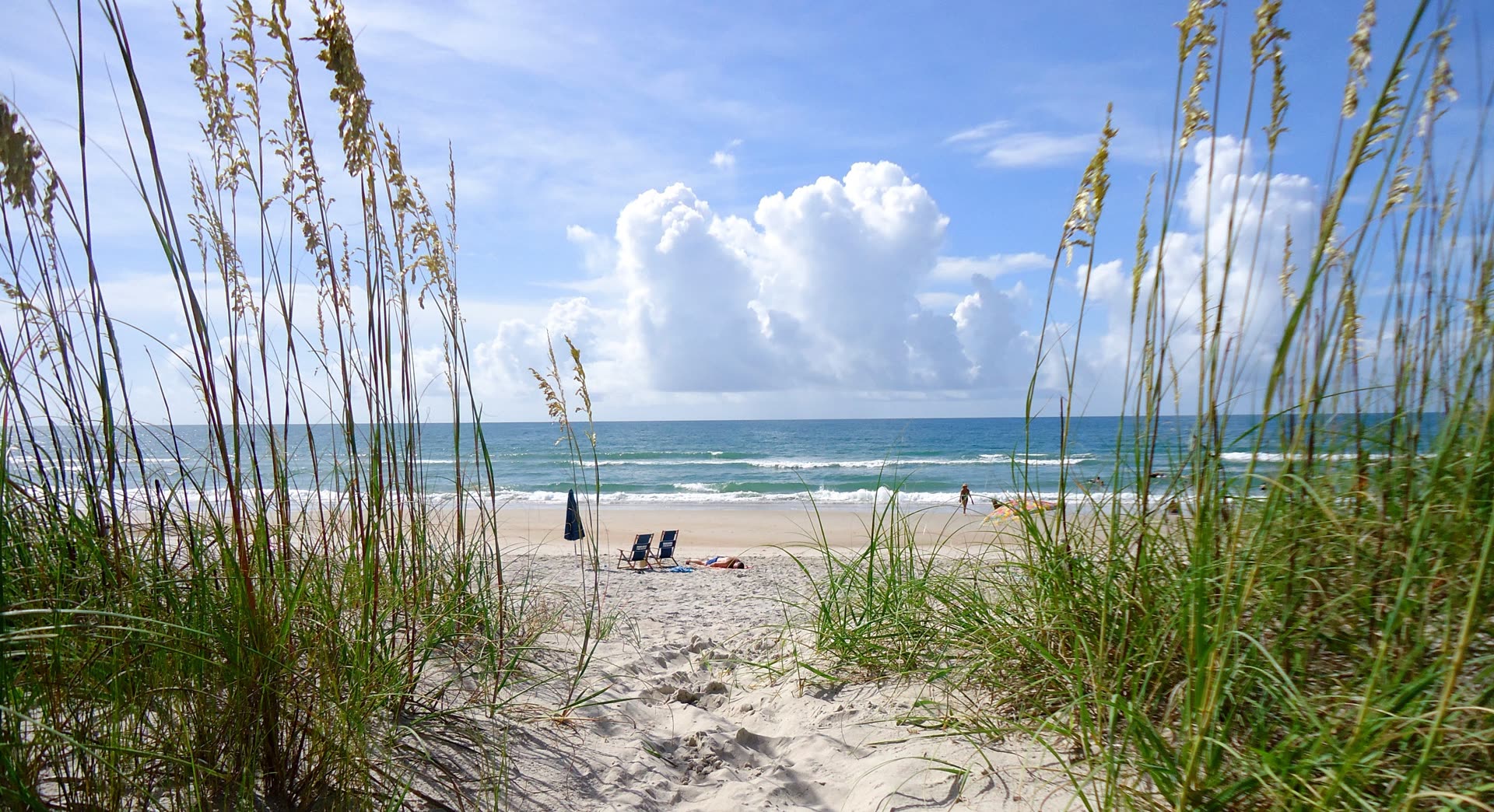
Roughly 2.5 hours down US-70, the Crystal Coast is the refined, family-friendly stretch of our coastline and a prime target for second-home buyers. Its south-facing beaches deliver calmer water and a more relaxed pace than the wilder Outer Banks. The key communities:
- Atlantic Beach: The region's oldest resort town, with wide, pearlescent beaches and every tier of accommodation. Neighboring Fort Macon State Park adds Civil War-era history and excellent fishing.
- Emerald Isle: The "Jewel of the Crystal Coast," known for exceptionally clear water and soft sand. Fishing, surfing, and quintessential seaside downtime, and one of the most requested second-home markets among my clients.
- Pine Knoll Shores: An upscale, eco-minded residential town built into preserved maritime forests and sand dunes, home to the North Carolina Aquarium at Pine Knoll Shores, a reliable hit with kids.
- Indian Beach and Salter Path: Quiet retreats with tranquil beaches and scenic sound views for buyers who want the coast without the crowds.
The Outer Banks: Wild Beaches and Pirate History
The Outer Banks (OBX) sit further out, generally 3 to 3.5 hours from the Triangle, and they reward the extra miles with a landscape unlike anywhere else on the East Coast. These barrier islands earned the name "Graveyard of the Atlantic" for the shipwrecks their shifting sandbars caused, and those same hidden inlets sheltered pirates including Blackbeard, who is said to have met his end near Ocracoke. That rugged history still flavors the islands, which draw buyers and renters seeking raw nature and serious recreation. Investment here typically means high-demand vacation rental properties with strong summer seasons. The tour, north to south:
- Northern Beaches: In Corolla, wild Spanish mustangs roam beaches you can drive with a 4x4. Nearby Duck offers maritime forests, upscale local shops, and water calm enough for both watersports and family swimming.
- Central Hub: Kitty Hawk and Kill Devil Hills form the historic heart, with wide public beaches, full amenities, coastal wildlife reserves, and the Wright Brothers National Memorial. Just south, Nags Head delivers the massive dunes of Jockey's Ridge State Park (hang gliding included) and a 1,000-foot fishing pier, while undeveloped Coquina Beach offers unspoiled shoreline for surfing and surf fishing.
- Hatteras Island: A purist's paradise. Villages like Rodanthe offer both ocean and sound access for surfing and kiteboarding, and the island culminates at Cape Point Beach, a bucket-list destination for serious anglers.
- Ocracoke Island: Reachable only by ferry or air, with unspoiled beaches, wild ponies, and a historic village. True seclusion, and a distinctive niche market because of it.
Moving to Raleigh-Durham? I’ll walk you through neighborhoods, timing, and next steps.
Book My Relocation Strategy CallThe Southern Coast: Wilmington and the Brunswick Islands
Head southeast on I-40 and in about 2 hours you reach the Wilmington-area beaches, the most accessible ocean for most Triangle residents and ideal for both quick getaways and long-term investment.
- Wilmington Area: Wrightsville Beach is the default day-trip answer for much of Raleigh, with a vibrant surf culture, extensive water sports, and a relaxed, upscale feel. Carolina Beach brings a lively boardwalk, an amusement park, and 4x4 beach driving. Kure Beach stays quieter, with a historic pier and the Fort Fisher State Recreation Area next door.
- The Brunswick Islands: A favorite of families and retirees. Oak Island pairs a family-friendly town with a notable lighthouse and abundant wildlife. Ocean Isle Beach and Holden Beach are loved for wide-open shorelines and community feel, with Holden Beach hosting the annual NC Festival by the Sea. Sunset Beach earned a spot on National Geographic's "21 Best Beaches In The World." And Bald Head Island, car-free and ferry-access only, is the premium luxury play: pristine, protected, exclusive.
The Blue Ridge Mountains: Peaks, the Parkway, and the Biltmore
Point west and in 3 to 4 hours you're in the Blue Ridge, the Appalachian subrange holding the highest concentration of major peaks in the Eastern U.S. This is the country that forged pioneers like Daniel Boone and absorbed the Scots-Irish settlers whose music, crafts, and resilience still define the high country. That heritage lives on at the Grandfather Mountain Highland Games, one of the largest gatherings of Scottish clans in the world.
The Black Mountains hold the biggest elevations east of the Mississippi: Mount Mitchell at 6,683 feet, flanked by Mount Craig (6,647'), Balsam Cone (6,611'), and Mount Gibbes (6,519'). The Blue Ridge Parkway, "America's Favorite Drive," threads through it all, connecting communities like Little Switzerland with landmarks like the rugged profile of Grandfather Mountain (5,945'), Mount Pisgah (5,722'), and the dramatic quartz outcrop of Devil's Courthouse (5,719'). Further south, the Great Balsam Mountains offer accessible summits like Richland Balsam (6,411') and the 360-degree views from Black Balsam Knob (6,214').
Then there's the Biltmore Estate in Asheville, America's largest private home. The 250-room Gilded Age chateau pioneered indoor plumbing and electricity in a private residence, and today its 8,000-acre estate offers house and garden tours, an award-winning winery, and outdoor recreation. Having a landmark of that caliber within an easy drive is a cultural asset most metros can't touch.
The Great Smoky Mountains: The Far High Country
Push a bit further west and the Great Smoky Mountains National Park straddles the North Carolina-Tennessee line. It's a UNESCO World Heritage Site, America's most visited national park, and genuine high country with dozens of peaks over 6,000 feet. The spine runs through Kuwohi (formerly Clingmans Dome) at 6,644 feet, the park's highest point, alongside Mount Guyot (6,621'), Mount Chapman (6,417'), and Mount Collins (6,188'). Serious hikers target Andrews Bald (5,906') or the remote Tricorner Knob (6,119') for a true wilderness day. The park is a biodiversity sanctuary, and wildlife encounters on its vast trail system are a routine, unforgettable part of visiting. For Triangle residents it's the long-weekend tier rather than the day-trip tier, and worth every hour.
Moving to Raleigh-Durham? I’ll walk you through neighborhoods, timing, and next steps.
Book My Relocation Strategy CallWhat Living Between Them Looks Like Year-Round
The proximity shapes daily life here, not just vacations. It has built a community that values outdoor recreation, conservation, and work-life balance, and it shows in our livability rankings.
- Spring and summer: kayaking on Jordan Lake, hiking the trails at William B. Umstead State Park, beach weekends east.
- Fall: mountain biking Durham's Duke Forest, leaf-season drives on the Blue Ridge Parkway.
- Winter: the Triangle itself sees minimal snow, but Sugar Mountain and Beech Mountain near Boone put skiing and snowboarding about 3.5 hours away.
The outdoor culture also drove the preservation of serious in-town green space: Raleigh's extensive Capital Area Greenway System and Durham's rugged Eno River State Park are now core urban infrastructure, not afterthoughts. Economically, the natural capital powers a thriving tourism sector and a strong market for outdoor recreation businesses, and research consistently ties accessible nature to lower stress, better air quality, and more physical activity. Healthier residents, more productive workforce, higher overall quality of life. For a deeper look at day-to-day amenities, see my guide to lifestyle and recreation in Raleigh-Durham.
How Raleigh-Durham Compares to California, Oregon, and Virginia
Other states offer beach-plus-mountain access too, so let's be fair about it. Having helped clients relocate from all three of the usual comparisons, here's my honest scorecard.
California: Beauty at a Price
California's portfolio is stunning, from the Pacific Coast Highway to the Sierra Nevada. The catches are real, though:
- Cost of living: California's desirable coastal and mountain-adjacent communities are prohibitively expensive for many households. Raleigh-Durham's cost-of-living-to-income ratio lets residents actually enjoy these amenities without extreme financial strain.
- Crowding and traffic: California's marquee destinations suffer severe congestion at peak times. Our crowds are more manageable and access is more efficient.
- Natural disasters: Earthquakes, wildfires, and drought are persistent California risks. No region is immune to hazards, but the Triangle's mid-Atlantic position offers a more stable, predictable environment.
Oregon: Beautiful but Distant
Oregon's rugged coast and volcanic Cascade peaks are justly celebrated. Three drawbacks against the Triangle:
- Weather: Western Oregon means prolonged rain and gray skies. Raleigh-Durham's temperate four-season climate with generous sunshine supports year-round outdoor life far better.
- Accessibility: Oregon's geographic spread puts real distance between population centers and both coast and mountains. Central North Carolina's compact geography keeps both within day-trip or weekend range.
- Economic opportunity: Oregon's economy is growing but lacks the depth of the Raleigh-Durham job market, a global leader in technology, life sciences, and advanced manufacturing anchored by Research Triangle Park (RTP).
Virginia: Close, but Not Quite
Our northern neighbor offers a genuinely comparable mix, but the Triangle keeps the edge in four areas:
- Beach quality: Virginia Beach has its appeal, but it can't match the water quality, natural beauty, and character of the Outer Banks or Crystal Coast. Our barrier islands offer a more diverse coastal experience.
- Mountain scale: Virginia's mountains lack the elevation and ecological richness of North Carolina's Appalachian and Smoky ranges. Mount Mitchell alone outclasses anything in the commonwealth.
- Central location: The Triangle's position grants balanced, near-equidistant access to coast and high country. Much of Virginia forces residents to favor one over the other.
- Cultural scene: The synthesis of Southern hospitality, world-class research institutions (Duke, UNC, NC State), and a nationally acclaimed arts and culinary scene gives our region a distinct identity.
The Raleigh-Durham Advantage
Stack it all up and the Triangle delivers:
- Affordability: a cost of living that lets more people actually live the beach-and-mountain lifestyle instead of admiring it.
- Accessibility: dramatically shorter travel times to diverse, world-class natural environments.
- Economic opportunity: a resilient, globally competitive job market in future-focused industries.
- Cultural richness: Southern charm, intellectual capital, and cosmopolitan amenities in one metro.
- Educational excellence: top-tier universities and highly rated public and private schools.
- Mild climate: four real seasons that support outdoor life all year.
California, Oregon, and Virginia each have their merits. But here you aren't forced to trade coastal proximity against mountain access, affordability against beauty, or career growth against quality of life. You can strategically have all of it.
Final Thoughts from Tim
I've built my own life on this geography, and after 18 years helping families and investors put down roots here, I can tell you the two-hours-to-sand, three-hours-to-summits reality never gets old. It shows up in property values, in weekend group texts, and in how quickly newcomers stop feeling like newcomers. If you're weighing a move, my team and I will help you choose the side of the Triangle that matches the trips you'll actually take, and if you're already here, we'll help you buy, sell, or build with that advantage working for you. Start browsing homes on my Triangle home search whenever you're ready, and reach out when you want a local's honest read on any of it.
Moving to Raleigh-Durham? I’ll walk you through neighborhoods, timing, and next steps.
Book My Relocation Strategy CallFrequently Asked Questions About Raleigh-Durham's Beach and Mountain Access
How far is Raleigh from the beach?
What beach do people from Raleigh go to?
How far are the mountains from Raleigh?
Can you do a day trip to the beach from Raleigh?
Where do people from Raleigh go skiing?
Is Raleigh a good base for both beach and mountain trips?
Moving to Raleigh-Durham? I’ll walk you through neighborhoods, timing, and next steps.
Book My Relocation Strategy Call