Ready to find the right home in the Triangle? Let’s talk strategy before you tour a single property.
Schedule My Home ConsultationKEY TAKEAWAYS
- The NC coast sits roughly two to three hours from the Triangle—the Crystal Coast, Topsail Island, and the Cape Fear-area beaches are close enough for a Friday-afternoon start.
- Flood insurance is a separate policy under the NFIP, and lenders require it in high-risk V and VE zones—pull the flood zone and an elevation certificate before you fall for the porch view.
- Wind and hail coverage is often excluded from standard coastal homeowners policies; many owners insure through the North Carolina Insurance Underwriting Association, the “Beach Plan.”
- CAMA setback lines and local erosion rates decide what you can build, rebuild, or expand on an oceanfront lot.
- Rental income can offset carrying costs, but management companies typically take 20–30% and town rules vary—buy a house you'd still want if it never rented a week.
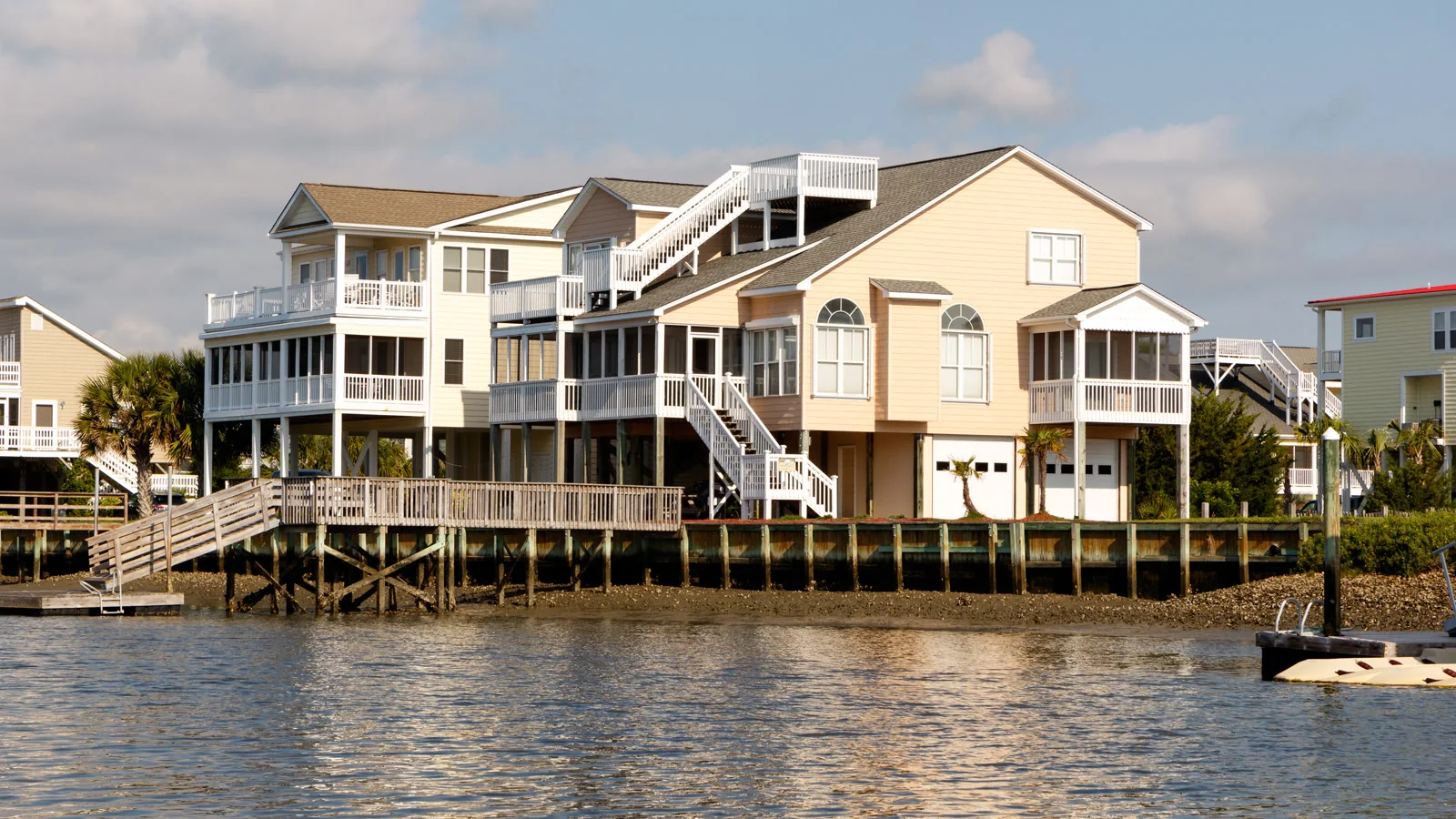
A beach house within striking distance is one of the quiet perks of living here. From most of the Triangle you can load the car after Friday lunch and have your feet in the sand before dinner. That reach in every direction is part of the Triangle's central location, and in my 17+ years helping Raleigh-Durham families, I've watched plenty of them turn that drive into a second front door on the coast.
But a beach house is not a Triangle house with better sunsets. The diligence list is different—flood maps, wind coverage, erosion lines, septic in sandy soil—and the buyers who do well are the ones who work that list before they write an offer. This guide covers what I tell my own clients when the conversation turns coastal.
Buy the beach house you'd still want if it never rented a single week.
Where Triangle owners buy on the NC coast
Four stretches of coastline absorb most of the second-home money that leaves the Triangle, and each has its own personality.
| Stretch | Towns | What it's like |
|---|---|---|
| Outer Banks | Corolla, Duck, Kitty Hawk, Kill Devil Hills, Nags Head | A 200-mile barrier-island chain with the deepest vacation-rental inventory in the state; the Wright Brothers National Memorial and Cape Hatteras National Seashore anchor the history and the wild beauty. Longest drive of the four. |
| Crystal Coast | Beaufort, Morehead City, Atlantic Beach, Emerald Isle | Harbor towns and clear water on Bogue Sound—the boating-and-fishing pick, with Beaufort's historic district and the Croatan National Forest nearby. |
| Topsail Island | Surf City, Topsail Beach, North Topsail Beach | Quieter family beaches at one of the shortest drives from Raleigh; erosion diligence matters most at the island's north end. |
| Cape Fear coast & southern beaches | Wrightsville Beach, Carolina Beach, Kure Beach, Oak Island, Holden Beach, Bald Head Island | The widest spread of price points, from walkable surf towns to ferry-access Bald Head Island and gated Figure Eight Island at the top of the market. |
One more variable worth tracking: future infrastructure. Long-running discussions about a mid-Currituck bridge, for example, could reshape drive times and values on the northern Outer Banks. Ask what's planned before you buy, not after.
The coastal diligence list
Here's what changes when the property sits on a barrier island instead of a Wake County cul-de-sac.
Flood zones and NFIP insurance
Start with the FEMA flood map, not the listing photos. Coastal properties fall into mapped risk zones, and if the home sits in a high-risk zone—typically V or VE—your lender will require flood insurance, which is a separate policy under the National Flood Insurance Program, not part of your homeowners coverage. Premiums swing widely based on zone, elevation, and the structure itself, and in the highest-risk pockets of the Outer Banks they can run well into the thousands per year.
An elevation certificate is your friend here. It documents where the house sits relative to the Base Flood Elevation (BFE), it can materially change what you pay for flood coverage, and it's often required in high-risk zones. The same discipline I lay out in my guide to flood-plain diligence applies double at the beach: know the zone, know the elevation, and price the risk before you commit.
Wind, hail, and the Beach Plan
Here's the surprise that catches most first-time coastal buyers: on much of the coast, wind and hail damage is excluded from standard homeowners policies. Many mainstream insurers simply won't write high-risk beach addresses at all, which is why the North Carolina Insurance Underwriting Association—known as the “Beach Plan”—exists. Plan on a homeowners policy, a separate wind and hail policy, and flood coverage as three distinct line items, and get real quotes during due diligence rather than estimating.
Erosion, setbacks, and CAMA
North Carolina regulates its shoreline through the Coastal Area Management Act—CAMA. In practical terms, CAMA sets oceanfront setback lines that determine how close to the water you can build or rebuild, and most construction inside designated Areas of Environmental Concern (AECs) needs a CAMA permit on top of ordinary building approvals. Larger projects in sensitive areas can trigger environmental impact assessments.
Setbacks are tied to erosion, and erosion is not theoretical here. Stretches near Nags Head and North Topsail Beach have seen real shoreline retreat over the years, while towns like Wrightsville Beach run beach nourishment projects to hold the line. Looking long term, the North Carolina Coastal Resources Commission has projected sea level rise of up to 39 inches by 2100 for parts of the coast. None of that should scare you off the beach—it should just push you to ask for the local erosion rate, the setback line, and the nourishment history on any oceanfront lot.
Septic on coastal soils
Plenty of beach homes run on septic, and coastal soil is a harder test than Triangle clay: sandy ground, high water tables, and salt exposure all stress a drainfield. Get a dedicated septic inspection, confirm the permitted bedroom count matches the house, and ask how the system has handled peak rental occupancy. Some communities use shared community water or septic arrangements instead—understand exactly what you're buying into before closing.
The coastal inspection stack
Salt air, wind, and humidity work on a house year-round, so the inspection list grows.
- Structure and foundation — settlement and water damage show up faster in older coastal homes; pilings and elevation matter.
- Moisture and mold — a specialized inspection is worth it, especially on homes that sit empty for stretches of the year.
- Wind mitigation — impact-resistant windows, reinforced roof-to-wall connections, and proper elevation affect both survival and insurance pricing.
- Title and water rights — on soundfront property along Bogue Sound or Pamlico Sound, riparian rights govern docks and water access; some parcels carry public beach-access easements, and land near protected areas like Cape Lookout National Seashore or Zeke's Island Reserve can carry conservation easements that restrict what you build.
- HOA documents — coastal associations range from simple road agreements to strict architectural control and rental rules. Read them all.
Financing and carrying costs
Lenders treat a second home differently than a primary residence: expect a larger down payment and a somewhat higher rate, and stricter terms still if the property is underwritten as an investment. At the top of the market—think Figure Eight Island or Bald Head Island—prices push many buyers into jumbo territory, with tighter qualification standards. Government-backed programs mostly don't help here: FHA loans face restrictions in many coastal settings, though USDA loans occasionally work in rural coastal communities for eligible buyers.
Property taxes vary meaningfully by county—New Hanover County, for instance, runs higher rates than Carteret County, home to Emerald Isle and Atlantic Beach. Stack the full carrying cost—mortgage, three insurance policies, taxes, HOA, and a maintenance budget that respects salt air—before you decide what the house really costs per year.
Ready to find the right home in the Triangle? Let’s talk strategy before you tour a single property.
Schedule My Home ConsultationRental income, honestly
Yes, peak-season weeks in Duck, Emerald Isle, or Holden Beach can produce real revenue, and coastal values in strong markets have historically appreciated well. But I've seen too many buyers pencil out gross rents and skip the subtraction. Here's the honest ledger.
WHAT THE RENTAL MATH GIVES YOU
- Strong peak-season demand in established vacation towns
- Meaningful offset against mortgage, insurance, and taxes
- Historically steady appreciation in the best-located markets
- A house that earns while you're not using it
WHAT IT DOESN'T
- Management companies typically keep 20–30% of rental income
- Insurance, maintenance, and turnover costs eat into the gross
- Some towns restrict short-term rentals—verify local rules first
- Shoulder seasons run quiet; peak weeks carry the year
- Renting it yourself saves the fee but costs real time
My rule for clients: run the numbers assuming a mediocre rental year, and buy only if you'd still be happy owning the house. Rental income should be the bonus, not the load-bearing wall.
Hurricane season and the ownership rhythm
Owning on the coast means owning through hurricane season. Build an emergency plan—evacuation routes, an emergency kit, and a list of local warning systems—and expect to check roofs, decks, and exterior paint after big storms. Salt corrosion is patient, so a standing maintenance schedule protects the investment far better than reacting to problems.
The calendar cuts the other way too. The buying market runs hottest spring through early fall alongside the tourist season; winter often brings less competition and more motivated sellers, and it shows you the coast at its quietest—including how thin services get on remote stretches of the Outer Banks in the off-season. If the drive or the ownership rhythm gives you pause, a lake house twenty minutes from home may fit better than a beach house three hours away—my guide to lakefront buying closer to home walks through that option.
How I'd sequence the purchase
- Pick your stretch by drive time and personality. Crystal Coast for boating, Topsail for quiet, the southern beaches for range, the Outer Banks for classic vacation-rental country.
- Build the full annual budget. Mortgage, flood, wind and hail, homeowners, taxes, HOA, and maintenance—before you shop, not after.
- Pull the flood zone, erosion rate, and elevation certificate on any serious candidate before you write the offer.
- Get real insurance quotes and a coastal-savvy lender lined up during due diligence, and consider offer contingencies for wind mitigation findings and flood insurance availability.
- Order the coastal inspection stack—structure, moisture and mold, wind mitigation, septic—and check title for easements and riparian rights.
- Close with eyes open. Set up utilities, put the hurricane plan and maintenance schedule in writing, and enjoy the house. Bring me the idea early, and my team and I will help you pressure-test the numbers before you commit.
Ready to find the right home in the Triangle? Let’s talk strategy before you tour a single property.
Schedule My Home ConsultationFrequently Asked Questions
Ready to find the right home in the Triangle? Let’s talk strategy before you tour a single property.
Schedule My Home Consultation