Thinking about selling? I’ll tell you what your property is really worth — no obligation.
Get My Free Home EvaluationIf you own a home in the Triangle, the two things keeping you warm in January and moving air in July are the furnace and the ductwork feeding off it. Buyers rarely see them. Inspectors always do. I'm Tim Clarke, and after 18 years selling homes across Raleigh, Durham, Chapel Hill, and Cary, I've watched these two systems make or break more deals than any granite countertop ever did.
This page is for homeowners who want to understand the heating and air-distribution side of their home: how a furnace works, when it's failing, and why leaky ducts quietly waste money in every room. For the whole picture, including cooling and the full split system, start with the full HVAC system overview and come back here for the deep dive.
The 30-second version
- The furnace heats the air; the ductwork delivers it. A great furnace on bad ducts is a wasted investment.
- A cracked heat exchanger is a carbon-monoxide safety issue and an automatic replacement flag on any inspection.
- AFUE measures efficiency. Old units waste 30 cents on the dollar; high-efficiency models hit 95% or higher.
- Leaky ducts in an attic or crawl space raise your bills, drag in dusty air, and leave rooms that never feel right.
- Sealing, insulating, and correctly sizing ducts often matters more than the furnace brand on the label.
How a furnace actually works
In most Triangle homes, the furnace is the heart of a forced-air system. It doesn't just make heat, it pushes conditioned air through the house using a network of ducts. In most modern homes the furnace and the central air conditioner are part of one split system: they share the same indoor blower motor and the same ducts to move both hot and cold air. That's why the furnace matters year-round, not just in winter.
A furnace is more than a box that gets hot. Knowing its core parts helps when you're reading an inspection report or talking to a tech.
- Heat exchanger. The most critical part. It transfers combustion heat into your home's air while keeping toxic gases separate. A crack here can leak carbon monoxide and is always flagged for immediate replacement.
- Blower motor. The fan that pushes air through the ducts. Older PSC motors give way to newer ECM motors that draw far less electricity and run at variable speeds for steadier comfort.
- Burners and ignition. Where fuel, usually natural gas, is ignited. Modern systems use a durable hot-surface ignitor instead of an old pilot light.
- Flue or vent pipe. The exhaust pipe that carries carbon monoxide and other byproducts out of the house. Proper slope and sealing keep it safe.
Types of furnaces and what they cost you
Picking a furnace is about more than a brand name. The technology inside decides comfort, efficiency, and what you pay every month.
By fuel
- Natural gas is the most common and cost-effective option in Raleigh-Durham.
- Rural homes without a gas line often run propane or a fully electric furnace.
- Fuel type changes the monthly operating cost, so factor it into any home's budget.
By firing rate
- Single-stage runs full-blast on and off, nothing in between.
- Two-stage adds a low and high setting for longer, quieter, steadier cycles.
- Modulating adjusts output in tiny increments for the most precise, efficient control.
Efficiency, in one number
The Annual Fuel Utilization Efficiency (AFUE) rating tells you what share of fuel becomes usable heat. An old furnace might sit at 70% AFUE, meaning 30 cents of every dollar goes up the flue. Modern high-efficiency units reach 95% or higher. That gap shows up on your utility bills and, when you sell, in how confident buyers feel about the mechanicals.
Signs your furnace is failing
Furnaces rarely quit all at once. They warn you first. Watch for these before a January breakdown catches you off guard.
- Rooms that never reach the thermostat setting, or wildly uneven temperatures floor to floor.
- Utility bills climbing while your habits stay the same.
- Short cycling, where the furnace switches on and off in quick bursts.
- Rattling, banging, or squealing that wasn't there last winter.
- A yellow or flickering burner flame instead of a steady blue one.
- Any carbon-monoxide detector alarm, which is a stop-everything, call-a-pro moment.
Most furnaces last roughly 15 to 20 years with regular service. Documented maintenance records are one of the simplest things a seller can hand a buyer to build trust in the system.
Thinking about selling? I’ll tell you what your property is really worth — no obligation.
Get My Free Home EvaluationThe unseen half: your ductwork
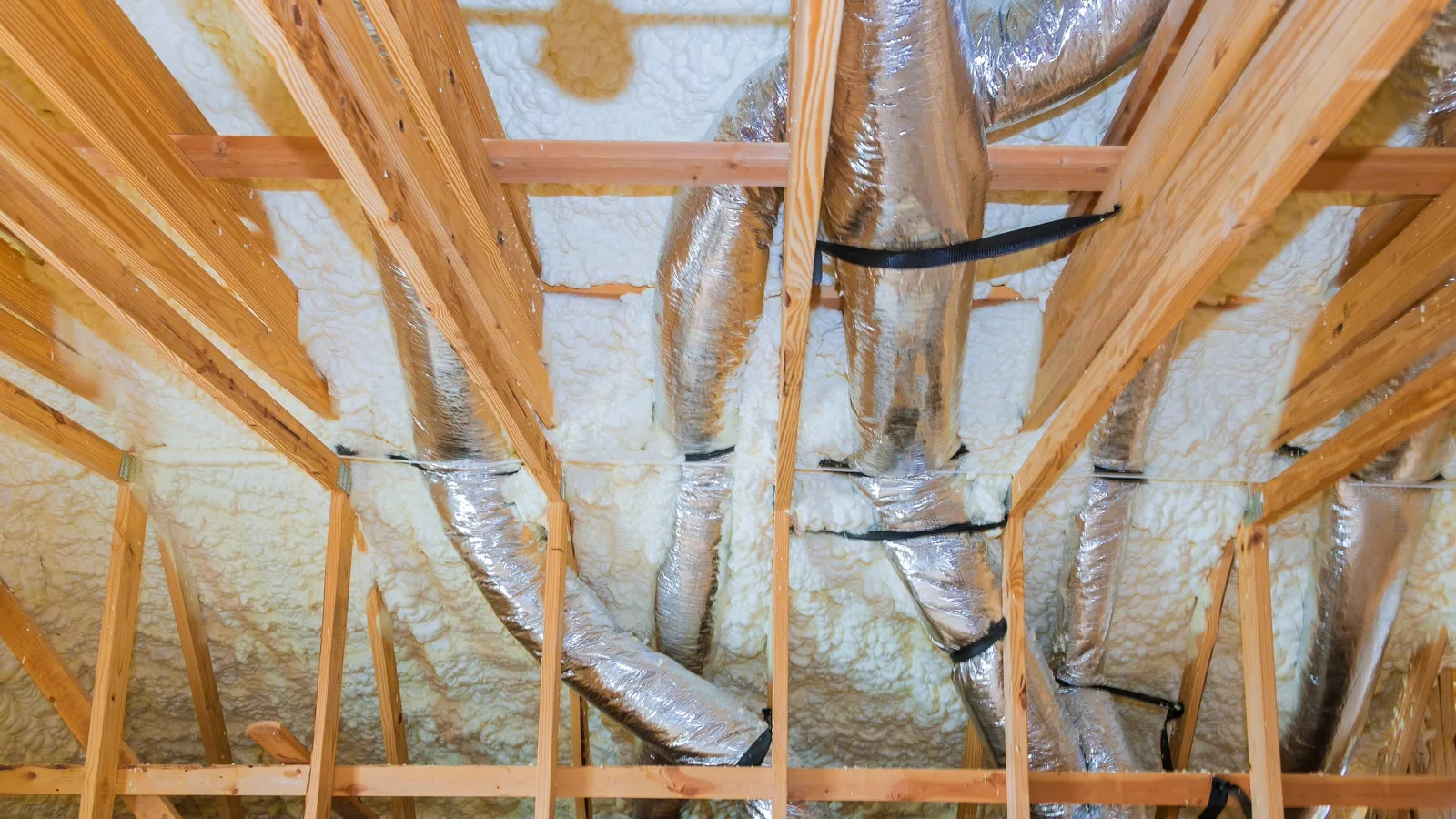
Think of ductwork as the circulatory system for your home's air. If the furnace is the heart, the ducts are the arteries. Even an expensive, high-efficiency furnace is wasted on leaky, undersized, or badly designed ducts. From a resale angle, duct condition is a direct read on a home's energy efficiency and indoor air quality.
What ducts are made of
- Galvanized steel. Rigid, durable, with a smooth interior that moves air well. A premium material, but more labor to install.
- Flex duct. Cheap and easy to run through attics and crawl spaces, which makes it common. It also kinks, crushes, and tears easily, choking airflow and creating big inefficiencies.
- Duct board. Compressed fiberglass with good insulating value. Over time the interior lining can degrade and shed fiberglass particles into the airstream if it's damaged or poorly sealed.
The parts of a duct system
- Plenum. The large box on the furnace where conditioned air collects before distribution.
- Trunk lines. The main highways carrying big volumes of air to each zone of the house.
- Branch ducts. The local roads running from the trunks to individual room vents.
- Registers and grilles. Supply vents deliver air to a room; return grilles pull it back to be re-conditioned. Too few returns in key rooms is a common design flaw.
Why leaky ducts quietly cost you
Leaky ductwork is one of the biggest and most overlooked sources of energy waste in a home. When ducts in an unconditioned attic or crawl space leak, they pull in dusty, humid, sometimes moldy air and spread it through the house. That tanks your indoor air quality and forces the furnace to work harder. The usual tells are high utility bills, rooms that never heat evenly, and dust that keeps coming back.
The fix is professional duct sealing, either with mastic sealant by hand or an interior process like Aeroseal, which can sharply improve performance. Ducts running through unconditioned space also need insulation to a solid R-value, typically R-6 or R-8. Uninsulated ducts in a 120-degree summer attic make the system run nonstop while delivering lukewarm air, and any sharp inspector will catch it. Since so much of this happens under the house, it's worth understanding how crawl-space sealing helps your ducts stay clean, dry, and efficient.
Sizing and balancing
Good duct systems are designed with an industry-standard Manual D calculation so each room gets the right amount of airflow. Skip that step and you get the classic complaint I hear all the time: the bedroom over the garage is freezing while the living room is stuffy. Proper sizing and balancing, not a bigger furnace, is usually the answer.
What this means when you buy or sell
The furnace and its ductwork aren't separate things, they're one system, and their combined health drives a home's safety, running costs, and value. A brand-new high-AFUE furnace bolted to leaky, uninsulated, poorly designed ducts is money left on the table. A well-maintained furnace with service records, paired with sealed and insulated ducts, is a genuine asset that tells buyers the owner cared.
Heating is one piece of a home's mechanical package. Once you've got the furnace and ducts sorted, the next box in the utility room usually deserves attention too, so it's worth reading up on choosing a water heater that fits your household. For a note on my lane here: I'm a Realtor, not a licensed HVAC contractor, so have a qualified technician inspect and service any system before you rely on their findings.
Thinking about selling? I’ll tell you what your property is really worth — no obligation.
Get My Free Home EvaluationFrequently Asked Questions
If you're weighing a purchase, prepping to sell, or just trying to make sense of an inspection report, my team and I are glad to help you read the mechanicals and figure out what actually matters for value here in the Triangle. Reach out and we'll follow up.
Thinking about selling? I’ll tell you what your property is really worth — no obligation.
Get My Free Home Evaluation