Thinking about selling? I’ll tell you what your property is really worth — no obligation.
Get My Free Home EvaluationQuick Takeaways
- Owning your system, not leasing it, is what captures the federal tax credit and adds real value to your home — a leased system can complicate a future sale.
- An average Triangle installation runs roughly $15,000 to $25,000, with most homeowners hitting payback in about 7 to 10 years.
- Duke Energy’s net metering credits your extra production, and North Carolina exempts the added solar value from your property tax.
- Incentive percentages and net-metering terms shift — confirm current federal, state, and Duke Energy incentives before you buy.
In my 17+ years steering clients through the Raleigh-Durham Triangle, I’ve watched solar move from a novelty to a line item on the home-value ledger. I don’t just sell houses. I build long-term asset value, and a well-designed solar array is one of the clearer ways to do it — when the numbers actually work for your roof and your goals.
This is the strategic read: what the technology does, what it costs, how it pays back, and when to walk away. I invent nothing here, and you shouldn’t buy on a salesperson’s slide deck either.
Why Triangle Homeowners Are Going Solar
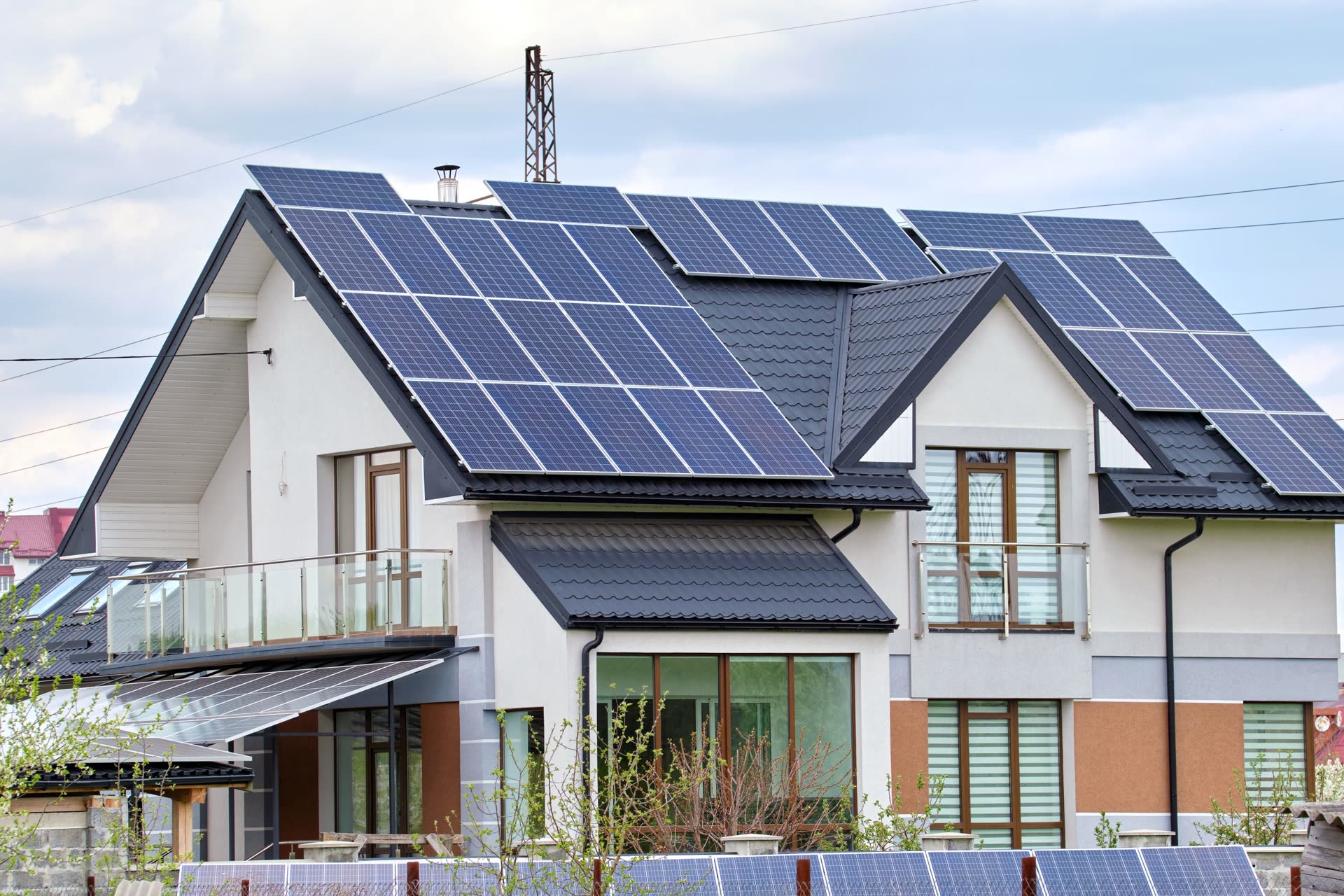
I see new arrays in neighborhoods from Chapel Hill to Wake Forest, and the homeowners installing them aren’t doing it for a bumper sticker. They want energy independence and predictable bills. A properly sized system cuts or eliminates your electric bill and insulates you from rising utility rates.
The environmental side is real too. Solar produces clean power with no greenhouse gas emissions, and the average residential system offsets roughly the equivalent of planting over 100 trees a year. But for most of my clients, the deciding factor is the money: lower bills, and homes with owned solar often appraise higher because the system is a genuine capital improvement.
A solar array isn’t a gadget on your roof. It’s a financial asset — and I treat it like one when I value your home.
How Solar Panels Actually Work
At the core are photovoltaic (PV) cells, usually silicon wafers. Sunlight hits the cell, photons knock electrons loose, and you get a flow of direct current (DC) electricity — the photovoltaic effect. When you read a proposal, two numbers tell you the quality of the panel: efficiency and degradation rate.
The Three Panel Types
Residential solar comes down to three panel types. Here’s how they stack up.
| Panel type | Best trait | Trade-off | Cost tier |
|---|---|---|---|
| Monocrystalline | Most efficient, best looking | Highest price | Higher |
| Polycrystalline | Solid balance of efficiency and price | Middle of the pack | Mid |
| Thin-film | Flexible, fits unusual installs | Least efficient | Lower |
The Rest of the System: Inverters and Batteries
Panels are only part of it. A grid-tied system that’s both efficient and resilient depends on the components you rarely think about.
Inverters
Inverters convert the DC electricity your panels make into the alternating current (AC) that runs your home. You have three choices. String inverters are the common, cost-effective option. Microinverters sit on each panel, perform better in partial shade, and give you panel-level monitoring. Power optimizers are the hybrid — some of the upside of both.
Battery Storage
Solar batteries are what turn a solar home into a truly independent one. They store excess energy for nighttime, cloudy days, and outages. Lithium-ion units like the Tesla Powerwall or Enphase IQ Battery lead the market and enable load shifting — using stored power instead of buying expensive peak-rate electricity from the grid.
Thinking about selling? I’ll tell you what your property is really worth — no obligation.
Get My Free Home EvaluationIs Your Roof a Good Candidate?
Before you sign anything, your home has to earn it. This is more than a glance at the roof.
Roof Condition and Orientation
Check your roofing material’s remaining lifespan first. You do not want to pull an array off to replace shingles three years in. In the Northern Hemisphere, south-facing roofs capture the most sun, but east and west faces work well too — especially if they line up with your Time-of-Use (TOU) consumption. The ideal roof angle roughly equals your latitude, though panels perform well across a range of pitches.
Shade Is the Enemy
Trees, neighboring buildings, even a chimney can throw shadows that gut production. A professional assessment includes a detailed shade analysis, often with a Solar Pathfinder, to calculate your home’s Total Solar Resource Fraction (TSRF) and place panels where they earn their keep.
Size It to Your Usage
Pull your last 12 months of electric bills to see your annual kilowatt-hour (kWh) consumption. That number sets your system size. Then look ahead — an EV, a home addition, a pool all raise your load. Slightly oversizing to lock in current equipment prices is often the smart play.
Good fit for solar
- South, east, or west roof faces with strong sun exposure
- Roofing material with plenty of life left
- Minimal shade from trees, buildings, or chimneys
- You plan to own the system and stay long enough to reach payback
- Rising usage ahead — an EV, an addition, or a pool
Think twice if
- Your roof needs replacing soon
- Heavy shading drags down your TSRF
- You’re selling shortly and would only qualify for a lease or PPA
- HOA covenants restrict panel placement or design
- You rent, or your roof simply can’t host a productive array
What Solar Costs — and How It Pays Back
Prices have dropped sharply, which makes solar more reachable than it’s ever been. Still, run the numbers like the major investment it is.
Upfront Cost vs. Long-Term Savings
An average-sized Triangle installation typically runs $15,000 to $25,000. Most homeowners reach their payback period within 7 to 10 years, and after that the power your roof makes is essentially free for the rest of the system’s 25-plus-year life.
Financing: Own It If You Can
| Option | Who owns the system | Key point |
|---|---|---|
| Solar loan | You do | Spreads the cost over time while you keep the tax credit and the added home value |
| Solar lease | The provider | No money down, but you forgo the credit — and a buyer must assume the lease |
| Power Purchase Agreement (PPA) | The provider | No money down; can complicate a future home sale the same way a lease does |
Owning the system is what captures the tax credits and adds direct value to your home. I’ll say it plainly: an owned system is an asset, a leased one can be a liability at closing.
Incentives That Shrink the Bill
The Federal Solar Investment Tax Credit (ITC), the Residential Clean Energy Credit, lets you take a large share of your system’s total cost as a dollar-for-dollar credit against your federal taxes — not a deduction, which is what makes it so valuable. North Carolina adds a property tax exemption on the added solar value, so the upgrade won’t raise your property taxes, and some local utilities offer rebates or performance-based incentives. These numbers and terms change — confirm current federal, state, and Duke Energy incentives before you buy.
Getting It Installed
Choosing an Installer
This is the single most important decision you’ll make, and no high-pressure sales pitch should rush it. Look for installers certified by the North American Board of Certified Energy Practitioners (NABCEP). In North Carolina, they should also be licensed by the North Carolina Utilities Commission. Verify insurance, check the Better Business Bureau rating, and ask for local references. Get at least three quotes, then compare the equipment, warranty terms, and production estimates — not just the price.
What Installation Looks Like
A thorough site assessment confirms suitability and drives the engineering and structural design: a roof inspection, an electrical panel review, and a final shade analysis. Your installer handles permits and, critically, the interconnection agreement with your utility — usually Duke Energy here. The physical install often takes just 1 to 3 days: racking, panels, inverter, electrical connections, and monitoring hardware.
Thinking about selling? I’ll tell you what your property is really worth — no obligation.
Get My Free Home EvaluationOwning It: Maintenance, Monitoring, and the Grid
Upkeep
Panels are durable and low-maintenance, but not no-maintenance. A rinse with water and a soft brush clears dirt, bird droppings, and debris. Our spring pollen coats everything — a quick rinse once the worst has passed keeps output up. For deeper cleaning or an unexplained drop in production, call a professional to check for loose connections or inverter faults.
Monitoring
Most inverter makers offer smartphone apps that track production in real time, down to the individual panel with microinverters. They flag problems and let you compare actual kilowatt-hours against your installer’s estimate, so you can verify your ROI and shift usage to soak up more of your own power.
Net Metering with Duke Energy
Net metering is the billing mechanism that credits the excess power you send back to the grid. In North Carolina, Duke Energy’s program credits that excess, effectively letting the grid act as a giant battery — you draw those credits down at night or on cloudy days. Terms here change too, so confirm current federal, state, and Duke Energy incentives before you buy.
Seasons in the Triangle
Production swings across the year — it’s the annual total that matters for your math, not any single day. Winter brings shorter days and lower sun, but panels run more efficiently in the cold; keep them clear of rare snow. Summer is peak season, the time to bank credits by running the dishwasher or pool pump during peak daylight.
Looking Ahead
The home-energy industry moves fast. Bifacial panels capture light from both sides and can lift production by as much as 30%. Solar roof tiles from Tesla or GAF Energy build the cells into the roofing itself — a clean, integrated look that appeals on custom and luxury homes. A Home Energy Management System (HEMS) can balance solar, grid, and battery automatically, and pairing solar with home automation lets high-draw appliances run when production peaks. And for anyone blocked by shade, HOA rules, or renting, community solar lets you subscribe to a share of a larger solar farm and take the credit on your bill.
How to Go Solar, Step by Step
- Get an energy audit first — a more efficient home may need a smaller, cheaper system.
- Pull 12 months of electric bills to nail down your annual kWh usage, and factor in an EV, addition, or pool.
- Assess your roof: material lifespan, orientation, angle, and a real shade analysis.
- Research HOA covenants and local ordinances that affect design or timeline.
- Get at least three quotes from NABCEP-certified, NC-licensed installers and compare equipment, warranties, and production estimates.
- Confirm current federal, state, and Duke Energy incentives, and decide how you’ll finance — owning beats leasing for value.
- Sign, permit, install, and set up monitoring, then track production against the estimate.
If you’re weighing solar and want to know what it does to your home’s value in this market, that’s exactly the call I make with clients every week. My team and I will walk your specific property, your goals, and your numbers — not a generic pitch. Reach out and we’ll follow up to talk strategy.
Thinking about selling? I’ll tell you what your property is really worth — no obligation.
Get My Free Home EvaluationFrequently Asked Questions
Thinking about selling? I’ll tell you what your property is really worth — no obligation.
Get My Free Home Evaluation