
Thinking about selling? I’ll tell you what your property is really worth — no obligation.
Get My Free Home EvaluationIf you're picking countertops for a Triangle kitchen and want a surface that looks great, survives real cooking, and pays you back at resale, this page is for you. In 18 years helping Raleigh-Durham homeowners weigh capital improvements, I've found no single feature moves a buyer's first impression of a kitchen more than the countertop.
My goal is narrow and practical: help you choose the right countertop material for your kitchen and budget. I'll compare the main options on cost, durability, maintenance, and resale, and flag where a choice makes sense versus where it quietly hurts your return.
The 30-second version
- Quartz and quartzite hit the sweet spot for most Triangle homes: luxury look, low upkeep, strong resale.
- Engineered quartz is non-porous, needs no sealing, and resists stains and scratches.
- Granite and quartzite are natural stone, so they need periodic sealing.
- Marble is stunning but soft and stain-prone, so it's a passion pick, not a resale play.
- Butcher block and laminate keep costs down but read as budget in a mid-to-upper kitchen.
- Match the material to your home's price tier, not just your taste.
How to pick a countertop material
Before you fall for a slab, run every option through four questions. The right answer shifts with how you cook, how long you'll stay, and where your home sits in the market.
- Set your budget tier.In a mid-to-upper Triangle home, buyers expect stone or engineered stone; in an entry-level home, a quality laminate can be the smart call.
- Weigh maintenance honestly.If sealing once a year or babying a surface against lemon juice sounds like a chore, rule out the porous and soft materials now.
- Match durability to your cooking.Heavy home cooks want heat and scratch resistance. Occasional cooks can prioritize looks.
- Think about the next buyer.A distinctive, low-hassle surface signals a high-quality kitchen. A dated or high-maintenance one gives buyers pause.
Quartz vs. quartzite: the two safest bets
For most Raleigh-Durham homeowners chasing the best balance of style, durability, and return, engineered quartz or a high-quality quartzite is the most prudent choice. They're easy to confuse by name, but they're different products.
Engineered quartz
- About 90-95% crushed natural quartz bound with resins and pigments.
- Non-porous, so it needs no sealing and shrugs off wine, coffee, and oil stains.
- Strong compressive strength resists scratching and chipping.
- Huge range of colors and marble-look veining without the upkeep.
- Brand names like Cambria, Silestone, and Caesarstone carry real recognition.
Natural quartzite
- A natural metamorphic stone formed from sandstone under heat and pressure.
- Often harder than granite, so it resists scratching and etching well.
- Delicate, sweeping veins that read like marble.
- Porous, so it does require periodic sealing.
- Costs about the same as high-end granite or a touch more.
Quartzite signals a homeowner who invested in a premium, high-performance surface.
Quartz is the blue-chip pick: durable, low-maintenance, and broadly appealing across the mid-to-upper market. Quartzite gives you marble's look with granite-plus durability, and both deliver a strong, defensible payback. To see how this fits the rest of a project, here's the full kitchen remodel picture.
Granite and marble: natural stone with trade-offs
Both are quarried natural stone, and both can be spectacular. The difference is how much care they demand and how the next buyer reads them.
Granite
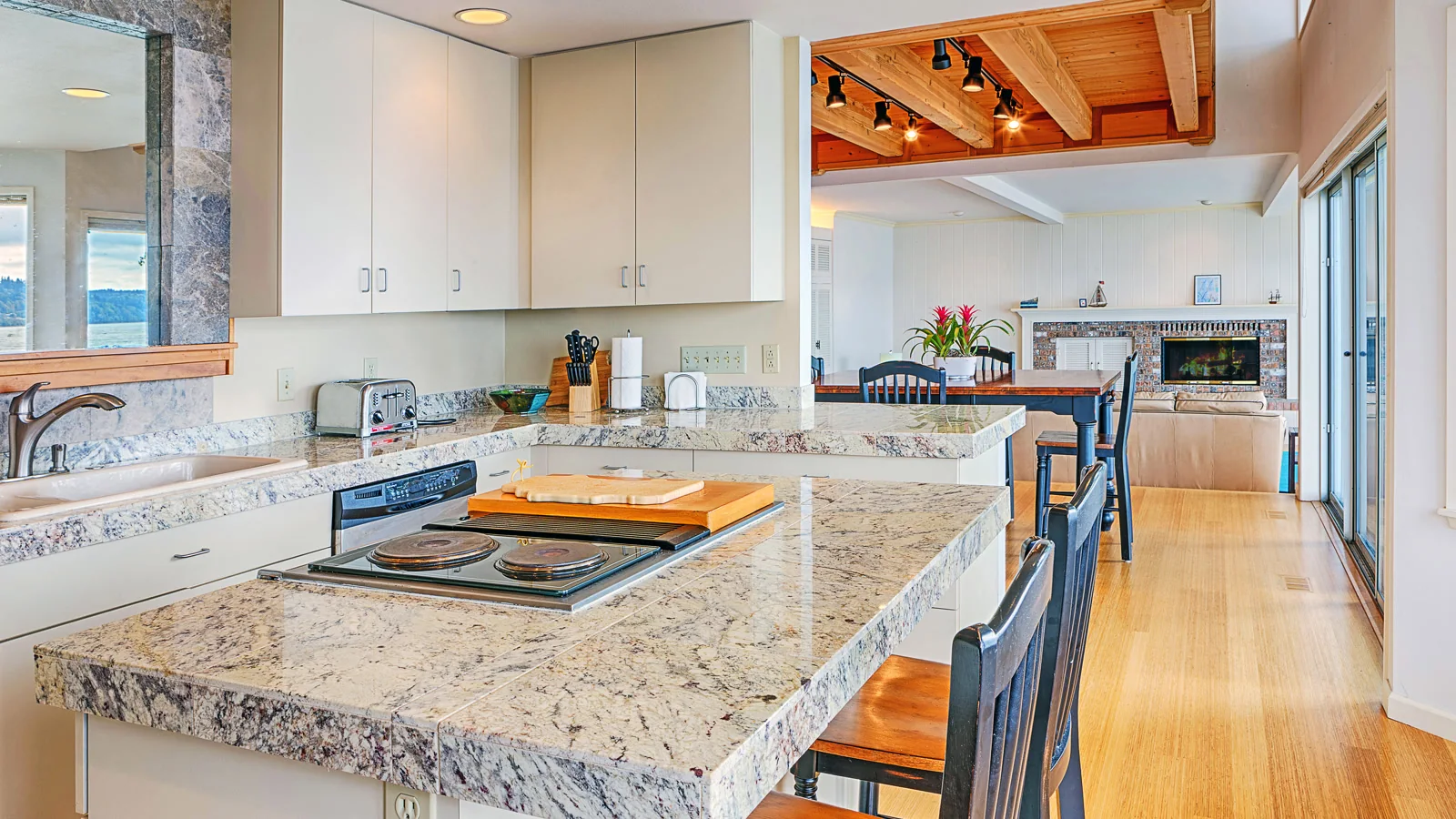
Granite is an igneous rock, so every slab is a unique piece of geological art with rich texture and depth. It's highly heat-resistant, so you can set a hot pan directly on it. It's also porous, which means periodic sealing, typically once a year, to guard against stains and bacteria.
Granite still reads as luxury when the slab is distinctive. The market is flooded with common, builder-grade patterns that look dated in a contemporary kitchen, so slab selection is everything. Pick a well-patterned slab that suits your color palette and it lands as a feature, not a commodity.
Marble
Marble is the classic luxury surface, with a soft luminous look and elegant veining nothing else quite matches. It's a softer, more porous metamorphic rock, so it scratches, stains, and etches from acids like lemon juice or vinegar. A honed finish hides etching better than a polished one, but careful daily habits are non-negotiable.
In the true luxury tier, marble can be a showpiece, especially when slabs are bookmatched to run one continuous vein across an island. For most mid-range homes, though, its upkeep scares off buyers and its resale contribution is limited. Choose marble for passion, not for return.
Thinking about selling? I’ll tell you what your property is really worth — no obligation.
Get My Free Home EvaluationButcher block and laminate: the budget-minded options
Not every kitchen needs stone, and not every budget can absorb it. Two lower-cost surfaces earn a mention, with clear eyes about resale.
- Butcher block brings warmth and a hands-on feel, and it's friendly to DIY installs. It needs regular oiling, marks over time, and can't take a hot pan. It works better as an island accent than as a whole resale-focused kitchen.
- Laminate is the value champion: low cost, endless colors, and modern versions look far better than the ones you remember. It's not heat-proof and can chip at the edges, and in a mid-to-upper home buyers tend to read it as builder-grade. In an entry-level home or a rental, it can be the right, disciplined call.
If you're lifting the kitchen without a full stone budget, pair a modest surface with smart, high-visibility changes. I lay several out in my guide to budget-friendly kitchen upgrades.
Matching your countertop to your home's value
The right material depends on where your home sits in the market. A surface that reads as luxury in one price tier can look like overspending in another, and vice versa.
Best resale fit
- Mid-to-upper homes: engineered quartz or high-quality quartzite.
- Traditional homes: a distinctive, well-patterned granite slab.
- Luxury estates: bookmatched marble or a dramatic quartzite as a showpiece.
- Entry-level or rentals: quality laminate, disciplined and cost-aware.
Proceed with caution
- Common builder-grade granite in a contemporary kitchen can look dated.
- Marble in a mid-range home is high upkeep for limited resale payback.
- Butcher block as a whole-kitchen surface in a resale-focused home.
- Laminate in a mid-to-upper home, where buyers expect stone.
Countertops set the tone, but the floor underfoot has to agree with the surface you choose. If you're updating both, my guide to choosing flooring to match keeps the palette consistent.
One honest note: prices swing with the market and slab quality, so confirm current per-square-foot costs with a local fabricator before you budget. I'm a Realtor, not a contractor or designer, so lean on a licensed pro for installation and structural questions.
Frequently Asked Questions
If you're weighing a countertop upgrade and want to know how a material will land with buyers in the Raleigh-Durham market, reach out. My team and I will follow up with a straight, data-driven read on where your investment yields the strongest return.
Thinking about selling? I’ll tell you what your property is really worth — no obligation.
Get My Free Home Evaluation