
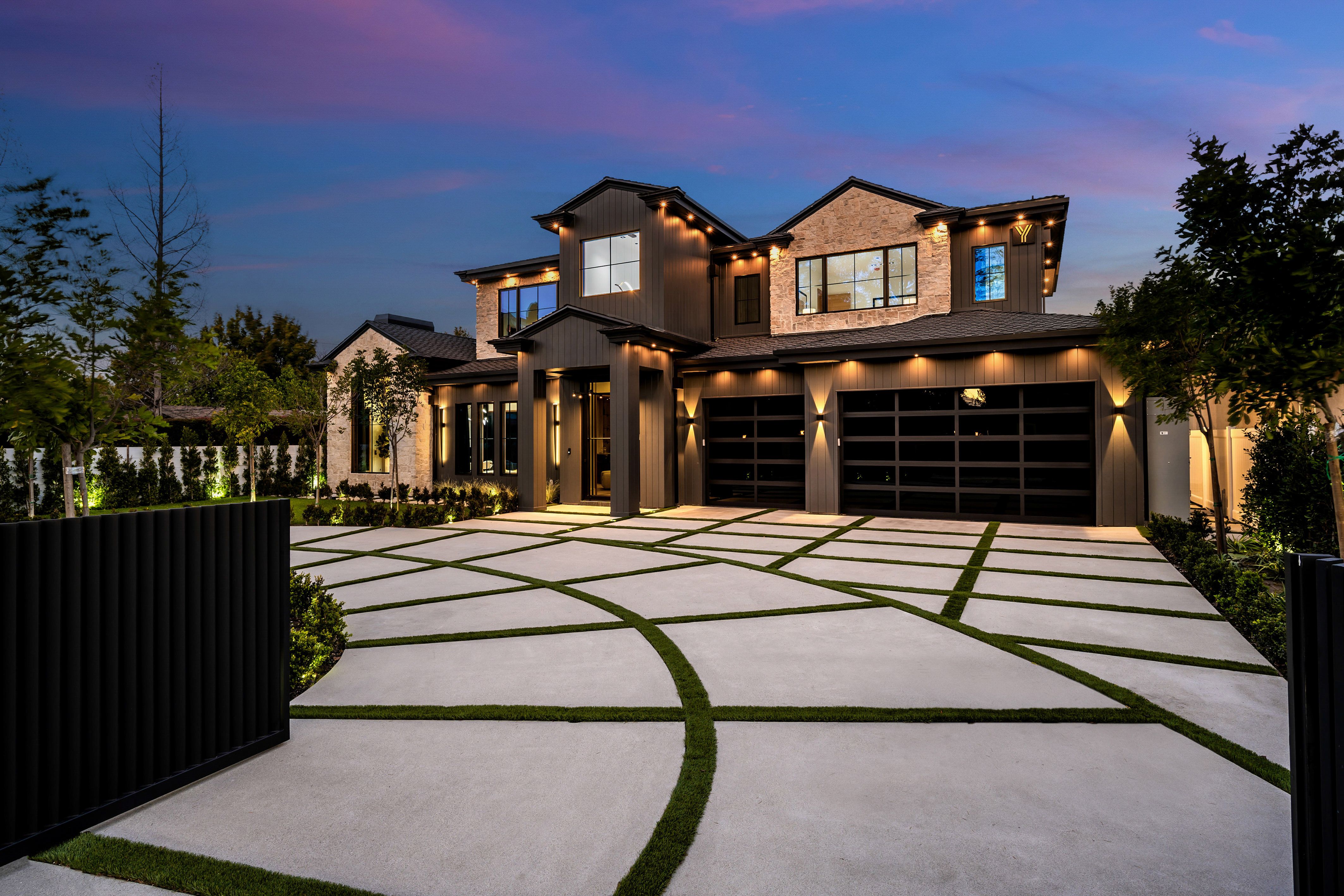
Thinking about selling? I’ll tell you what your property is really worth — no obligation.
Get My Free Home EvaluationSelling a luxury home in Raleigh-Durham is a different discipline from selling a $400K suburban house, and treating the two the same way is how sellers leave six figures, sometimes seven, on the table. This guide covers the full playbook for selling a $1M+ property in the Triangle: pricing strategy, staging and preparation, marketing that actually reaches high-net-worth buyers, negotiation, tax planning, and closing. I'm Tim Clarke, and over 18 years leading the Tim M. Clarke Team I've specialized in Triangle luxury real estate, backed by hands-on experience in custom luxury home construction that shapes how I value and position these properties.
What Selling a Luxury Home in Raleigh-Durham Actually Involves
The $2M+ space isn't regular real estate at a higher price point. It's an entirely different discipline that requires understanding ultra-high-net-worth buyer psychology, the intricate dynamics of executive relocation packages, and how to leverage Triangle-specific advantages that sellers in Atlanta, Nashville, or Charlotte simply can't offer.
The Triangle's luxury sector fundamentally transformed after Apple announced its $1B campus investment and Google expanded its presence in Research Triangle Park. We're no longer competing with Charlotte's established old-money neighborhoods or Atlanta's corporate headquarters appeal. We've become the destination for tech executives, pharmaceutical innovators, and venture-backed entrepreneurs who want world-class career opportunities without sacrificing their children's education, their outdoor lifestyle, or their sanity to three-hour commutes. These buyers think differently. They negotiate differently. And they will not tolerate the amateur-hour marketing that might work fine in the $400K suburban market.
What 18 years of specializing in Triangle luxury real estate has taught me is this: the properties that command premium prices and generate multiple offers aren't necessarily the biggest or most expensive. They're the ones positioned with surgical precision to match what today's affluent buyer actually wants, not what sellers assume they want. That distinction makes all the difference, and everything in this guide flows from it.
Who This Guide Is For
I wrote this for Triangle owners of properties above roughly $1M who want to sell for maximum value: relocating executives, empty-nesters downsizing from large estates, owners of long-held or inherited properties with substantial gains, and sellers whose current luxury listing has stalled. Find your situation below and start with the question that matters most.
| Your Situation | First Question to Ask | Right Next Step |
|---|---|---|
| Relocating executive who must sell a $2M+ home around a job start date | Can my timeline absorb 60-120 days from contract to closing, plus marketing time? | Price within 3% of true comps and launch during the spring or fall peak window |
| Empty-nester in Preston or Governors Club downsizing to North Hills | What will my estate net after staging investment versus selling as-is? | Get a professional valuation and a staging plan before touching anything |
| Owner of a long-held or inherited estate with large unrealized gains | What is my capital gains exposure after the $500,000 married exclusion? | Sit down with a CPA about 1031, installment, or Opportunity Zone options before listing |
| Seller whose $3M+ listing has sat 6+ months with no offers | Is my price more than 3% above what legitimate comparable sales support? | Reposition with corrected pricing before stigma compounds the problem |
| Public figure or executive who needs the sale kept quiet | Can every buyer be pre-qualified and under confidentiality before entering? | Use a limited-access listing with proof-of-funds screening and NDA protocols |
| Custom-home owner unsure whether the property qualifies as luxury tier | Does it exceed $1M with distinctive architecture, lot, or location? | Request a confidential market analysis to see which luxury tier it competes in |
What Luxury Home Selling Is Not
Half my job at listing appointments is correcting expectations, so let me kill the expensive myths up front.
It is not "pricing high to leave room to negotiate." Overpriced luxury listings, even by 5-7%, sit for 8-12 months, accumulate stigma, and ultimately sell for less than if they'd been priced correctly from day one. I've seen $3.5M homes eventually close at $3.1M after two price reductions, when they could have generated competing offers at $3.4M with proper initial positioning. Sophisticated buyers recognize value instantly, and they recognize wishful pricing just as fast.
It is not a showcase for your personal taste. Your furnishings, regardless of how expensive or carefully curated, don't translate to maximum sale value. I've watched sellers balk at $40K staging investments, then leave $200K on the table because buyers couldn't see past purple accent walls, oversized furniture, or family photo collections.
It is not the same transaction as a standard sale with more zeros. Jumbo financing scrutiny, specialist inspections, tax structuring, confidentiality protocols, and multi-party negotiations make the mechanics genuinely different. An agent who is excellent at $450K listings can be badly out of their depth at $4.5M.
It is not won by square footage alone. The ultra-luxury segment responds to architectural significance, irreplaceable locations, and trophy status, not raw size. A 10,000-square-foot home with builder-grade finishes will lose to a 6,500-square-foot property with genuine craftsmanship and the right address.
It is not a fire-and-forget MLS entry. If your marketing plan is professional photos and a sign, you're invisible to the out-of-state and international buyers who drive this market's premiums.
Thinking about selling? I’ll tell you what your property is really worth — no obligation.
Get My Free Home EvaluationHow the Luxury Sale Process Works
Every successful luxury sale I've run follows the same spine, even though the details vary by property. If you want the granular step-by-step version, I've broken it out in my mansion selling process guide. Here's the sequence:
- Valuation and positioning. Establish true market value from legitimate comparable sales, identify the target buyer profile, and pick the luxury tier your property competes in.
- Preparation. Staging, exterior work, and strategic improvements chosen for return, not vanity. This phase typically takes 2-6 weeks.
- Marketing launch. Matterport capture, cinematic video, drone work, targeted digital campaigns, print placement, and broker previews, timed to the spring (March-May) or fall (September-November) peak.
- Qualified showings. Pre-screened buyers only, with proof of funds or verified pre-approval before access.
- Offer evaluation and negotiation. Judged on financing strength, contingencies, and closing probability, not just headline price.
- Due diligence and closing. Specialist inspections, appraisal, jumbo underwriting, and tax coordination across 60-120 days from contract to closing table.
- Transition. Moving coordination, community integration, and ongoing advisory after the sale.
The rest of this guide goes deep on each phase.
Understanding the Raleigh-Durham Luxury Market
Market Dynamics
The macroeconomic forces driving Triangle luxury demand operate on a completely different plane than the traditional residential market. Federal Reserve monetary policy directly impacts jumbo loan availability and investor liquidity, while RTP's biotech expansion and the pharmaceutical industry's aggressive R&D spending create sustained executive housing pressure that doesn't exist in single-industry economies. I track these indicators religiously because they tell me six months in advance whether we'll face buyer scarcity or multiple-offer scenarios in specific luxury price bands.
Right now the supply-demand calculus in our luxury segment heavily favors sellers, but that advantage disappears quickly if you don't understand the nuances. The qualified buyer pool, and I mean truly qualified with verified liquidity, 740+ FICO scores, and 30% down payments, continues expanding as Fortune 500 companies relocate entire divisions here. Meta's investment in downtown Raleigh workspace, coupled with continued pharmaceutical growth in Research Triangle Park, has created something I haven't seen in 18 years: genuine inventory scarcity at the $2M-$5M price point in neighborhoods with top-tier school districts.
Here's what most agents miss: inventory constraints don't automatically translate to premium pricing. Properties priced within 3% of true market value based on legitimate comparable sales move in 60-75 days. The absorption numbers tell the real story. Accurately priced properties in Preston, Governors Club, or Wakefield Plantation move in under 90 days because sophisticated buyers recognize value instantly. They're running cap rate calculations, comparing our property tax rates (significantly lower than Northern Virginia or Connecticut), and evaluating total cost of ownership including HOA assessments and utility costs for homes exceeding 8,000 square feet.
Price Trends and Appreciation
Luxury appreciation in the Triangle tracks in the 7-12% annual range for properties above $1.5M, which dramatically outpaces the regional median home appreciation of 4-6%. But those numbers mask critical segmentation that determines whether your property appreciates at the high or low end of that range. I analyze five-year compound annual growth rates (CAGR) across the luxury tiers because they reveal where smart money is flowing and where speculative excess has crept in.
Entry-luxury properties ($1M-$3M) perform consistently because they capture move-up buyers from the traditional residential market plus first-time luxury purchasers who've hit liquidity events through IPOs, stock option exercises, or business exits. Mid-luxury ($3M-$7M) properties appeal to established executives and business owners who prioritize lot size, privacy, and custom architectural details over proximity to urban amenities. The ultra-luxury segment ($7M+) responds to entirely different drivers: architectural significance, irreplaceable locations, and trophy status among peer groups.
What sets Triangle luxury appreciation apart from peer markets is our value proposition differential. I regularly work with relocating executives from Palo Alto, Westchester County, and Northern Virginia who sell $2M properties getting 2,400 square feet, then purchase $2M Triangle estates offering 7,000 square feet with pools, finished basements, and three-car garages on two-acre lots. That value arbitrage drives sustained demand and supports continued appreciation even during broader market corrections.
Comparative studies I've run against Atlanta, Nashville, and Austin consistently show Triangle luxury delivering superior risk-adjusted returns. Nashville faces inventory glut in the $3M+ segment. Austin's luxury market has ridden tech-sector boom-bust volatility. Triangle luxury benefits from economic diversification across pharmaceuticals, biotechnology, advanced manufacturing, and technology, with no single-industry risk exposure.
What Makes Triangle Luxury Homes Different
Triangle luxury architecture reflects something you won't find in cookie-cutter luxury developments in Phoenix or Las Vegas: genuine architectural diversity driven by discerning buyers who understand the difference between builder-grade luxury finishes and true custom craftsmanship. Our market attracts clients who've lived in Manhattan, San Francisco, and London. They demand architectural authenticity, not McMansion pretense.
Architectural Styles That Command Premiums
Georgian Revival estates dominate the Triangle's established luxury neighborhoods for good reason. These properties feature symmetrical facades, authentic architectural proportions, and classical detailing that signals permanence and sophistication. I'm talking about imported limestone surrounds, hand-carved crown molding that took craftsmen weeks to install, and formal gardens designed by landscape architects, not landscapers. These homes appeal to traditional luxury buyers, often executives in banking, law, or established corporations, who view their residence as a reflection of their professional standing and family legacy.
Contemporary luxury designs have gained substantial traction, particularly among younger tech executives and entrepreneurs who made their wealth in industries that didn't exist 20 years ago. These buyers want floor-to-ceiling glass systems, open-concept great rooms that flow onto covered terraces, and clean architectural lines that emphasize natural light and indoor-outdoor connectivity. I've sold several contemporary masterpieces featuring NanaWall folding glass systems, European cabinetry, and Gaggenau appliance packages that appeal to clients who view architectural innovation as status signaling just as powerful as traditional luxury markers.
Modern farmhouse interpretations represent the fastest-growing luxury segment in the Triangle. These properties blend reclaimed wood elements, shiplap detailing, and rustic materials with sophisticated modern amenities including whole-home Lutron lighting control, Sonos distributed audio, and commercial-grade HVAC zoning. The aesthetic appeals to affluent buyers seeking "approachable luxury": homes that feel warm and livable rather than museum-like. Neighborhoods like Fearrington Village and custom builds in Chatham County have capitalized on this trend brilliantly.
Transitional architecture provides the sweet spot for risk-averse luxury buyers who want properties with strong resale potential and broad market appeal. These homes incorporate classical proportions and traditional exterior styling while delivering contemporary interior flow, updated mechanical systems, and flexible spaces that function as home offices, fitness rooms, or guest suites. From a strategic pricing perspective, transitional properties consistently outperform architectural extremes because they appeal to wider buyer demographics.
The Neighborhoods Luxury Buyers Ask For
Understanding Triangle luxury neighborhoods requires more than knowing zip codes. You need to understand the lifestyle propositions, buyer demographics, and competitive advantages each community offers. Here's what I actually tell clients evaluating where their luxury property sits in the market.
North Hills delivers true urban luxury living in a market that historically lacked it. The high-rise condominiums and luxury townhomes here appeal to empty-nesters selling 6,000-square-foot estates who want walkability to Whole Foods, midtown restaurants, and boutique shopping without maintaining massive homes and grounds. I've worked with several clients downsizing from Governors Club or Preston who traded square footage for lifestyle convenience. These properties command premium per-square-foot pricing ($400-$550/SF) because you're selling location and lifestyle, not just real estate.
Preston in Cary represents golf-course luxury at its finest, featuring a TPC-managed championship course, extensive clubhouse amenities, and estate homesites ranging from one to five acres. The buyer profile skews toward corporate executives, professional athletes, and successful business owners who view club membership as both recreation and networking. I've sold properties here to pharmaceutical executives relocating from New Jersey who specifically sought private club environments similar to what they left behind. HOA fees run $400-600 monthly, which funds exceptional amenity maintenance and preserves property values.
Governors Club in Chapel Hill offers gated security, a Jack Nicklaus Signature golf course, and strict architectural review standards that maintain community prestige and property values. The location near UNC appeals to university-affiliated buyers including administrators, major donors, and successful alumni seeking proximity to cultural amenities, basketball tickets, and academic healthcare at UNC Medical Center. Properties here hold value exceptionally well during downturns because the community brand and location advantages prove resilient.
Wakefield Plantation solves a critical problem for relocating executives with school-age children: combining TPC golf amenities with access to top-rated Wake County schools. I've handled numerous corporate relocations where the executive wanted golf-course living but the spouse prioritized school districts above everything else. Wakefield delivers both, which explains why properly priced properties here often receive multiple offers. The community also spans price points from $800K townhomes to $3M custom estates, creating natural move-up opportunities within the same neighborhood.
Thinking about selling? I’ll tell you what your property is really worth — no obligation.
Get My Free Home EvaluationPreparing a Mansion for Sale
Professional Staging That Pays for Itself
Professional luxury staging consistently generates 300-500% ROI through some combination of higher sale prices, reduced time on market, and increased offer competition. Luxury staging methodology fundamentally differs from traditional residential staging. We're not just decluttering and placing furniture. We're creating an aspirational lifestyle narrative that lets qualified buyers envision themselves hosting dinner parties, entertaining business associates, or enjoying morning coffee in the breakfast room overlooking mature landscaping. The expert designers I partner with specialize in luxury markets and understand the difference between staging a $400K home and a $4M estate. I cover the fundamentals for any price point in my complete home staging guide; here's what changes at the luxury level.
The design approach starts with sophisticated neutral palettes: not builder beige, but carefully selected warm grays, soft taupes, and creamy whites that create a calming foundation and let architectural details shine. Strategic accents add personality without polarizing buyers, perhaps jewel-tone pillows in the primary suite, fresh orchids in the entry, or curated coffee table books that signal sophistication. Every element gets selected intentionally based on the target buyer demographic for that specific property.
Furniture scaling is one of the most common staging failures I see. Sellers with oversized sectionals and massive entertainment centers make 1,200-square-foot great rooms feel cramped. Professional staging teams bring in appropriately scaled premium furniture that creates conversation groupings, establishes clear traffic patterns, and makes rooms feel spacious rather than cluttered. We're showing proportions and functionality, not building obstacle courses.
Lighting design plays a critical role that most sellers completely underestimate. We implement layered illumination strategies combining ambient lighting (overhead and recessed), task lighting (reading lamps, under-cabinet), and accent lighting (artwork spots, architectural feature uplights). Smart lighting scenes let us create warm, inviting atmospheres for evening showings, when properties photograph beautifully and buyers respond emotionally. I've had buyers tell me they fell in love with a property during a 7 PM showing because of how the lighting created ambiance. That's not accidental.
Exterior Enhancements and Curb Appeal
Every luxury marketing presentation I give starts with this statement: curb appeal determines whether qualified buyers get out of their cars. I don't care how spectacular your interior finishes are. If the exterior doesn't compel buyers to want to see more, we've already lost the battle. Professional landscape design and meticulous maintenance ensure year-round visual impact, whether we're marketing in February or October.
Strategic exterior improvements generate disproportionate returns. Mature landscape installations, meaning specimen trees, layered foundation plantings, and seasonal color rotations, create the sense that grounds have been carefully tended for years. Professional hardscape including bluestone walkways, brick pavers, or natural stone retaining walls adds the permanence and craftsmanship buyers associate with quality construction throughout the property. Architectural landscape lighting transforms properties after dark, spotlighting specimen trees, washing the facade with uplighting, and illuminating pathways for safety and beauty.
Water features add tranquility and luxury status signaling that resonates with affluent buyers. I've installed custom fountains, reflecting pools, and naturalized stream features as pre-listing improvements that generated strong buyer responses and justified premium pricing. The sound of flowing water creates immediate sensory appeal during tours; buyers spend more time in outdoor spaces and form emotional connections to the property.
Outdoor entertainment areas have become non-negotiable for Triangle luxury properties since COVID fundamentally changed how affluent families view their homes. Commercial-grade outdoor kitchens featuring built-in Wolf or Lynx grills, Scotsman ice makers, and refrigerated storage demonstrate entertainment capability. Fire features, whether outdoor fireplaces or fire pits, extend usability into cooler months and create gathering spaces. Pool and spa areas deserve particular attention: dated equipment, worn decking, or outdated finishes signal deferred maintenance that raises questions about the entire property's condition.
Smart Home Technology Buyers Now Expect
Contemporary luxury buyers don't view home automation as an upgrade. It's a baseline expectation, like central air conditioning or granite countertops. I lose listing presentations when sellers haven't invested in integrated smart systems, because competing properties offer them as standard features.
Whole-home automation platforms like Control4, Crestron, or Savant provide single-interface control over lighting, climate, security, audio/video distribution, and motorized window treatments. Professional installation and programming ensure reliable operation and interfaces that don't require engineering degrees. I've worked with clients who adjust their home's temperature, check security cameras, and control lighting from their iPhones whether they're upstairs or in Singapore. That level of control resonates with executive buyers managing complex professional lives.
Kitchen technology upgrades signal culinary sophistication to affluent buyers who view cooking as recreation rather than chore. Wolf dual-fuel ranges, Sub-Zero integrated refrigeration, and Miele steam ovens deliver professional-grade performance with clean design integration. Smart appliance connectivity allows preheating ovens remotely, monitoring refrigeration temperatures, and receiving maintenance alerts before problems occur. These features particularly appeal to dual-income professional couples who value both efficiency and entertaining capability.
Home office infrastructure has shifted from nice-to-have to essential. Remote work and flexible schedules among executive populations mean luxury buyers evaluate dedicated office spaces, commercial-grade networking, and video conferencing setups as carefully as kitchens and primary suites. Properties with fiber internet, CAT-6 ethernet throughout, and professionally designed office spaces command premiums because they solve real problems for today's luxury buyers.
Amenities That Differentiate Premium Properties
Distinctive amenities separate premium properties from standard luxury inventory, creating competitive advantages that justify price premiums and generate buyer urgency. Custom wine cellars with climate control, racking for 1,000+ bottles, and dedicated tasting areas appeal to collectors who view wine storage as both practical necessity and status symbol. I've sold properties where the wine cellar became the closing factor for buyers with extensive collections needing proper storage.
Private spa facilities turn luxury homes into resort-style retreats. Steam rooms, saunas, massage rooms, and meditation spaces give affluent homeowners wellness amenities without leaving the property. These features resonate with high-stress executive populations who value health but lack time for spa visits. Professional installation with proper ventilation, waterproofing, and equipment selection ensures these amenities provide genuine utility rather than becoming maintenance headaches.
Home fitness centers gained dramatic value after COVID ended casual gym memberships among health-conscious affluent populations. Properties featuring dedicated fitness rooms with commercial-grade equipment, mirrored walls, rubber flooring, and integrated audio appeal to buyers who prioritize health and convenience. I've watched buyers eliminate properties from consideration specifically because they lacked adequate space for a home gym. It's become that important to certain demographics.
Recreational amenities like home theaters with stadium seating, acoustic treatments, and 4K projection create unique selling propositions in competitive luxury inventory. Game rooms with custom bars, billiards tables, and entertainment equipment provide family-friendly spaces that justify premium pricing. Hobby spaces, from woodworking shops to art studios to craft rooms, help buyers envision their specific lifestyle fitting perfectly into the property.
Marketing Strategies That Reach Qualified Luxury Buyers
Virtual Tours and Cinematic Production
Immersive digital experiences have transformed luxury property marketing, particularly for out-of-state relocating executives, international buyers, and time-constrained professionals who need comprehensive property evaluation before committing to physical tours. Matterport 3D capture creates interactive virtual experiences that let prospects explore properties at their own pace, revisit specific spaces, and take measurements from a laptop or phone.
The strategic value extends beyond convenience. Virtual tours pre-qualify buyer interest so physical showings involve genuinely serious prospects rather than curiosity seekers. Corporate relocation companies have used my Matterport tours to help transferring executives shortlist properties before their weekend house-hunting trips, dramatically increasing showing efficiency and closing probability.
Professional cinematography elevates marketing from documentation to lifestyle storytelling. I invest in 4K video production, stabilized gimbal camera movement, and cinematic editing that showcases both property features and surrounding community amenities. These aren't simple walkthroughs. They're carefully crafted narratives highlighting morning light in the breakfast room, sunset views from the terrace, and the indoor-outdoor flow that defines Triangle luxury living.
Aerial cinematography by FAA Part 107-certified drone operators captures context impossible to convey from ground level. Estates on multi-acre lots, properties with lake frontage, and homes in premier golf communities benefit dramatically from aerial perspectives showing lot dimensions, mature landscaping, and neighborhood setting. Buyers have specifically requested drone footage before scheduling showings because they wanted to evaluate privacy and neighboring properties first.
Virtual reality presentations represent the cutting edge, though adoption remains limited to ultra-luxury properties where innovation itself becomes part of the marketing story. VR gives prospects immersive headset experiences with a sense of presence and spatial understanding that surpasses traditional virtual tours, and it particularly appeals to tech sector executives and younger affluent demographics who appreciate early technology adoption.
Social Media Campaigns That Target Wealth
Targeted social advertising reaches the specific demographic and psychographic profiles of luxury buyers with precision traditional channels can't match. Instagram campaigns featuring professionally curated content showcase lifestyle elements and aesthetic details that resonate with affluent users who engage with luxury brands, high-end travel, and design content. Platform algorithms allow targeting by income level, net worth indicators, job title, and lifestyle interests.
LinkedIn advertising provides direct access to C-suite executives, entrepreneurs, and high-income professionals through sponsored content targeted by job title, company affiliation, and industry. I've successfully marketed luxury properties to pharmaceutical executives by targeting director-level and above employees at major pharma companies in Northern markets. Reaching decision-makers during their professional content consumption is an advantage unique to LinkedIn.
Facebook advertising, despite platform perception challenges, still delivers for luxury properties through demographic targeting on income level, education, and life event triggers like job changes, relocations, or marriage that correlate with purchase timing. Custom audiences allow retargeting website visitors, email subscribers, and past clients with relevant property ads.
Influencer partnerships with local lifestyle bloggers, interior designers, and luxury brand ambassadors extend exposure through authentic content. Strategic collaborations with Triangle influencers covering luxury living, design trends, and local lifestyle reach affluent audiences in native, non-promotional contexts. I've partnered with local designers to feature staging transformations, generating thousands of impressions among design-savvy demographics.
Print, Publications, and Exclusive Events
Print advertising in premium publications continues reaching affluent demographics who appreciate high-quality editorial and luxury imagery in tangible formats. Robb Report, Architectural Digest, and DuPont Registry offer targeted luxury readership with substantial disposable income and real estate investment interest. These readers actively seek luxury real estate content; they're not being interrupted by our marketing.
Regional luxury publications including O.Henry, Walter Magazine, and Charlotte Magazine provide local focus while maintaining luxury editorial standards and affluent readership. Geographic targeting reaches Triangle residents seeking move-up opportunities, second home buyers, and local high-net-worth individuals exploring real estate investments. Local publication features also generate third-party credibility that sellers can leverage in their own social networks.
Custom property brochures with museum-quality photography, premium paper stock, and sophisticated graphic design convey property quality through production quality. I commission limited-edition coffee table-style property books for ultra-luxury listings; recipients keep these collectible pieces indefinitely, maintaining long-term brand presence. Buyers attending luxury property tours expect substantial takeaway materials, and anything less signals amateur marketing.
Private showing events create exclusivity, urgency, and social proof among qualified buyer groups. Invitation-only broker previews for select luxury specialists and their qualified clients build market awareness and referral opportunities while the property shows in ideal conditions: staged, perfectly lit, and presented with full context.
Lifestyle events including wine tastings, art exhibitions, or charity fundraisers hosted at luxury properties demonstrate entertainment capability while supporting worthy causes. They attract community leaders, affluent residents, and potential buyers in relaxed social settings where the property gets appreciated naturally, without sales pressure. I've generated multiple offers from connections made at charity events where the property served as venue rather than being overtly marketed.
Broker appreciation events with catered experiences and property education keep the Triangle's top luxury specialists engaged. Most luxury transactions involve both a listing and a selling agent, so relationships with the area's top buyer agents directly affect how enthusiastically they present your property to qualified clients.
Working With High-Net-Worth Buyers
What Motivates Each Buyer Type
Luxury buyers operate with layered decision-making frameworks that extend far beyond housing needs into investment analysis, lifestyle optimization, tax strategy, and legacy planning. Understanding those layers allows positioning that resonates with specific segments. Primary residence buyers typically prioritize location convenience relative to RTP or downtown offices, school district quality for families with children, and community prestige that reflects their professional and social standing.
Secondary home purchasers focus on entirely different criteria: recreational amenities like golf or lake access, architecture as status symbol, and potential rental income to offset carrying costs. I've worked with Charlotte-based executives purchasing second homes in Chapel Hill for UNC football weekends who evaluated properties primarily on entertainment space and guest accommodations.
Investment-focused buyers run sophisticated financial analysis including internal rate of return (IRR) calculations and comparative cap rate analysis, plus portfolio diversification benefits. These buyers often engage wealth advisors and CPAs before making offers, so I prepare detailed financial documentation: operating expenses, property tax history, and market appreciation data. The property has to perform financially, not just aesthetically.
Relocation buyers present unique opportunities and challenges. They typically require expedited timelines coordinated with job start dates, temporary housing while closing progresses, and community integration help for their families. Corporate relocation packages often include home purchase benefits, making these buyers well-qualified but requiring coordination with relocation management companies and their policy constraints.
Privacy-conscious clients including public figures, corporate executives, and ultra-high-net-worth individuals require discretionary approaches that protect personal information while maintaining effective buyer reach. These clients may prohibit certain exterior photography, restrict showing access through pre-qualification requirements, and use trust or LLC ownership structures to shield identity from public records.
Negotiation at the Luxury Level
Luxury negotiations involve deal structures that extend well beyond purchase price into creative financing, complex contingency management, and multi-party coordination. Value-based negotiation emphasizes unique property features, market positioning, and lifestyle benefits rather than answering every price-reduction request with a concession.
When a buyer requests a $100K price reduction, the sophisticated response might highlight comparable sales that justify current pricing, emphasize features unavailable in competing properties, or offer non-price concessions like seller-paid closing costs, extended post-closing occupancy, or inclusion of specific personal property such as wine collections or outdoor furniture.
Creative financing structures provide flexibility while addressing buyer liquidity constraints or tax strategy. Seller financing can facilitate sales to cash-rich but financing-limited buyers, often at premium prices, because the seller offers convenience unavailable through traditional jumbo mortgage channels. Lease-purchase arrangements let buyers occupy while securing financing or selling an existing home, generating interim cash flow for the seller.
Multiple offer scenarios require evaluation beyond purchase price: buyer qualifications, financing strength, contingency periods, and closing probability all matter. I've recommended accepting lower offers from stronger buyers, with shorter inspection periods, larger earnest money deposits, and pre-approved jumbo financing, over higher offers carrying qualification concerns or extended contingencies. My guide on making the most of multiple offers goes deeper on this evaluation.
International buyer negotiations involve unique complexities including foreign currency exchange considerations and FIRPTA tax withholding requirements (the federal rules governing purchases from foreign sellers), plus ownership entity decisions. These buyers often need additional transaction time for international wire transfers, foreign identification verification, and legal documentation.
Thinking about selling? I’ll tell you what your property is really worth — no obligation.
Get My Free Home EvaluationTaxes, Ownership Structures, and Confidentiality
Tax Implications of a High-Value Sale
High-value transactions trigger substantial tax consequences that demand professional guidance coordinated with CPAs and tax attorneys. Capital gains exposure on appreciated properties can consume 15-20% of sale proceeds in federal long-term gains, plus 5.25% North Carolina state capital gains tax. The primary residence exclusion lets married couples exclude $500,000 in gains if they've occupied the property two of the past five years, but luxury properties often appreciate well beyond exclusion limits.
1031 exchange structures enable tax-deferred transfer from sold investment properties into replacement investment real estate, maintaining portfolio growth while deferring taxation until ultimate disposition. These exchanges carry strict 45-day identification deadlines and 180-day closing requirements, so they demand planning and an experienced qualified intermediary to stay compliant.
Opportunity Zone investments provide significant tax advantages for capital gains reinvested in qualified development projects in designated Triangle communities. Investors can defer capital gains taxes until 2026, receive basis step-ups for holdings maintained 5-7 years, and eliminate taxation on appreciation for investments held in Opportunity Zones for ten years. That creates interesting strategies for luxury sellers with substantial gains seeking tax-advantaged reinvestment.
Installment sale structures spread tax obligations across multiple years while providing steady income for sellers who prefer ongoing cash flow over lump-sum proceeds. Gains get recognized proportionally as payments arrive, which can keep sellers in lower annual tax brackets compared to recognizing the entire gain in one year.
Estate planning integration ensures ownership structures align with broader wealth transfer strategy. Properties held in revocable living trusts, family limited partnerships, or qualified personal residence trusts (QPRTs) carry estate tax advantages and probate avoidance benefits that should be evaluated before listing, not after.
Confidentiality and Discreet Marketing
Discretionary marketing protocols protect client privacy while still reaching qualified buyers. Limited-access showing procedures require buyer pre-qualification including proof of funds or verified mortgage pre-approval, identification checks, and signed confidentiality agreements before anyone schedules access.
Anonymous listing strategies use trust ownership, LLC holding structures, or representative identification instead of individual seller names in MLS records and marketing materials. Public records still reveal ultimate ownership, but the additional research steps deter casual privacy intrusions.
Media management controls information distribution, particularly for celebrity clients or executives whose home sales might attract unwanted publicity. That means restricting exterior photography that could identify the property's location, prohibiting aerial imagery, and limiting descriptive detail in public channels while providing full information to pre-qualified buyers under confidentiality agreements.
Professional network communication ensures every transaction participant, from cooperating agents to inspectors, appraisers, contractors, and closing attorneys, understands the confidentiality requirements and follows discretionary procedures through marketing and closing.
Closing the Deal
Timeline Expectations
Luxury transaction timelines typically run 60-120 days from contract execution to closing, reflecting comprehensive due diligence, complex jumbo financing approvals, and the extensive inspections common in high-value sales. Realistic planning accounts for delays from inspection discoveries, appraisal complications in thinly-traded luxury segments, and underwriting that involves extensive asset verification.
Jumbo mortgage financing (loans exceeding $766,550 in 2024) involves heightened scrutiny including verification of liquid reserves covering 12+ months of payments, extensive income documentation, and appraisals often requiring multiple comparable sales, which can be challenging for unique luxury properties. Underwriting extends 30-45 days even with pre-approval letters, and last-minute documentation requests are common.
Seasonal factors significantly influence luxury buyer activity. Peak activity occurs in spring (March-May) and fall (September-November), when families prefer relocating between school years and weather allows optimal property presentation. Summer sees reduced activity as affluent families vacation, while December and January face holiday slowdowns. Timing launches, price adjustments, and campaigns around these windows maximizes engagement and shortens marketing periods.
Inspections on luxury properties involve multiple specialists rather than a single home inspector. Expect structural engineers for custom architectural elements, pool specialists for complex aquatic systems, home automation technicians for smart infrastructure, and specialized HVAC contractors for zoned climate systems. Coordinating these and allowing adequate due diligence periods (typically 21-30 days for luxury properties) prevents rushed processes and blown timelines. Many of my sellers get ahead of this with a pre-market inspection so surprises surface before a buyer's engineer finds them.
Handling Multiple Offers
Competitive scenarios require evaluation well beyond price: buyer financial strength, financing contingency language, inspection period duration, and closing date flexibility. Offer analysis weighs earnest money deposits (luxury offers should include 2-3% deposits demonstrating genuine commitment), escalation clause structures if present, and appraisal gap coverage indicating a buyer's willingness to cover valuation shortfalls.
Buyer qualification verification becomes critical when offers compete. I personally contact buyers' lenders to confirm pre-approval legitimacy, loan-to-value ratios, and underwriting progress rather than accepting letters at face value. Buyers with complete underwriting and verified funds can close with certainty; merely pre-qualified buyers carry substantially higher fall-through risk.
Escalation clauses automatically increase a buyer's offer by set increments above competing offers up to a cap. The strategic question is whether to engage the escalation mechanics or counter all buyers with a highest-and-best request, depending on offer strength and seller priorities.
Backup offer cultivation provides transaction insurance if the primary contract hits complications or the buyer withdraws. Maintaining backup interest through regular updates and transparency about contract status ensures a clean transition to a secondary buyer if the primary contract fails.
Communication with multiple buyer agents affects professional relationships and future referrals. Transparent, prompt communication through offer evaluation, clear explanation of decision factors, and professional courtesy toward non-selected buyers maintains relationships and demonstrates the ethical practice that generates long-term goodwill.
After the Closing
Comprehensive service extends past closing to ensure smooth transitions. Moving coordination includes white-glove moving companies specializing in luxury relocations, temporary housing when closing dates and moving schedules don't align, and household staff transition assistance for properties with housekeeping, landscape, or property management personnel.
Community integration provides introductions to premier service providers, exclusive clubs, and social organizations that help new residents establish roots. That might mean facilitating golf club membership applications at Governors Club or Preston, connecting new residents with charity organizations aligned with their philanthropic interests, or introducing families to estate managers and personal chefs. Property management referrals help out-of-state owners with maintenance, security monitoring, and rental management, which second-home owners particularly value during extended absences.
My relationships don't end at the closing table. Quarterly market updates, annual property valuation assessments, and proactive investment opportunity notifications keep me useful long after the sale, and I track clients' likely real estate timelines: growing families, approaching retirement, job changes. I receive 60-70% of my luxury business through past client referrals and professional network connections, which tells you everything about how relationship-driven this segment is. I also maintain the Certified Luxury Home Marketing Specialist (CLHMS) designation and continuously study market trends so my clients get current, not recycled, market insight.
Final Thoughts from Tim
The difference between luxury properties that languish and those that generate competing offers usually comes down to strategic positioning grounded in real market expertise. After 18 years specializing in Triangle luxury real estate, I've refined systems and relationships that consistently deliver for discerning sellers throughout the region.
My background in custom luxury home construction gives me an advantage most luxury practitioners can't match. I understand structural systems, construction quality indicators, and premium material selection well enough to assess true property value beyond superficial finishes. When I walk a property, I'm evaluating foundation and framing quality, HVAC sizing and efficiency, and craftsmanship details that affect both immediate value and long-term maintenance costs. That knowledge drives sharper positioning, more accurate competitive analysis, and improvement recommendations that raise your sale price without wasteful spending.
The Triangle's luxury market keeps evolving as technology growth, pharmaceutical expansion, and venture capital investment drive affluent population growth. If you're weighing a sale, start with an honest number: request a confidential home evaluation and my team and I will show you exactly where your property stands and what it will take to sell it for maximum value.
Thinking about selling? I’ll tell you what your property is really worth — no obligation.
Get My Free Home EvaluationFrequently Asked Questions About Selling Luxury Homes in Raleigh-Durham
What is considered a luxury home in Raleigh-Durham?
How long does it take to sell a luxury home in Raleigh-Durham?
Should I stage my luxury home before selling it?
What are the taxes when selling a high-value home in North Carolina?
How do I sell my home without the public knowing?
Is now a good time to sell a luxury home in the Triangle?
Thinking about selling? I’ll tell you what your property is really worth — no obligation.
Get My Free Home Evaluation