
Thinking about selling? I’ll tell you what your property is really worth — no obligation.
Get My Free Home EvaluationThis guide covers how to attract high-net-worth buyers to a luxury home in the Raleigh-Durham market: who these buyers are, what they evaluate, and the preparation, marketing, and pricing strategies that consistently command top-tier pricing. It's written for owners preparing to sell a property above $1.5 million in The Triangle. I'm the founder of the Tim M. Clarke Team and a Strategic Pricing Specialist (SPS), and I've spent 18 years working with clients selling estates most agents will never see inside. Everything here comes from actual deal files and buyer objections I've handled, not theory.
What Attracting High-Net-Worth Buyers Actually Means
Selling a mansion in Raleigh-Durham isn't slapping a premium price tag on a large house and waiting for someone to write a check. Attracting high-net-worth (HNW) buyers means positioning every element of your property to answer questions those buyers haven't even asked yet, then putting the listing in front of a small, sophisticated, geographically dispersed audience through the channels they actually use.
Here's what that looks like in practice. Last month, I closed a $4.2 million custom estate in North Ridge that had sat with another brokerage for 387 days. We sold it in 43 days, at 98% of ask. The difference wasn't luck. It was understanding exactly what affluent buyers in The Triangle evaluate when they tour a luxury property and repositioning the home to win that evaluation.
These transactions carry layers most residential sales never touch: 1031 exchange timing, estate planning considerations, and buyers juggling multiple offers across different markets at once. The family looking at your $2.8 million estate in Governors Club is also touring properties in Charlotte's Myers Park and Charleston's South of Broad. Your listing has to win that mental competition before they ever make an offer. Attracting affluent buyers is the discipline of stacking presentation, marketing reach, and negotiation strategy so it does.
Who This Guide Is For
If you own a Triangle property that will list above roughly $1.5 million, this playbook applies to you. That includes owners in established luxury communities like Governors Club and Preston, custom homes on private acreage in western Wake County or northern Durham, and estates with unique features like water views, wine cellars, or architectural pedigree. It also applies if you've already tried listing and the property stalled. If you're not sure where your home lands, start with a professional valuation through my home evaluation page before committing to any strategy.
Use this table to find your starting point:
| Your Situation | First Question to Ask | Right Next Step |
|---|---|---|
| Estate in an established luxury community like Governors Club or Preston | Which buyer archetype does my community's lifestyle actually attract? | Build the marketing around club amenities and membership, not just the house |
| Custom home on 3-10 private acres near Cary or Bahama | Does my listing make the privacy and acreage visible from the first image? | Commission drone videography before you list, not after showings stall |
| $2M+ home with a dated kitchen or primary bath | Will a targeted renovation return more than it costs? | Get a design consultation with a recognized luxury builder before listing |
| Luxury listing that expired after 200+ days with another agent | Was the failure presentation, price, or marketing reach? | Full repositioning: new photography, corrected pricing, luxury channels — see my guide to reviving a stalled listing |
| Relocating executive who must sell within one quarter | What's my true net under different offer structures and carrying costs? | Model net proceeds on multiple closing timelines before setting list price |
| Seller executing a 1031 exchange on the proceeds | Can my closing calendar hit the exchange deadlines? | Coordinate listing timing and negotiated close dates around the exchange window |
What Attracting Affluent Buyers Is Not
Killing the wrong expectations early saves you months of carrying costs. In 18 years I've watched the same misconceptions sink one luxury listing after another:
- It is not a standard MLS listing with more zeros. Syndication to Zillow and Realtor.com is necessary but insufficient. Those platforms are cluttered with mass-market inventory and never provide the curated experience luxury buyers expect. A poorly executed campaign doesn't just fail to attract buyers; it actively devalues your property by signaling the seller doesn't understand the luxury market.
- It is not a job for a generalist agent or a generalist stager. The luxury market runs on different buyer motivations, different legal complexities, and different professional networks. An agent who normally handles $400,000 suburban homes cannot effectively compete here, and neither can their stager.
- It is not pricing based on hope. The market punishes wishful thinking. A property priced on what the seller wants rather than what the data supports sits for 247 days and eventually sells at 87% of list. Correctly positioned, that same property moves in 45 days at 97%.
- It is not about the buyer affording the mortgage. A buyer touring a $3 million estate has already cleared financing with their private banker or mortgage broker before the showing. They're evaluating whether the property enhances their daily life, reflects their personal brand, and holds up as an asset in their portfolio.
- It is not open-house volume. Luxury showings are pre-qualified, access-controlled, and private. Foot traffic is a vanity metric; qualified traffic is the only metric.
Thinking about selling? I’ll tell you what your property is really worth — no obligation.
Get My Free Home EvaluationHow the Process Works
Every successful luxury sale I've run follows the same sequence, whatever the price point. For a fuller walkthrough of each stage, my step-by-step mansion selling guide goes deeper; here's the frame:
- 1. Identify your buyer archetype. Historic-estate buyer or modern-luxury buyer, tech executive or medical specialist. Everything downstream — prep, staging, marketing copy — is built for that profile.
- 2. Prepare the property to signal uncompromising standards. Curb appeal, arrival sequence, view framing, and luxury-specialist staging, all completed before a single photo is taken.
- 3. Price from evidence, not emotion. Genuine comparables adjusted for finish level, architectural pedigree, lot characteristics, and community positioning, with skepticism about the story behind every comp.
- 4. Market through luxury channels. Architectural photography, drone and cinematic video, luxury portals, targeted print, and quiet outreach through professional networks.
- 5. Show experientially and privately. Curated events and personalized showings for pre-qualified buyers, never a free-for-all.
- 6. Negotiate the whole structure. Timing, contingencies, chattels, incentives, and entity structures, modeled to your true net proceeds rather than headline price.
The sections below are the deep dive on each of these stages.
Understanding the Luxury Real Estate Market in Raleigh-Durham
The Triangle has evolved dramatically over my 18 years selling luxury real estate here. We've moved from a market where $750,000 was considered ultra-premium to one where we regularly close transactions north of $3 million, occasionally touching $5 million for truly exceptional estates. What changed? The composition of who's moving here and what they expect when they arrive.
Two Property Archetypes
Our luxury market splits into two distinct camps. First, the historic estate properties: sprawling colonials in North Raleigh's established sections, or renovated tobacco baron estates in Durham's Forest Hills. These carry architectural provenance and mature landscaping you simply cannot replicate. Second, the modern luxury segment: ultra-contemporary custom builds with floor-to-ceiling glass, automated Lutron HomeWorks QS systems, and LEED-certified construction. Buyers lean hard toward one aesthetic or the other, which is why identifying your buyer archetype before you list is critical.
Technology and Energy Expectations
I'm seeing a decisive shift toward whole-home automation as a non-negotiable rather than a luxury add-on: integrated Crestron or Control4 systems managing lighting, climate, security, and entertainment from a single interface. Buyers touring at the $2 million-plus level expect geothermal HVAC systems or substantial solar arrays, not because they need to save $200 monthly, but because energy independence signals forward-thinking design and insulates them from utility rate volatility. One of my clients recently walked away from a $3.1 million listing in Hasentree specifically because it lacked smart home infrastructure; he viewed the retrofit cost as a dealbreaker.
Efficiency matters more than you'd expect at this price point. It's about environmental stewardship and future-proofing the asset, not the utility bill itself. Spray foam insulation, high-SEER HVAC systems, and low-E window packages signal quality construction. When a buyer compares two $2.5 million estates and one runs $400 monthly in utilities while the other runs $175, that's a real data point in their decision matrix.
Outdoor Living as Interior Square Footage
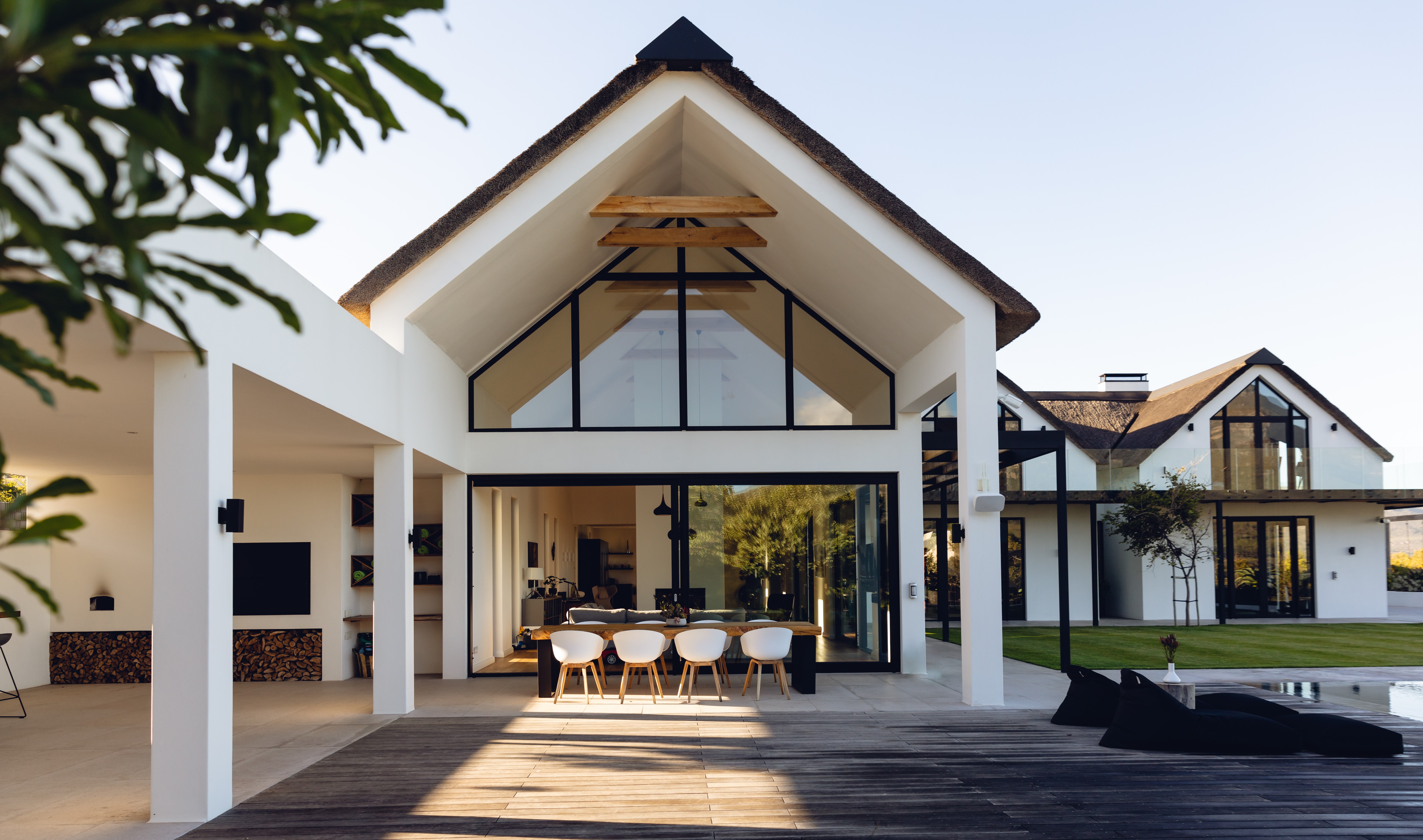
Outdoor living spaces now function as extensions of the interior. I'm not talking about a deck with a grill. Affluent Triangle buyers want resort-caliber outdoor kitchens with built-in Lynx or Twin Eagles grills, beverage refrigeration, and often a wood-fired pizza oven. Infinity-edge pools with integrated spas, automated pool houses with climate-controlled changing areas, and professionally designed fire features are baseline expectations in estates over $2.5 million. These are lifestyle enablers for clients who entertain frequently and treat their home as a private country club.
Location and What Defines True Luxury Here
Location remains the ultimate differentiator. Gated communities like Governors Club, Southern Hills Estates, Maida Vale, and Shadow Creek Estates continue to attract buyers seeking controlled access and established prestige. But demand keeps growing for custom homes on 3-to-10-acre private parcels, particularly in western Wake County near Cary and northern Durham near Bahama. These buyers want the security of space and complete control over their environment without HOA architectural review committees or mandatory club memberships.
What actually elevates a property into true luxury territory in our market? Book-matched marble or quartzite is expected in primary baths and statement kitchens. Custom millwork and coffered ceilings signal craftsmanship mass-market builders cannot deliver. Architectural pedigree matters: homes by recognized Triangle firms like Rufty Custom Built Homes, Donelan Contracting, or The Yeargan Company command premiums because buyers know the quality standards embedded in those names. Proximity to RTP's corporate campuses, Duke University, or UNC-Chapel Hill translates to locational permanence; those institutional anchors aren't moving, which underwrites long-term value.
The differentiators of five years ago are now table stakes. Temperature-controlled wine cellars with proper humidity management, dedicated home theaters with acoustic engineering and tiered seating, and home gyms with rubber flooring and integrated sound appear in nearly every estate I list above $2 million. The new differentiators? Wellness rooms with infrared saunas and cold plunge pools. Dedicated home offices with built-in millwork and separate entrance access. EV charging infrastructure with 240V circuits for multiple vehicles. These signal you anticipated the buyer's lifestyle before they articulated it.
Who These Buyers Are and What They Want
Buyer psychographics are where most agents selling luxury properties fail completely. The demographic we target is typically 40 to 60 years old with household income exceeding $500,000 annually, often substantially higher. A significant percentage are tech executives relocating from Silicon Valley, Seattle, or Boston, accustomed to $2 million buying 1,800 square feet, so our market's value proposition lands immediately. We also see medical specialists, particularly surgeons and physicians affiliated with Duke Health or UNC Health, and entrepreneurs who've exited Triangle-based companies and are upgrading their primary residence.
The common thread: these buyers are globally mobile and acutely aware of market inefficiencies. They've owned homes in multiple states. They understand cost-per-square-foot analysis but also recognize when a property offers intangible value beyond spreadsheet metrics. They evaluate school district rankings even with kids already in college, because rankings affect resale. They check crime statistics by zip code and historical appreciation rates before they ever schedule a showing.
What do they actually want? In 18 years of selling in The Triangle, three priorities appear in virtually every buyer consultation: privacy, security, and exclusivity. They're purchasing a sanctuary from demanding careers with constant travel and public visibility. Long gated driveways, mature tree buffers from neighboring properties, and advanced security systems with perimeter cameras and monitored intrusion detection aren't paranoia; they're baseline comfort requirements. They want convenient access to RTP, Duke, or downtown Raleigh, and they want to retreat behind gates at the end of the day.
Preparing Your Mansion for the Luxury Market
First impressions in luxury real estate aren't formed at your front door. They happen the moment a buyer's vehicle turns onto your street. I've watched qualified buyers write off a property before they parked, purely from curb appeal deficiencies that were completely correctable. The exterior must immediately communicate that everything about this property has been maintained to uncompromising standards.
The Arrival Sequence
Engage a landscape architect, not just a landscaping company. There's a fundamental difference: you need someone who understands sightlines, seasonal color rotation, and how to frame architectural features with strategic plantings. Mature hardwoods should get certified arborist maintenance: dead limbs removed, canopies shaped, mulch beds meticulously edged. Consider hardscape elements like a stone water feature near the entrance or architectural lighting that transforms the property at dusk. Buyers increasingly schedule evening showings, and a home that looks spectacular after dark communicates a level of finish daylight photos can't capture.
The driveway is your arrival experience. Standard asphalt with cracking or fading signals deferred maintenance before the buyer sees anything else. I've had sellers invest $35,000 to $50,000 in paver driveways using Belgian block or tumbled cobblestone, and we've recaptured that investment multiple times over in final sale price and reduced days-on-market. The moment a buyer experiences a beautiful arrival sequence, their mental pricing model adjusts upward.
If your estate has views — overlooking Falls Lake, the Eno River, or the manicured fairways at Prestonwood Country Club — those sightlines must be expertly revealed and framed. That might mean selectively removing lower tree branches, trimming overgrown shrubs, or installing viewing platforms or pergolas that draw the eye toward the vista. A $2.8 million property with an unrecognized water view is fundamentally mispriced until that view is made obvious and accessible.
Your front entrance is the threshold between exterior and interior, and it must make a definitive statement. I've seen sellers replace builder-grade entry doors with custom 8-foot mahogany doors with wrought iron glass inserts and immediately transform the perceived caliber of the entire home. Consider Corinthian columns, a coffered portico, or statement lighting fixtures from manufacturers like Restoration Hardware or Visual Comfort. The entrance should look like something photographed for Architectural Digest, not a standard subdivision builder package.
Staging for the Aspirational Lifestyle
Interior staging for luxury properties requires a completely different approach than standard home staging. You cannot use a generalist stager who normally handles $400,000 suburban homes. You need a luxury staging specialist who understands how HNW clients mentally evaluate space and who has access to furnishings that match the property's price point. I work regularly with staging professionals who source pieces from North Hills design showrooms and Cameron Village galleries, and occasionally bring in rental furniture from Atlanta or Charlotte when the Triangle market doesn't carry the specific aesthetic we need.
The goal isn't to make the home look occupied. It's to help buyers envision the aspirational lifestyle the property enables. Every room must have a clear, compelling purpose. That awkward bonus room over the garage? Stage it as a sophisticated home office with built-in shelving styled with leather-bound books and architectural models. The 800-square-foot finished basement? Position it as a climate-controlled wine storage and tasting room with a live-edge tasting table and upscale seating. Buyers need to see possibility, not empty space.
Be aggressive about showcasing high-end appliances and custom features. A La Cornue Chateau range retails for $40,000 to $100,000; it should be a central talking point in every showing, with information cards explaining the French craftsmanship and customization. Sub-Zero and Wolf appliance suites, Gaggenau steam ovens, and integrated Miele coffee systems are substantial value components many buyers won't recognize without context. Your primary bath's Jacuzzi hydrotherapy tub or Kohler DTV+ digital shower system should be presented as the spa-caliber amenities they are, not just plumbing fixtures.
A climate-controlled wine cellar should be professionally styled with bottles that suggest an active collection, even if your actual collection moves with you. Empty racks communicate missed potential rather than luxury lifestyle. Same for home theaters: plush seating, ambient lighting set to showcase the space, possibly a film paused on screen to demonstrate the 4K projection system or OLED display wall.
Thinking about selling? I’ll tell you what your property is really worth — no obligation.
Get My Free Home EvaluationTargeted Marketing Techniques for Affluent Buyers
Marketing a luxury property demands a different strategic framework than traditional residential real estate. The audience is smaller, more geographically dispersed, and substantially more sophisticated about marketing materials. Every asset has to be executed at a level that mirrors the property's quality.
Photography, Drone, and Cinematic Video
Invest in professional architectural photography, not standard real estate photography. You need a photographer who understands HDR imaging, optimal natural light conditions, and composition that emphasizes spatial flow and architectural detail. Budget $2,500 to $5,000 for a comprehensive shoot. Images must be color-corrected, perspective-corrected, and edited to magazine-publication standards.
Drone videography is non-negotiable for properties with substantial acreage, water features, or landmark proximity. Aerial footage shows the property's relationship to Jordan Lake, the Research Triangle Park campus boundaries, or the tree canopy buffer separating your estate from neighbors. I've had buyers schedule showings purely from drone footage that revealed privacy and positioning the MLS listing completely failed to communicate.
Consider commissioning a cinematic property video with professional narration, licensed music, and scripted sequences that tell a story rather than documenting rooms. These 3-to-5-minute films showcase lifestyle moments: morning coffee on the screened porch overlooking mist on a pond, evening entertaining around the outdoor fireplace, a formal dinner in the dining room under the chandelier. This content gets shared on YouTube, Vimeo, and private video hosting platforms, then distributed through targeted email campaigns to qualified buyers and buyer's agents.
Luxury Platforms and Targeted Print
Your listing must appear on luxury-specific platforms HNW buyers actually use. Mansion Global provides international exposure, which matters because we're seeing more international buyers targeting The Triangle. The Wall Street Journal Real Estate section reaches a pre-qualified audience that fits our exact demographic. LuxuryRealEstate.com and JamesEdition add exposure in the ultra-luxury segment. Standard MLS syndication to Zillow and Realtor.com is necessary but insufficient.
Don't abandon traditional channels. Print advertising in targeted publications remains highly effective because it provides a tangible, prestigious touchpoint. Midtown Magazine reaches affluent Triangle households with demographic precision. Walter Magazine (formerly O.Henry) targets the specific neighborhoods where our buyer demographic already lives. I've secured multiple showings directly from print placements where buyers first encountered the property in a physical magazine, then researched it online. The print ad establishes credibility digital advertising alone cannot replicate.
The Professional Network Advantage
Your agent's professional network is arguably the most valuable marketing asset you have access to. At the Tim M. Clarke Team, we've spent 18 years building relationships with corporate relocation directors at companies like Cisco, SAS Institute, and Red Hat, organizations that regularly move senior executives into The Triangle. We maintain relationships with wealth management advisors at Wells Fargo Private Bank, UBS, and First Citizens Bank, who often know when their HNW clients plan to purchase a primary residence before those clients contact a real estate agent.
We leverage connections with family office advisors who manage ultra-high-net-worth portfolios and frequently facilitate real estate acquisitions as part of broader wealth strategies. Our network includes luxury automotive dealerships — Porsche, Mercedes-Benz, BMW — whose sales teams interact daily with exactly the demographic we're targeting. A discreet mention at the right time to the right person has generated showings with qualified buyers who weren't searching MLS listings at all, because they prefer confidential, off-market opportunities.
Showcasing the Lifestyle, Not Just the Property
The fundamental strategic error I see agents make is selling the house instead of the life the house enables. A buyer touring a $3 million estate isn't wondering whether they can afford the mortgage; they cleared that with their private banker or mortgage broker before scheduling. They're evaluating whether this property will enhance their daily life, reflect their personal brand, and perform as an asset within their portfolio.
The Triangle offers a genuinely rare combination: economic growth anchored by Fortune 500 headquarters and global research institutions, urban cultural amenities typically found only in much larger cities, and immediate access to recreational outdoor environments. Your property's value isn't just the four walls. It's the lifestyle ecosystem those walls open onto, which is why I point relocating buyers to our community guides as often as to individual listings.
Sell the Community and the Culture
If your estate sits in an exclusive community like The Governors Club in Chapel Hill or Preston in Cary, you're selling membership in an elite community with its own social fabric. Detail the championship golf course and its architect, the tennis and fitness facilities, the social calendar of member events, and the caliber of neighbors these communities attract. Buyers are purchasing a curated life where their children play with children from similar backgrounds and business relationships form organically around the pool or the nineteenth hole.
Emphasize proximity to cultural institutions HNW individuals actively patronize: the North Carolina Museum of Art with its internationally significant collection and park trails with outdoor installations; DPAC (Durham Performing Arts Center), whose Broadway tours rival anything in Atlanta or Nashville; the Carolina Ballet, North Carolina Symphony, and Opera Carolina at venues like Meymandi Concert Hall. Many of our luxury buyers hold season tickets to multiple performing arts organizations. They want to know they're 20 minutes from downtown rather than 45.
Highlight The Triangle's culinary scene, which has evolved dramatically over the past decade. We have James Beard Award nominees and Michelin-recognized chefs at restaurants like Bida Manda, The Pit, Herons at The Umstead Hotel, and Fearrington House. For buyers relocating from major metropolitan markets, proof of sophisticated dining is essential; they need to know they're not sacrificing culinary excellence by moving here.
Experiential and Personalized Showings
Create curated, experiential events that let qualified buyers emotionally connect with the property rather than tour empty rooms. I've hosted private wine tastings led by certified sommeliers from local establishments like Vinoteca and Wine Authorities, showcasing the property's cellar while giving buyers a taste of The Triangle's wine culture. We've arranged private chef dinners prepared by chefs from restaurants like Saint Jacques and Second Empire, using the listing's gourmet kitchen for a five-course meal for prospective buyers and their spouses.
These experiential showings serve a dual purpose: they demonstrate the property's entertaining capabilities in an authentic setting, and they create memorable, emotional experiences that separate your listing from every other property the buyer tours that week. A couple who has shared a beautifully prepared meal in your dining room, looking out over your terrace at sunset, will remember your property far more vividly than the six they saw during standard daylight showings.
Personalize every showing to the specific buyer. Showing to known art collectors? Arrange for a gallery consultant from Lump Gallery in downtown Raleigh or Craven Allen Gallery in Durham to attend and discuss how specific walls and lighting would showcase their collection. Buyers who are fitness enthusiasts? Have your showing agent ready to demonstrate the home gym, explain how the pool area supports a wellness routine, and mention nearby running and cycling routes like the Tobacco Trail and Umstead State Park's trail system.
Working with Luxury Real Estate Professionals
The single most consequential decision you'll make in selling your luxury property is choosing who represents you. Generalist residential agents cannot effectively compete here. The luxury market runs on different buyer motivations, different negotiation strategies, different legal complexities, and different professional networks.
Vetting the Track Record
Your agent must have a documented track record of luxury closings in The Triangle specifically. Ask for their sales history above $1.5 million over the past 24 months. Request references from past clients who sold comparable properties. Verify their average list-to-sale price ratio; elite luxury agents consistently close at 95% to 98% of list because they know how to position properties and manage negotiations with sophisticated buyers.
Due Diligence Runs Deeper
Luxury transactions involve substantially more complex due diligence than standard residential sales. Larger acreage may carry land-use restrictions, conservation easements, or unrecorded deed restrictions requiring careful legal review. Water features, private wells, and septic systems bring regulatory compliance requirements with Wake County Environmental Services or Durham County Engineering. If the property sits in a homeowners association, buyers will request years of HOA meeting minutes, reserve study reports, and CC&R documentation. Your agent must prepare this documentation before it's requested, and in many cases a pre-market inspection surfaces issues while you still control the timeline.
Negotiation Is Structural, Not Linear
Negotiation dynamics in luxury transactions rarely follow simple offer-and-acceptance patterns. I routinely handle multi-party negotiations where buyers request complex terms: structuring the purchase through an LLC for privacy and liability reasons; seller financing or a delayed closing timed to a 1031 exchange on a property they're selling; specific chattel items included in the deal, from furniture and artwork to wine collections or even vehicles when there's a collectible car garage attached.
An agent who can't structure these terms will either walk away from viable deals or accept terms that cost you money. I've negotiated a transaction where we included a one-year membership to Prestonwood Country Club as a closing incentive. It cost my seller $25,000 and closed a $3.4 million deal that had stalled over a $75,000 price gap. Creative structuring requires deep market knowledge and confidence with non-standard terms.
Allied Professionals Who Add Value Before Listing
The value of a well-connected agent compounds. My team maintains active relationships with senior executives at Triangle-based companies, department chairs at Duke and UNC who advise incoming faculty on housing, and investment advisors at local wealth management firms. These relationships provide confidential access to buyers before they search public listings. In many luxury transactions, the buyer never saw the property on Zillow; they heard about it through a trusted professional referral, which immediately establishes credibility.
Consider partnering with allied professionals before you list. If your estate needs targeted updates — dated kitchen marble, a primary bath whose tile work trails current luxury standards — work with established luxury builders like Tingen Construction Company, Thompson Residential, or Renaissance Custom Homes. These firms execute high-end renovations that deliver ROI rather than over-improving for the market. A $150,000 kitchen renovation by a recognized luxury builder can generate $250,000 in additional sale proceeds when it transforms the space from dated to spectacular.
Some sellers benefit from interior designers who specialize in luxury resale preparation: not staging, but design consultation that identifies which updates yield the highest returns. Firms like Carter Skinner Residential Design and Design Lines can assess your property and recommend strategic investments that disproportionately shift buyer perception.
For the ultimate differentiation, offer concierge services to prospective buyers during their decision. Partner with Triangle-based lifestyle management companies that can arrange temporary housing, school tours for their children, private tours of Duke or UNC if they're affiliated with those institutions, or introductions to private clubs. These services signal you understand the complexity of a high-level relocation and you're committed to making the move easy.
Thinking about selling? I’ll tell you what your property is really worth — no obligation.
Get My Free Home EvaluationPricing Strategies for the Luxury Market
Pricing a luxury property is where rigorous market analysis meets intangible value factors that traditional appraisal methodologies struggle to quantify. In the $300,000 to $800,000 range, cost-per-square-foot provides a reliable baseline. Luxury estates defy that math because the attributes commanding premium pricing don't reduce to spreadsheet calculations.
Finding Genuine Comparables
Start with truly comparable properties, which is harder than it sounds. A 6,000-square-foot estate in Preston and a 6,000-square-foot estate in Falls River in North Raleigh share square footage, but community prestige, amenity access, and lot premium create substantial value differences. Your agent must match not just size but finish level, architectural pedigree, lot characteristics, and community positioning.
Treat comparable sales data with substantial skepticism. In the luxury market there are often very few genuine comps in any 12-month window. A sale from 14 months ago may be irrelevant if conditions have shifted. Properties comparable on paper may hide off-market conditions: a corporate relocation buyer under time pressure, a sale between family members, or a listing that sat 18 months and finally sold at a distressed price. Your agent must know the story behind every comp to weigh it correctly.
Valuing What Can't Be Replicated
Unique architectural features require careful valuation. A home custom-designed by a recognized architect with vaulted ceilings and exposed timber trusses, walls of floor-to-ceiling glass, or stone imported from specific quarries represents substantial invested capital that buyers will value, but only if it's highlighted and contextualized. A $200,000 custom wine cellar with temperature and humidity controls, custom millwork, and 3,000-bottle capacity is a significant value component for the right buyer and worthless to someone who doesn't drink wine. Buyer psychographics determine how much weight each feature carries in your pricing.
Historical significance or celebrity provenance can command real premiums. If your estate was owned by a notable Triangle business figure, designed by a regionally significant architect, or has documented historical importance, that narrative becomes part of the value story. I've marketed properties where the historical backstory became the central marketing theme and justified pricing 15% to 20% above what comparable square footage would suggest.
Views and natural features are the hardest attributes to value because they're unique and non-replicable. A property overlooking Jordan Lake with unobstructed water views, or a ridgeline lot with panoramic sunsets toward the Blue Ridge Mountains visible 100 miles west, is something no budget can recreate. Pricing these requires view-premium comparables from other markets — what lake-view properties command relative to non-view properties elsewhere — adapted to The Triangle's specific conditions.
Modeling Offers to True Net Proceeds
Prepare for complex, multi-dimensional negotiations that go beyond price. Luxury buyers propose sophisticated terms: a 120-day closing to accommodate their current home sale; a pre-closing occupancy agreement to move in early; seller financing for a portion of the purchase to reduce cash requirements or improve their debt structure. Some negotiations involve personal property inclusions: the custom window treatments you planned to take, the outdoor furniture package from the pool area, or artwork professionally integrated into the home's design.
Your agent must model true net proceeds under each scenario. An offer of $2.85 million with a 60-day close, no contingencies, and $100,000 in requested chattels might actually net less than $2.775 million with a 30-day close and no extra requests, once you factor carrying costs and the replacement value of what's being asked for.
Consider strategic incentives that deliver disproportionate value to buyers relative to their cost to you. If your property is in Prestonwood, offering to pay the buyer's first year of country club dues — roughly $20,000 to $25,000 — might be the factor that closes a $3.2 million deal. If you hold long-tenured Carolina Hurricanes season tickets or Duke basketball tickets, offering to transfer them adds lifestyle value beyond the real estate itself. These creative elements demonstrate sophistication and signal you're committed to making the deal work.
Final Thoughts from Tim
The difference between a property that sits for 247 days and sells at 87% of list and one that moves in 45 days at 97% of ask isn't the property. It's the execution. I've watched $2.5 million estates languish because they were presented poorly, priced on hope, and marketed through standard residential channels that never reached a qualified HNW buyer. Repositioned correctly, those same properties sold quickly at premium pricing.
Your success hinges on three things: presentation that immediately signals quality, marketing that reaches the specific demographic who can and will pay premium pricing, and representation by professionals who understand luxury transaction dynamics. None is optional, and none compensates for the absence of another. You're not selling shelter; you're offering a strategic asset acquisition that has to enhance a buyer's daily life, host their business and social entertaining, place them among peers, and appreciate over time, all at once.
The luxury market rewards preparation, sophistication, and strategic patience. It punishes wishful thinking and agents working outside their competence. With millions of dollars and potentially years of carrying costs at stake, my team and I would rather show you the exact playbook before you list than help you recover after a mispositioned launch. If you're weighing a sale, start with a confidential conversation and a comprehensive comparative market analysis. Your estate deserves representation that matches its caliber.
Frequently Asked Questions About Attracting Affluent Buyers
Where do high-net-worth buyers search for luxury homes?
What do affluent buyers want most in a luxury home?
How much does it cost to market a luxury home properly?
Is staging worth it for a multi-million dollar home?
How long does it take to sell a mansion in Raleigh-Durham?
Should I renovate my luxury home before selling it?
Thinking about selling? I’ll tell you what your property is really worth — no obligation.
Get My Free Home Evaluation