Building or buying new? Let’s make sure the builder’s contract works for you — not just for them.
Schedule a New Construction ConsultationThe 30-second version
- Impervious means water can't soak in. Concrete driveways, asphalt, rooftops, and traditional patios all shed rain instead of absorbing it.
- Runoff is the real cost. More hard surface means faster, heavier runoff — localized flooding, stream-bank erosion, and oil and grease carried toward Falls Lake and the Neuse River.
- Many Triangle municipalities cap coverage. A maximum impervious percentage can limit what you build and how you use the lot, so check your local ordinance before you draw plans.
- Permeable options let you build and still drain. Permeable pavers, porous asphalt and concrete, rain gardens, and bioswales cut your footprint — and some areas offer tax credits or stormwater fee reductions.
In my 17+ years building and selling homes across the Raleigh-Durham Triangle, I've watched one detail decide whether a lot works: how much of it sheds water instead of soaking it up. That's the impervious surface question. It sounds like an engineering footnote. It sets your buildable area, your flood exposure, and sometimes your insurance bill.
Impervious surfaces are the materials that keep rain from reaching the soil. They're everywhere on a residential property — the driveway you park on, the roof over your head, the patio out back. Here's what they cost, and what you can do about it.
What counts as an impervious surface
If water hits it and runs off instead of sinking in, it's impervious. On a typical Triangle lot, four surfaces do most of the work.
| Surface | Permeable? | Runoff impact |
|---|---|---|
| Concrete driveways and sidewalks | No | High — durable, but sheds every drop |
| Asphalt (roads, drives) | No | High — a major source of hard coverage |
| Rooftops | No | High — the footprint people forget |
| Patios and decks (traditional) | No | Moderate to high depending on material |
The rooftop is the one that surprises people. It's easy to picture the driveway as the problem. The roof is often the single largest impervious surface on the lot, and it counts against you the same way.
If water hits it and runs off instead of sinking in, it counts — and the roof usually counts most.
Why runoff is the real cost
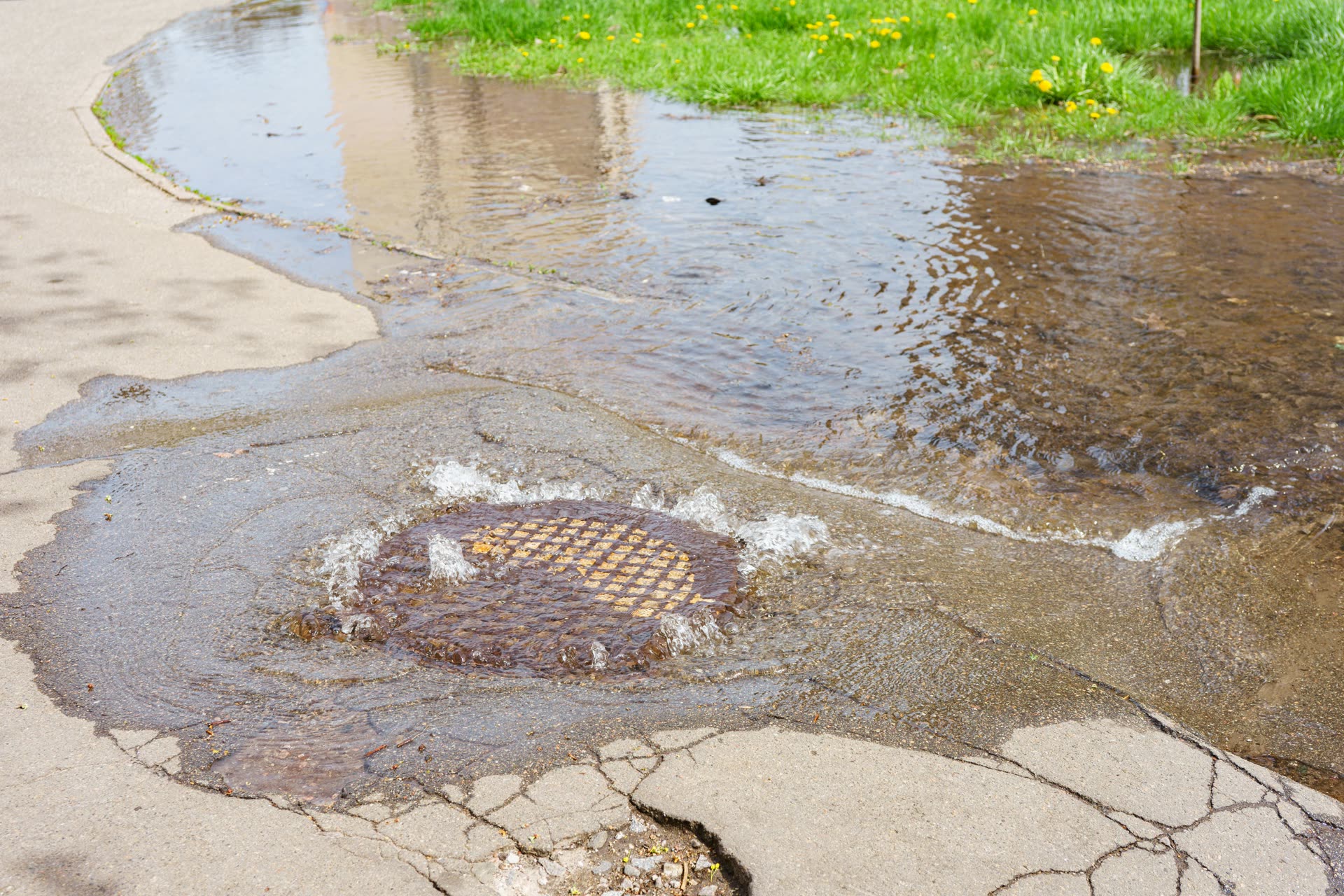
We get heavy summer thunderstorms here, plus the occasional tropical system pushing up from the coast. Impervious surfaces increase both the volume and the speed of surface runoff. That's when the trouble starts.
Flooding and erosion
- Localized flooding. Low-lying areas and neighborhoods with thin drainage take it first.
- Erosion. Fast water chews at stream banks and cuts into steep terrain.
Water quality
Runoff doesn't leave clean. It picks things up on the way down.
- Pollutant transport. Oil, grease, and other contaminants wash off roads and driveways into local waterways like Falls Lake and the Neuse River.
- Thermal pollution. Asphalt and concrete soak up heat, then warm the runoff — hard on aquatic life downstream.
The ground underneath
Every square foot of hard surface is a square foot the rain can't recharge. As new neighborhoods go in, that adds up two ways: habitat loss where development meets wildlife areas, and groundwater depletion as reduced infiltration lowers water tables that feed wells and springs.
What it does to your property
This isn't only an environmental question. It lands on value and on what you're allowed to do.
Value and risk
- High impervious coverage can raise flood risk — which can push up insurance rates and drag on value.
- Coverage limits in some Triangle areas cap development potential and restrict how you use the property.
Stormwater burden
- Excess runoff can overload municipal stormwater systems, feeding flooding and water-quality problems.
- Managing runoff on your own lot carries real maintenance cost over time.
Building or buying new? Let’s make sure the builder’s contract works for you — not just for them.
Schedule a New Construction ConsultationImpervious versus permeable
The fix isn't paving less and living with mud. It's choosing surfaces that carry weight and still let water through.
Impervious (sheds water)
- Poured concrete drives and walks
- Standard asphalt
- Conventional rooftops
- Solid-set patios and decks
Permeable (lets water through)
- Permeable pavers — stable surface, water seeps between
- Porous asphalt and concrete, engineered to pass water into the soil below
- Green roofs that absorb rain and add insulation
Porous asphalt and concrete are showing up more and more in the custom homes we work on. Permeable pavers give you a firm driveway or walkway that drains instead of dumping into the street.
Green infrastructure that earns its keep
Some of the best runoff tools double as landscaping. They handle water and they look like a choice, not a compromise.
Green infrastructure
- Rain gardens. Landscaped low spots that collect and filter runoff — useful and good-looking.
- Bioswales. Planted channels that slow and clean stormwater, often set along driveways or property lines.
- Green roofs. More common on commercial buildings, but some custom-home clients are putting gardens up top to absorb rain.
Smart landscaping
- Strategic grading. Shape the lot so water flows toward permeable ground, and runoff drops.
- Native plant selection. Plants suited to our North Carolina climate absorb more water and ask for less irrigation.
The rules and the incentives
Regulation around impervious surfaces keeps tightening across the Raleigh-Durham area. Some of it constrains you. Some of it pays you back.
Ordinances and zoning
- Impervious surface limits. Many municipalities set a maximum coverage percentage that can reshape a building plan. The number varies by jurisdiction — check your local ordinance before you commit to a design.
- Stormwater management requirements. New developments often have to include on-site water management.
Incentives
- Tax credits. Some local governments offer tax benefits to homeowners who put in green infrastructure.
- Stormwater fee reductions. A few areas discount utility fees for properties that cut their runoff.
The coverage cap is set by your jurisdiction, not by me — confirm the local ordinance before you draw the driveway.
Building or buying new? Let’s make sure the builder’s contract works for you — not just for them.
Schedule a New Construction ConsultationWhat I've seen work in the Triangle
Three projects from our own market show how this plays out on real lots.
- Cary subdivision. A developer ran bioswales and permeable driveways throughout a new subdivision. It met local rules and turned into a selling point for buyers who cared about it.
- Durham custom home. A client put a green roof on the garage and a rainwater harvesting system on the lot — smaller impervious footprint, plus water for the garden through dry spells.
- Raleigh renovation. A homeowner with recurring flooding reworked the landscape around a series of rain gardens. The water problem went away and the yard got easier to keep.
If you're buying or selling
Impervious coverage cuts both ways depending on which side of the table you're on.
Buyers
- Look for smart stormwater features already in place.
- Weigh the long-term upside of lower impervious coverage.
- Ask about existing water issues or flood history.
Sellers
- Consider adding mitigation before you list.
- Call out any green infrastructure or stormwater features in the listing.
- Be ready to explain how the property handles heavy rain.
Your next moves
- Find your coverage capCheck the local ordinance for the maximum impervious percentage on your lot before you plan anything.
- Add up your hard surfacesTotal the driveway, roof, walks, and patio — the roof usually counts for more than you'd guess.
- Swap in permeable where it fitsPermeable pavers, porous concrete, rain gardens, or bioswales cut runoff without cutting usable space.
- Ask about credits and fee reductionsSee whether your area offers tax credits or stormwater fee discounts for green infrastructure.
- Check flood and water history before buyingAsk the seller about past flooding and how the lot sheds a heavy rain.
My team and I work with local builders and landscape designers on this every day, and we'll walk your specific lot with you. If you're building, buying, or selling in the Triangle, reach out and we'll follow up.
Building or buying new? Let’s make sure the builder’s contract works for you — not just for them.
Schedule a New Construction Consultation