Thinking about selling? I’ll tell you what your property is really worth — no obligation.
Get My Free Home EvaluationYour roof is one of the biggest single systems you'll ever pay to replace, and one of the first things a buyer or inspector looks at. After nearly two decades selling homes across Raleigh, Durham, Cary, and Chapel Hill, I've watched roofs quietly make or break deals. This page is for homeowners who want the plain-English version: what covers your house, how long it lasts, what it costs, and how it plays into buying or selling here.
I'll keep this on residential roofs. If you own a storefront, office, or warehouse, the rules differ, and I cover that in how commercial roofing differs.
The 30-second version
- Asphalt shingles cover most Triangle homes because they're affordable, proven, and easy to repair.
- Material, roof size, and pitch drive most of the cost of a full replacement.
- Inspect twice a year and after big storms, and catch small problems before they rot the deck.
- A repair beats a replacement when damage is isolated and the roof still has years left.
- A tired roof shows up in inspections and can shrink your buyer pool or your price.
Common residential roof types
Most Triangle homes wear one of a handful of roofing materials. Here's how they stack up for a homeowner deciding what to install, or what they're inheriting on a house they're buying.
Asphalt shingles
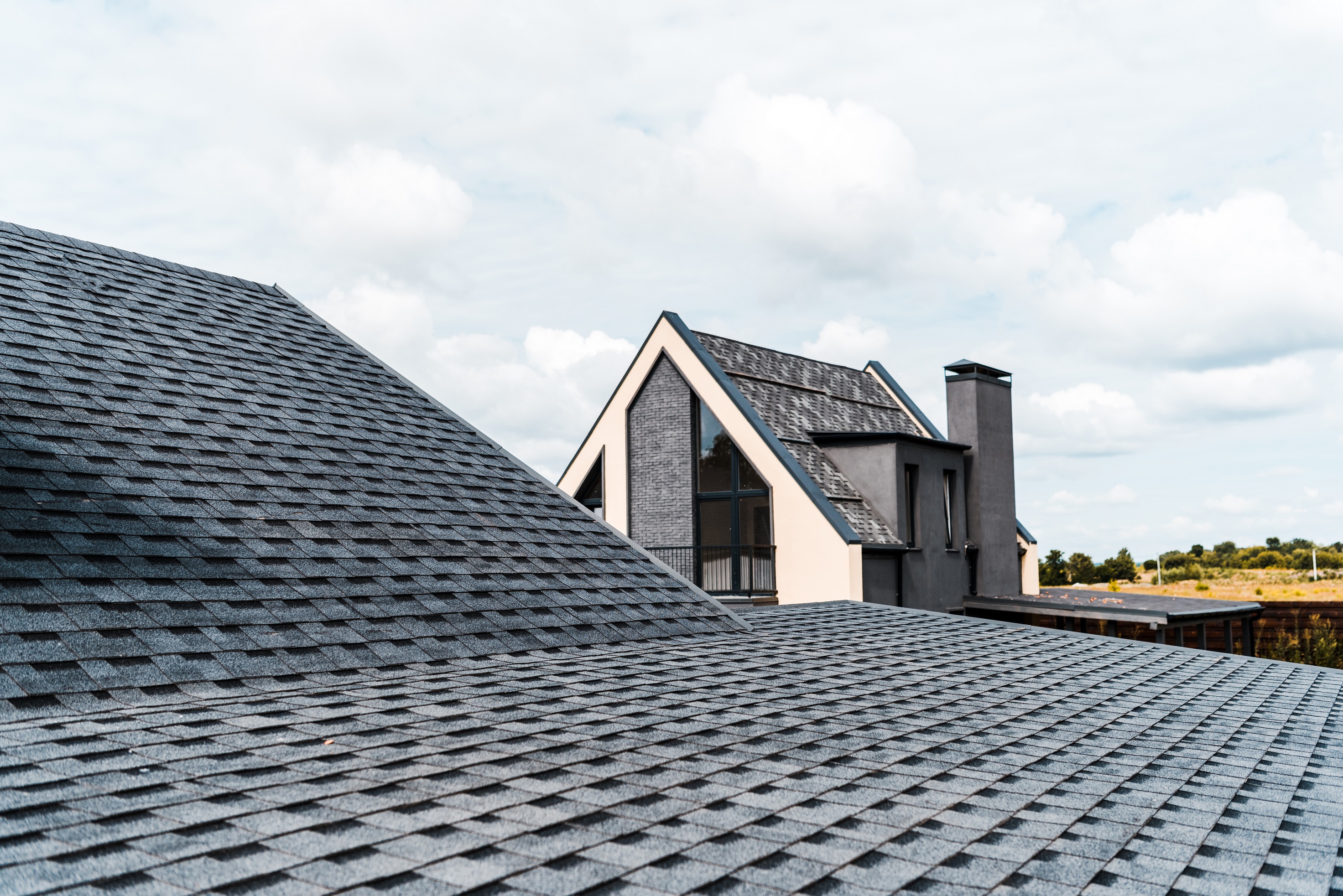
The default for a reason. Three-tab asphalt shingles are affordable and come in plenty of colors. Architectural (or "dimensional") shingles cost a bit more, look thicker and richer, and hold up better to wind. For most homeowners here, architectural shingles are the sweet spot of price, curb appeal, and lifespan.
Metal roofing
Metal keeps gaining ground, especially with owners who plan to stay put. It lasts a long time, reflects heat well, and gives a house a clean, modern line. The upfront price runs higher than shingles, but you're buying decades of service.
Tile and slate
For a luxury look and a roof that can last a lifetime, tile and slate are hard to beat. They cost more, and they're heavy enough that the framing has to support them. You'll see them on higher-end homes rather than the typical subdivision.
Underneath whatever material you choose, two things do the quiet work: underlayment (the water barrier below the shingles) and ventilation. Good ventilation keeps moisture out of the attic and adds years to the roof above it.
What drives cost and lifespan
When homeowners ask me what a roof "should" cost, the honest answer is: it depends on a few clear factors. Material is the big one, but it's not the only one.
- Material.Asphalt sits at the affordable end; metal, tile, and slate climb from there and last longer.
- Size.Roofers price by the square (100 square feet), so a bigger footprint means a bigger bill.
- Pitch and complexity.Steep roofs and cut-up designs with lots of valleys, dormers, and hips take more labor and safety gear.
- Tear-off and decking.Removing old layers and replacing rotted plywood underneath adds cost you can't see from the driveway.
- Labor and season.Local crew rates and how busy roofers are (often after a storm) move the final number.
Costs swing widely with all of that, so I won't quote a figure that'll be stale by the time you read it. Get two or three written estimates from licensed local roofers and compare them line by line. If you're folding the spend into a larger project, I walk through budgeting a roof replacement alongside other big-ticket work.
On lifespan, the material sets the ceiling but maintenance decides whether you reach it. An ignored roof can fail early; a well-vented, well-maintained one runs its full expected life.
Maintenance and warning signs
Keeping a home's roof healthy isn't complicated, and it's a lot cheaper than replacing it before its time. I tell my clients to give the roof a look at least twice a year, and again after any severe storm.
From the ground with binoculars, or from a ladder if you're comfortable, watch for these:
- Missing, cracked, curling, or lifted shingles.
- Granules collecting in the gutters (that's the shingle surface wearing off).
- Dark streaks or algae growth, common on shady, north-facing slopes.
- Damaged or rusted flashing around chimneys, vents, and valleys.
- Sagging rooflines or daylight showing through the attic.
- Water stains on ceilings or in the attic after rain.
The cheapest roof repair is the one you make before the leak reaches the decking.
Clear branches that overhang the roof, keep gutters flowing so water doesn't back up under the shingles, and address small leaks fast. Catching problems early is the whole game.
Thinking about selling? I’ll tell you what your property is really worth — no obligation.
Get My Free Home EvaluationRepair or replace?
This is the question I get most, and there's a sensible way to think about it. Not every problem calls for a full replacement.
Lean toward repair
- Damage is isolated to one area or a few shingles.
- The roof is still well within its expected lifespan.
- A storm knocked off shingles but the rest is sound.
- Flashing failed but the field of the roof is fine.
Lean toward replace
- The roof is near or past its expected age.
- Leaks show up in more than one spot.
- Decking underneath is soft or rotted.
- You're patching repeatedly, chasing new leaks each season.
When you do repair, matching shingle color and profile matters for resale. A mismatched patch reads as "problem" to a buyer even when the fix is solid.
Insurance and inspection basics
Two roof-related things trip up homeowners more than any other. First, insurance: storm and wind damage is often covered, but wear and age usually aren't, and some insurers get strict about older roofs at renewal. If a storm hits, document the damage and file promptly, and confirm your coverage and deductible with your insurance agent.
Second, inspections. A home inspector or roofer will flag age, leaks, missing shingles, and failing flashing. If you're hiring the work out, use a licensed, insured contractor with a solid local track record, ask for references and a written estimate, and get the warranty in writing. A good contractor won't blink at any of that.
One note: I'm a Realtor, not a roofer, insurance adjuster, or attorney. Treat this as orientation, and confirm the details on your home with the right licensed professional.
Roofs when you're buying or selling in the Triangle
Here's where my lane and yours overlap. A roof's condition shows up in almost every transaction I handle.
If you're selling: a tired roof narrows your buyer pool and hands leverage to the other side. Buyers relying on financing sometimes can't close on a roof at the end of its life, because the lender or their insurer balks. A pre-listing roof check and a fresh estimate let you get ahead of it instead of reacting to an inspection report. It ties into the wider set of exterior projects that add value before you go to market.
If you're buying: ask how old the roof is and whether it's ever been replaced. If it's aging, factor a near-term replacement into your offer. It's a normal thing to negotiate, and far better to price in now than to be surprised a year after closing.
Thinking about selling? I’ll tell you what your property is really worth — no obligation.
Get My Free Home EvaluationHow residential differs from commercial
Homeowners sometimes assume "a roof is a roof," but residential and commercial systems solve different problems. In short: homes use sloped roofs and shingles, metal, or tile, chosen partly for looks and curb appeal. Commercial buildings usually run flat or low-slope roofs with membrane systems built for large spans and rooftop equipment.
That's the quick contrast. If you own commercial property, or you're just curious how the flat-roof world works, I go deep on it in how commercial roofing differs. For a house, the residential playbook above is what you need.
Frequently Asked Questions
If you're weighing a roof repair or replacement before you list, or sizing up a home you want to buy, my team and I are glad to look at it with you and connect you with trusted local roofers. Reach out and we'll follow up to talk through your situation here in the Triangle.
Thinking about selling? I’ll tell you what your property is really worth — no obligation.
Get My Free Home Evaluation