Ready to find the right home in the Triangle? Let’s talk strategy before you tour a single property.
Schedule My Home ConsultationKEY TAKEAWAYS
- 1978 is the line. The federal government banned lead-based paint in homes that year, so any house built earlier could contain it—and the older the house, the higher the odds.
- On every pre-1978 sale, federal law gives you a lead disclosure, an EPA pamphlet, and a 10-day opportunity to test before you're locked in.
- Lead hides where paint rubs and weathers: window sashes and sills, door frames, stair railings, trim, old siding—and the soil right against the foundation.
- Intact, well-maintained lead paint is a manageable maintenance item. Disturbed lead paint—sanding, scraping, demolition—is the real hazard.
- A positive test shouldn't kill the deal. Encapsulation, enclosure, and professional abatement are all proven fixes, and they're negotiable with the seller.
Some of my favorite houses in the Triangle are also the oldest ones—the wraparound porches in Raleigh's Oakwood and Boylan Heights, the foursquares around Mordecai, the mill houses and bungalows of Trinity Park and Old West Durham, the historic blocks of Hillsborough and Carrboro. In 17+ years selling Raleigh-Durham real estate, I've walked buyers through plenty of them. And on almost every one, we've had the lead paint conversation.
Here's the version of that conversation I want you to have before you fall in love with a pre-1978 home: what the law guarantees you, where lead actually hides, how testing works, and what your options are if the results come back positive. Lead is a serious health issue, especially for young children. It is also one of the most fixable problems in residential real estate. Both things are true, and this guide holds onto both. Treat it as one piece of your broader environmental due diligence.
Intact lead paint is a maintenance item. Disturbed lead paint is a hazard. That distinction is the whole game.
Why 1978 is the line
Lead was added to paint because it worked. It made paint more durable, faster-drying, and more moisture-resistant, which is why builders used it generously on both interiors and exteriors for decades. Congress restricted it in federally funded housing with the Lead-Based Paint Poisoning Prevention Act of 1971, and in 1978 the Consumer Product Safety Commission banned lead-based paint in residential properties outright.
The result is a clean rule of thumb: the build year on the listing sheet tells you your starting odds. Per the U.S. Department of Housing and Urban Development:
In the Triangle, that maps neatly onto our in-town neighborhoods. A 1920s bungalow near downtown Durham almost certainly has lead somewhere in its paint history. A 1972 ranch in Garner or Cary might. A 1990s build in Apex or Holly Springs is past the line entirely.
Your federal protections on a pre-1978 purchase
When you buy a home built before 1978, federal law requires the seller to do four things:
- Disclose what they know. Sellers must share any known information about lead-based paint or lead hazards in the home, including past test reports.
- Hand you the EPA pamphlet. You'll receive the EPA-approved booklet Protect Your Family From Lead in Your Home before you're bound to the contract.
- Put warning language in the contract. Pre-1978 sales include a specific lead disclosure attachment with required warning language.
- Give you a 10-day inspection opportunity. You're entitled to a 10-day window to conduct a lead inspection or risk assessment before you're obligated to proceed. You can negotiate a different length or waive it in writing—on a genuinely old house, I'd rather you use it.
In North Carolina, this testing fits naturally inside your due diligence period, right alongside your general inspection. And since you already have testers in the house, that same window is your chance to knock out radon testing too—two environmental checks, one calendar.
Where lead hides
Lead paint doesn't distribute its risk evenly. The danger concentrates on friction and impact surfaces—places where paint gets rubbed, banged, and ground into dust:
- Window sills, sashes, and frames—the single most common trouble spot, because every open-and-close grinds painted surfaces together
- Door frames and doors—impact points that chip and shed
- Stairs, railings, and banisters
- Baseboards and crown molding
- Exterior siding and porch elements
- Bare soil near the foundation—decades of exterior paint weathering and old scraping jobs leave lead in the first few feet of dirt, which matters if kids play there or you're planning a vegetable bed
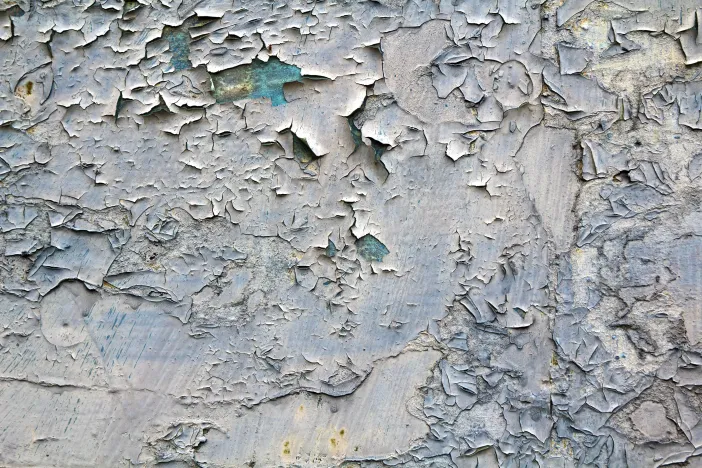
During showings, I look for the visual tells: peeling or chipping paint, chalking (a powdery residue on the surface), alligatoring (a cracked pattern that looks like alligator skin), and heavy paint buildup in corners and edges where many layers have stacked up over the decades. None of these prove lead is present—but on a pre-1978 home, they tell you where to point the tester.
Ready to find the right home in the Triangle? Let’s talk strategy before you tour a single property.
Schedule My Home ConsultationHow testing works
Skip the drugstore swab kits for a purchase decision. A certified lead inspector or risk assessor gives you results you can actually negotiate with, using one of two main methods:
XRF testing
- A handheld X-ray fluorescence analyzer scans painted surfaces without damaging them
- Results are immediate, so an entire house can be tested in a single visit
- Reads through layers, flagging lead even under newer paint
- The workhorse method for a buyer on a due diligence clock
Paint chip analysis
- Small samples are removed—all layers down to the substrate—and sent to a laboratory
- Analyzed by methods like atomic absorption spectroscopy for precise lead content
- More invasive and slower, but highly accurate for layered, ambiguous surfaces
- Useful as a follow-up where XRF results need confirmation
A risk assessment goes a step further than an inspection: instead of just cataloging where lead paint exists, it evaluates which surfaces are actual current hazards—deteriorating paint, contaminated dust, bare soil—and recommends specific responses. For a buyer, that hazard-focused read is often the more useful document.
Children and lead: why the stakes are real
I promised practical, not alarmist, so here it is straight. Children under six are the most vulnerable, because their bodies absorb lead more readily and their brains are still developing. Short-term exposure can show up as abdominal pain, fatigue, headaches, irritability, and loss of appetite. Long-term exposure is the serious part: reduced IQ and cognitive function, learning disabilities, behavioral problems, slowed growth, hearing problems, and anemia. Adults aren't immune either—prolonged exposure is linked to high blood pressure, kidney damage, memory difficulties, and reproductive problems.
The practical takeaways for a family buying an older home: test the house before you commit, keep paint intact after you move in, and talk with your pediatrician about a routine blood lead test for young children—it's a simple screen, and it turns worry into information.
If the home tests positive: your three paths
A positive result is a negotiation point and a scope of work—not a reason to walk away from a house you love. You have three broad options, and the right one depends on the condition of the paint, your renovation plans, and who's living in the house.
| Approach | What it is | Best when |
|---|---|---|
| Management in place | Keep intact lead paint stable: monitor it, maintain it, clean up dust, repaint over sound surfaces | Paint is in good condition and you're not renovating those surfaces |
| Encapsulation / enclosure | Seal the paint under a specialized liquid encapsulant coating, or cover surfaces with new material—drywall, paneling, vinyl siding—with edges sealed against dust | Surfaces are mostly sound and you want a durable barrier without full removal costs |
| Abatement | Certified professionals permanently remove or treat the lead hazard—wet scraping, chemical stripping, component replacement—with containment, protective gear, and clearance testing afterward | Paint is deteriorating, kids are in the home, or renovation will disturb those surfaces anyway |
Two rules sit over all three paths. First, never dry-sand, torch, or power-grind old paint—that's how a contained problem becomes an airborne one. Professional removal means sealed work areas, HEPA filtration, wet methods, and proper disposal of debris. Second, if you hire out any renovation, repair, or painting that disturbs paint in a pre-1978 home, the EPA's RRP Rule requires the firm to be EPA-certified, use trained renovators, and follow lead-safe work practices. You can verify any contractor in the EPA's database of certified firms—ask for proof before you sign. And remember that a kitchen gut or window replacement in an older home also triggers the ordinary renovation permit and regulation requirements on top of the lead rules.
Ready to find the right home in the Triangle? Let’s talk strategy before you tour a single property.
Schedule My Home ConsultationThe pre-1978 buyer's playbook
- Check the build year first. Anything before 1978 gets the lead conversation; anything before 1960 gets it with emphasis.
- Read the disclosure closely. Ask whether the home has ever been tested and request any prior reports—sellers must share what they know.
- Use your 10-day opportunity. Schedule a certified lead inspection or risk assessment inside your due diligence window, alongside your general inspection.
- Price the fix, not the fear. If results come back positive, get a written scope from a certified abatement or renovation firm so you're negotiating with numbers.
- Negotiate with the seller. Repairs, credits, or price adjustments are all on the table—my team and I write these asks into Triangle contracts regularly.
- Plan your ownership habits. Budget for annual paint checkups, damp-cleaning and HEPA vacuuming routines, and covering bare soil near the foundation with mulch or groundcover.
Living well in an older home
Once you own the house, lead safety becomes simple maintenance. Walk the painted surfaces once a year, paying attention to windows, door frames, and anywhere moisture or traffic wears at the finish. Clean window sills and floors with damp methods rather than dry dusting, run a HEPA vacuum regularly, and make hand-washing before meals a habit for the kids. If you ever spot peeling or chipping on a surface you know carries lead, address it promptly and keep the debris double-bagged, sealed, and disposed of per local rules.
I'll say it one more time because it's the point of this whole page: the Triangle's older neighborhoods are worth it. The lead question has a known answer, a legal framework protecting you, and a professional industry built to fix it. Test smart, negotiate from the results, and buy the porch swing.
Frequently Asked Questions
Ready to find the right home in the Triangle? Let’s talk strategy before you tour a single property.
Schedule My Home Consultation