Building or buying new? Let’s make sure the builder’s contract works for you — not just for them.
Schedule a New Construction ConsultationKey Takeaways
- Plan the site early. The best outdoor living starts on the plans, not after move-in — grading, drainage, and utility stub-outs are cheap to design and expensive to retrofit.
- Grade and drainage come first. Our Triangle clay and summer downpours make the water plan the foundation of every patio, porch, and planting bed.
- Watch your impervious surface. Patios, driveways, and pool decks all count toward your lot-coverage cap — know the limit before you draw the hardscape.
- Build native. North Carolina natives handle our heat, humidity, and clay with far less water and upkeep than the fussy imports.
When people design a custom home in the Triangle, the outdoor space is almost always an afterthought — something to figure out once the house is framed and the budget is tight. In 17+ years across Raleigh, Durham, Cary, and Chapel Hill, I’ve watched that order cost my clients real money and real regret. The yard, the grading, the porch you actually sit on — those decisions belong on the plans, right alongside the kitchen layout.
Here’s how I walk clients through landscaping and outdoor living on a Triangle custom build, from the raw lot forward, so the outdoor space works as hard as the house.
Start with the site, not the patio furniture
Before anyone picks pavers, we read the lot. Where does water go in a hard rain? Which trees are worth saving? Where does the afternoon sun land in July? On a Triangle lot — heavy clay soil, mature hardwoods, real summer heat — those answers set the whole plan. Getting a landscape architect involved during design, not after, means your grading, drainage, and outdoor rooms all get drawn together instead of fought over later.
The best backyard I’ve ever walked was decided on paper, months before the foundation was poured.
Read the lot early
- Topography — slopes, low spots, and where water pools.
- Existing trees — which hardwoods to protect during clearing.
- Sun and shade — where you’ll actually want to sit.
- Setbacks & coverage — how much hardscape the lot allows.
Coordinate with the build
- Grading — done once, for house and yard together.
- Utility stub-outs — gas, water, and power run before slabs pour.
- Drainage — French drains and swales sized on the plans.
- Access — heavy-equipment routes that don’t wreck finished work.
None of this is glamorous, but it’s where the money is won or lost. This work runs hand in hand with designing the custom home itself — the two plans should be drawn by teams that talk to each other.
Grading and drainage: the part nobody photographs
If you take one thing from me, take this: in the Triangle, water is the first problem you solve outside. Our clay soil doesn’t drain fast, and a summer thunderstorm can drop two inches in an hour. A patio that sits in a puddle, a foundation that stays damp, a lawn that turns to soup — all of it traces back to grading and drainage that got skipped or rushed.
Good grading pitches water away from the house and toward drains, swales, or a rain garden. Do it once, during site work, while the equipment is already on-site. Retrofitting drainage into a finished landscape means tearing up the patio you just paid for.
Mind your lot coverage before you pour concrete
Here’s a trap I catch clients in constantly. Every patio, driveway, walkway, and pool deck is an impervious surface — water can’t soak through it — and most Triangle jurisdictions cap how much of your lot you’re allowed to cover. Dream up a sprawling outdoor kitchen, a big pool deck, and a circular drive, and you can blow past your limit before you’ve planted a single shrub.
I always have clients tally their hardscape against the coverage cap early, on the plans, so nothing gets value-engineered out at permit time. If this is new to you, read my breakdown of impervious surfaces and lot coverage before you finalize the hardscape.
Building or buying new? Let’s make sure the builder’s contract works for you — not just for them.
Schedule a New Construction ConsultationDesign the outdoor rooms you’ll actually use
Once the site plan is solid, the fun starts. I push clients to think in outdoor rooms — defined spaces with a purpose — rather than one big undifferentiated slab. In our climate you can use these spaces most of the year, which makes them some of the best square footage in the whole build.
- Decks, patios, and porchesPick materials that match the house — natural stone, composite decking, a screened porch for our mosquito season.
- Outdoor kitchen and diningRun the gas, water, and power on the plans; a built-in grill and counter turns the backyard into a second kitchen.
- Fire and shadeA fire pit or fireplace stretches the season into fall; a pergola or covered porch tames the July sun.
- Pool or water featurePlan for it early — the deck counts toward coverage and the equipment needs power and drainage.
A covered, screened porch is the single feature I recommend most in the Triangle. It buys you spring evenings and summer nights without the mosquitoes, and buyers down the road love it.
Plant native, plant for our climate
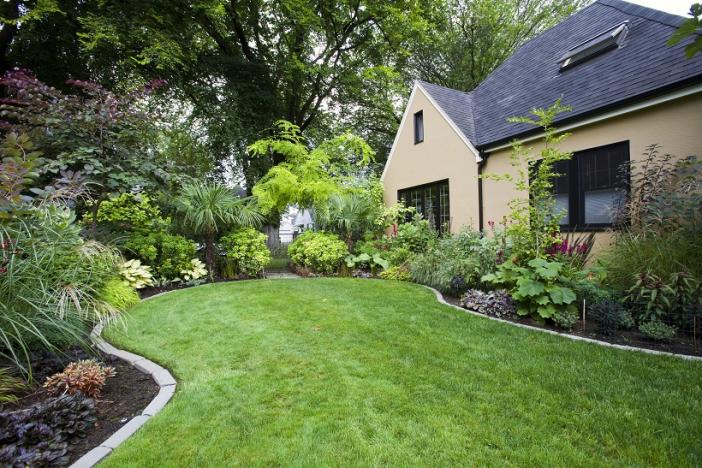
The landscaping that thrives here is the landscaping that belongs here. North Carolina natives — dogwood, redbud, oakleaf hydrangea, coneflower, muhly grass — are built for our heat, humidity, and clay. They need less water, less fussing, and less replacing than the imports that look great at the nursery and die by August.
Native & low-maintenance
- Handles Triangle heat, humidity, and clay.
- Less irrigation, lower water bills.
- Supports local pollinators and birds.
- Fewer replacements over the years.
Thirsty imports
- Struggles in our summer heat.
- Needs constant watering to survive.
- More disease and pest pressure.
- Higher upkeep and replacement cost.
Balance the hardscape and the plantings, use trees and shrubs for privacy and shade, and lean on efficient irrigation and mulch to hold water in our dry stretches. A native-first landscape is the low-maintenance one, which matters when the newness wears off and you just want to enjoy the place.
How outdoor spaces fit the bigger picture
Outdoor living isn’t a luxury add-on in this market — it’s a feature Triangle buyers expect and pay for. Thoughtful landscaping and a real outdoor room lift both your daily enjoyment and your resale value, and both are trends I’m watching closely across the Raleigh-Durham custom home market. Design them in from the start, coordinate them with the build, and you get an outdoor space that feels like part of the house rather than something bolted on afterward.
Building or buying new? Let’s make sure the builder’s contract works for you — not just for them.
Schedule a New Construction Consultation