Wake Forest neighborhoods
Compare established communities and neighborhood-specific listings.
Explore neighborhoods in Wake Forest →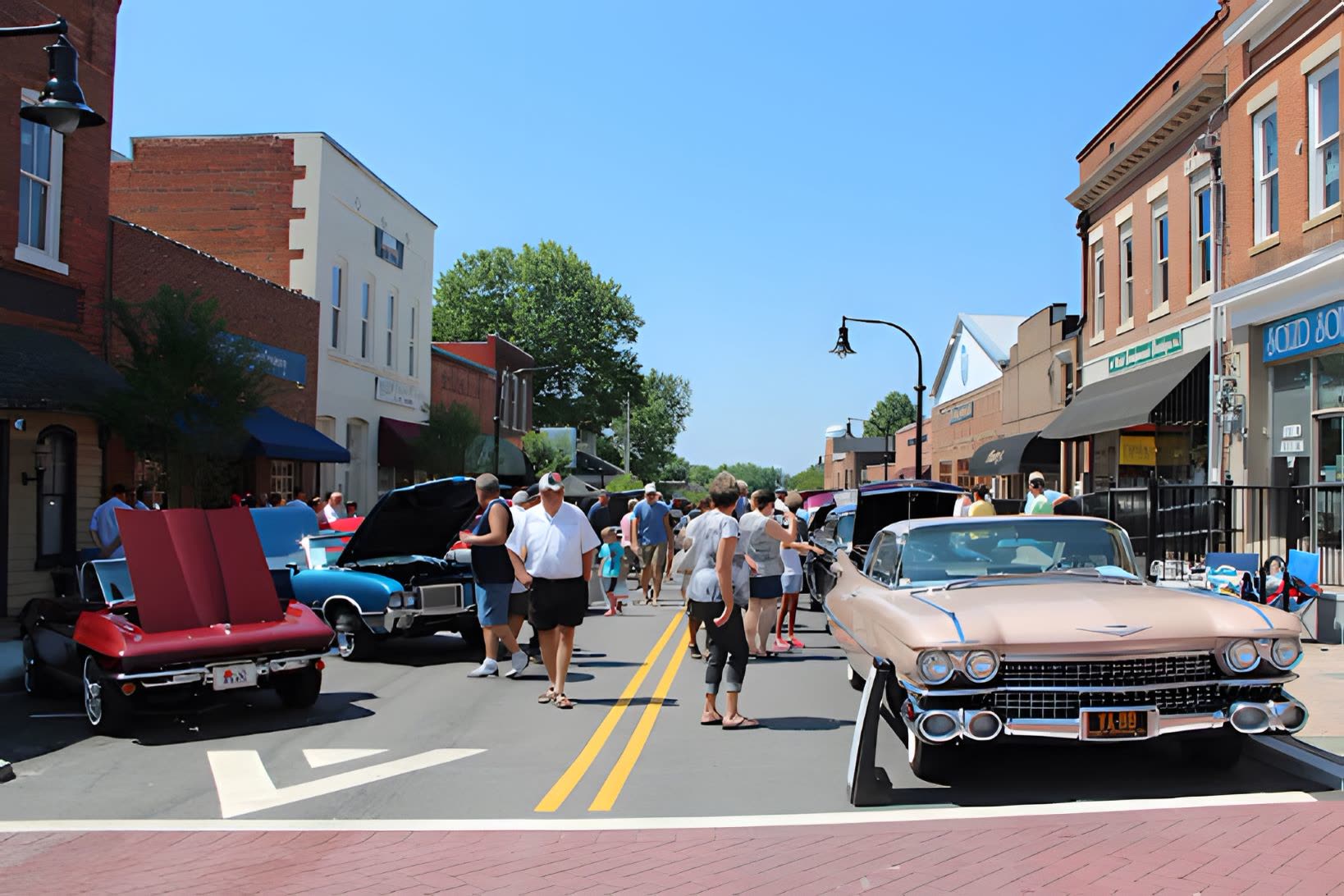
Wake Forest is a Wake County town in the Raleigh-Durham Triangle, and this guide tracks 39 Wake Forest communities. 13 of them are new-construction neighborhoods priced $250K–$949K, built by 8 production builders. The median drive from a Wake Forest community to Research Triangle Park is 36 minutes. On a new build the onsite agent works for the builder, so I represent the buyer instead — from the first Wake Forest model-home visit through closing.
Wake Forest has 13 new-construction communities and 26 established neighborhoods covered here, with 123 new homes on the market today. Builder and price columns are filled only where the Wake Forest data carries them.
| Community | Type | Builder | Price band | Homes for sale |
|---|---|---|---|---|
| Rosedale | New construction | Lennar | $300K–$781K | 20 |
| Holding Village | New construction | Tri Pointe Homes | $340K–$435K | 13 |
| Magnolia Trace | New construction | Stanley Martin Homes | $250K–$400K | 13 |
| Prestleigh | New construction | D.R. Horton | $405K–$455K | 13 |
| Grove 98 | New construction | Stanley Martin Homes | $275K–$400K | 12 |
| Enclave at Traditions | New construction | Eastwood Homes | $320K–$354K | 10 |
| Forestville Station | New construction | Taylor Morrison | $310K–$370K | 10 |
| Prestleigh Townhomes | New construction | D.R. Horton | $265K–$299K | 8 |
| Kalas Falls | New construction | D.R. Horton | $550K–$692K | 7 |
| Sage on North Main | New construction | Davidson Homes | $539K–$649K | 6 |
| Forestville Towns | New construction | Dream Finders Homes | $380K–$400K | 5 |
| Radford Glen | New construction | Taylor Morrison | $490K–$510K | 3 |
| Rockport | New construction | Davidson Homes | $879K–$949K | 3 |
| Barham Place | Resale | — | — | — |
| Berklee Estates | Resale | — | — | — |
| Drayton Reserve | Resale | — | — | — |
| Galloway | Resale | — | — | — |
| Hasentree | Resale | — | — | — |
| Hawkshead | Resale | — | — | — |
| Heritage | Resale | — | — | — |
| Hillcrest Farm | Resale | — | — | — |
| Holding Village South Lake | Resale | — | — | — |
| Kelsey at Falls Lake | Resale | — | — | — |
| Kenwood Reserve | Resale | — | — | — |
| Kingston on Thompson Mill | Resale | — | — | — |
| Majestic Oaks | Resale | — | — | — |
| Mangum Estates | Resale | — | — | — |
| Old Farm Crossing | Resale | — | — | — |
| St Ives | Resale | — | — | — |
| Stonegate at St. Andrews | Resale | — | — | — |
| Stonewalls | Resale | — | — | — |
| The Estates at Brook Crossing | Resale | — | — | — |
| The Homestead at Heritage | Resale | — | — | — |
| Traditions | Resale | — | — | — |
| Wakefield Estates | Resale | — | — | — |
| Waterfall Plantation | Resale | — | — | — |
| Waterstone Manors | Resale | — | — | — |
| Waterstone Reserve | Resale | — | — | — |
| Wexford Reserve | Resale | — | — | — |
Every Wake Forest neighborhood, including those without a full guide yet, is listed in the Wake Forest neighborhood directory.
8 production builders hold the 13 active new-construction communities in Wake Forest. D.R. Horton, Davidson Homes and Stanley Martin Homes are the most active in Wake Forest by community count. 2 of the 8 Wake Forest builders carry a builder profile here.
WakeMed North is the closest of the 13 destinations measured from Wake Forest, at a median 17 minutes across 39 communities. The spread column shows how much the choice of Wake Forest neighborhood moves that drive.
| Destination | Median drive from Wake Forest | Spread across communities |
|---|---|---|
| WakeMed North commute | 17 min | 13–31 min |
| Downtown Raleigh commute | 24 min | 16–31 min |
| Duke Raleigh Hospital commute | 25 min | 18–32 min |
| WakeMed Raleigh commute | 30 min | 19–37 min |
| RDU Airport commute | 34 min | 23–44 min |
| UNC Health Rex commute | 34 min | 16–40 min |
Measured centre to centre from the community coordinates behind this site, Rolesville is 6.1 miles away and Raleigh is 10.2 miles away — the two closest municipalities to Wake Forest. The table sets Wake Forest’s 13 new-construction communities and 39 covered neighborhoods against the same measures next door.
| Measure | Wake Forest | Rolesville | Raleigh |
|---|---|---|---|
| Communities covered | 39 | 9 | 152 |
| New-construction communities | 13 | 3 | 15 |
| New-home price band | $250K–$949K | $275K–$632K | $270K–$725K |
| Production builders active | 8 | 4 | 13 |
| New homes for sale | 123 | 55 | 132 |
| Median drive to RTP | 36 min | 39 min | 23 min |
| Median drive to downtown Raleigh | 24 min | 22 min | 16 min |
| County | Wake County | Wake County | Wake County |
In every new-construction community in Wake Forest, the agent in the sales office works for the builder who owns it, and writes the builder's contract. Tim M. Clarke represents the buyer instead: he compares the communities selling in Wake Forest now, reviews contracts, lot premiums and build timelines, and attends the walkthroughs. Talk to him before your first model-home visit — builders ask who represents you at the door.
Talk to Tim M. Clarke before you tour, or start with New construction in Wake Forest.
Tim M. Clarke is a licensed North Carolina real estate broker, NCREC license #261118.
Raleigh-Durham local guide
Compare homes, neighborhoods, commute connections, and local amenities in Wake Forest, North Carolina.
Get to Know the area
Wake Forest is a charming town located primarily in Wake County, with small portions extending into Franklin and Granville counties. Situated north of the state capital, Raleigh, this growing community has become a sought-after destination for families and professionals alike. As of April 2020, the U.S. Census Bureau estimated the town's population to be 47,601, showcasing its rapid growth and appeal.
Before the recession, Forbes magazine recognized Wake Forest as the 20th fastest-growing suburb in America, with an impressive 73% population increase from 2000 to 2006. This growth trend has continued, making Wake Forest an increasingly popular choice for those seeking a balance between suburban living and urban amenities.
Wake Forest has a rich history, most notably as the original home of Wake Forest University for 122 years before the institution's move to Winston-Salem in 1956. This legacy has left an indelible mark on the town's character and educational focus.
One of Wake Forest's most significant advantages is its strategic location. As a northern Raleigh suburb, it offers easy access to the outer beltline (I-540), providing convenient routes around the Triangle area. This accessibility is particularly beneficial for commuters heading to Research Triangle Park (RTP) or Raleigh-Durham International Airport (RDU).
The town's location also puts it within reach of various North Carolina attractions. It's approximately 28 minutes from RTP and RDU (without traffic), about two and a half hours from Charlotte (perfect for catching an NBA or NFL game), four hours from the beautiful Blue Ridge Mountains, and three hours from several of North Carolina's picturesque beaches.
Twenty-eight minutes to RTP and RDU, mountains one way, beaches the other — Wake Forest puts the whole state within reach.
Wake Forest offers a relatively reasonable cost of living compared to larger urban centers. However, its increasing popularity has led to rising housing demand, which can impact real estate prices. Despite this, many find the overall cost of living to be more affordable than in major metropolitan areas.
The education system in Wake Forest is a significant draw for families. The town is served by the highly-regarded Wake County Public School System, known for its quality education. Additionally, there are several private school options available for those seeking alternative educational paths.
Wake Forest boasts various cultural activities and venues, including the Wake Forest Renaissance Centre, a hub for arts and entertainment, and the Wake Forest Historical Museum, offering insights into the town's rich history. For those willing to venture a short distance, Raleigh offers additional cultural experiences such as the North Carolina Museum of Natural Sciences, the North Carolina Museum of History, and the North Carolina Botanical Garden.
Moving to Wake Forest can be a smart financial decision. While housing costs may be on the rise due to increased demand, the overall cost of living remains competitive. This affordability extends to daily expenses like food and essentials, potentially allowing residents to allocate more of their budget to savings or other priorities.
One of the most appealing aspects of living in Wake Forest is the relatively short commute times. The proximity to I-540 makes it easy for residents to reach key areas like RTP and RDU. On average, commutes in the Raleigh area are just under 30 minutes, with many Wake Forest residents enjoying even shorter travel times to work.
Wake Forest is known for its warm and welcoming atmosphere. The town hosts numerous community events and festivals throughout the year, providing ample opportunities for newcomers to meet their neighbors and become part of the local fabric. This sense of community is one of the reasons why many residents choose to stay in Wake Forest long-term.
The sense of community here is why so many residents choose Wake Forest for the long haul.
For those who value an active lifestyle, Wake Forest and the surrounding Triangle area offer a wealth of options. From local sports leagues to cultural events, there's always something happening. The proximity to Raleigh also means easy access to professional sports, concerts, and a vibrant arts scene.
The quality of education in Wake Forest is a major draw for families. The Wake County Public School System is widely recognized for its excellence, and the town also offers several highly-rated private school options. This focus on education contributes to the overall quality of life and makes Wake Forest an attractive destination for families with school-age children.
Wake Forest offers a diverse range of housing options to suit various preferences and budgets. The town's suburban character is reflected in its neighborhoods, which range from quiet, tree-lined streets to more bustling areas closer to amenities. Housing options include apartments and condominiums, townhomes, single-family houses, and luxury developments with community amenities.
Real estate prices in Wake Forest can vary significantly depending on the neighborhood, property type, and current market conditions. It's advisable to work with a local real estate agent who can provide up-to-date information on market trends and help you find the best fit for your needs and budget.
While Wake Forest itself may not have as diverse an industrial base as Raleigh, its proximity to the capital city and Research Triangle Park opens up a wide range of employment opportunities. Key sectors in the area include technology, healthcare, education, retail, and professional services.
Job seekers can find resources through the Wake Forest Area Chamber of Commerce or by exploring online job boards. The town's strategic location means that residents can easily commute to jobs throughout the Triangle area, including positions in IT, biotechnology, government, and academia.
Wake Forest offers a rich tapestry of cultural experiences and community events. The town takes pride in its heritage while embracing modern amenities and entertainment options. Key cultural attractions and events include the Wake Forest Renaissance Centre, the Wake Forest Mardi Gras Street Festival, and the Wake Forest Christmas Parade.
The town's proximity to Raleigh, Durham, and Chapel Hill also means easy access to a wider range of cultural offerings, including the North Carolina State Fair, numerous music festivals and concerts, and world-class museums and art galleries.
Wake Forest stands out as an excellent choice for those looking to relocate. Its combination of affordability, quality of life, and access to urban amenities makes it an attractive option for a wide range of people, from young professionals to growing families and retirees.
Whether you're drawn by the promise of a shorter commute, the charm of a close-knit community, or the balance between suburban living and urban accessibility, Wake Forest offers something for everyone. As the town continues to grow and evolve, it remains committed to maintaining its unique character and high quality of life, making it a great place to call home for years to come.
Build your Triangle shortlist
A Wake Forest home search works best when you compare the community, construction options, and daily drives together. Use these connected guides to move from a city overview to a practical shortlist.
Compare established communities and neighborhood-specific listings.
Explore neighborhoods in Wake Forest →See the custom and production builders connected to this market.
Compare builders in Wake Forest →Review new-construction communities with current inventory and price context.
Find new construction in Wake Forest →Compare baseline routes to the Triangle destinations that shape a home search.